Why Raw Sulphur is a Strategic Commodity for India’s Agriculture Boom
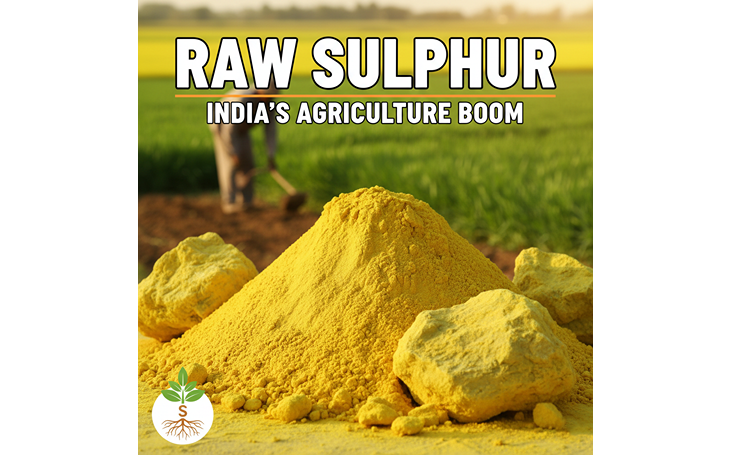
India is on the edge of one of the largest agricultural booms in its history. Rising population, expanding food exports and continuous pressure to improve crop yields are pushing fertilizer demand to new heights. Most of the conversation revolves around nitrogen, phosphorus and potassium, but there is a hidden player shaping agricultural output: sulphur. Raw sulphur is no longer a secondary input. It has become a strategic commodity for India’s farming economy.
Understanding why sulphur matters begins with how India consumes modern fertilizers.
Understanding why sulphur matters begins with how India consumes modern fertilizers.
India’s dependence on DAP and sulphur
Diammonium phosphate (DAP) is one of India’s most used fertilizers. It supplies phosphorus and nitrogen, which farmers know are essential for growth. What many do not realize is that DAP production requires sulphur. Every tonne of DAP depends on sulphuric acid made from raw sulphur. Without steady sulphur supply, DAP plants slow down or shut their production lines.
India does not produce enough sulphur domestically. Most sulphur comes from imports, carried from Gulf refinery hubs and Central Asian gas processors. When geopolitical tensions or shipping delays occur, DAP output quickly becomes unstable. Prices rise. Farmers pay more, and rural procurement stalls.
In simple terms, sulphur is the backbone of phosphorus delivery. Without it, fertilizer factories cannot convert imported phosphate rock into usable products.
Diammonium phosphate (DAP) is one of India’s most used fertilizers. It supplies phosphorus and nitrogen, which farmers know are essential for growth. What many do not realize is that DAP production requires sulphur. Every tonne of DAP depends on sulphuric acid made from raw sulphur. Without steady sulphur supply, DAP plants slow down or shut their production lines.
India does not produce enough sulphur domestically. Most sulphur comes from imports, carried from Gulf refinery hubs and Central Asian gas processors. When geopolitical tensions or shipping delays occur, DAP output quickly becomes unstable. Prices rise. Farmers pay more, and rural procurement stalls.
In simple terms, sulphur is the backbone of phosphorus delivery. Without it, fertilizer factories cannot convert imported phosphate rock into usable products.
Soil sulphur deficiency is a silent crisis
Indian soils are losing sulphur faster than they gain it. Traditional crop cycles and monsoon washing strip sulphur from the soil. Past generations relied on organic matter and rain-fed ecosystems to replenish micronutrients. Today, high intensity farming and lower organic residue turnover have widened the gap.
◾ Slower plant growth
◾ Weak protein structure in grains and oilseeds
◾ Poor seed development
◾ Reduced photosynthesis efficiency
Crops like groundnut, onion, mustard and pulses are particularly sensitive. Farmers often blame weather or seed quality before checking sulphur levels. The result is a loss of potential yield that could have been prevented at very low cost.
Indian soils are losing sulphur faster than they gain it. Traditional crop cycles and monsoon washing strip sulphur from the soil. Past generations relied on organic matter and rain-fed ecosystems to replenish micronutrients. Today, high intensity farming and lower organic residue turnover have widened the gap.
Sulphur deficiency leads to:
◾ Yellowing of leaves similar to nitrogen deficiency
◾ Slower plant growth
◾ Weak protein structure in grains and oilseeds
◾ Poor seed development
◾ Reduced photosynthesis efficiency
Crops like groundnut, onion, mustard and pulses are particularly sensitive. Farmers often blame weather or seed quality before checking sulphur levels. The result is a loss of potential yield that could have been prevented at very low cost.
Why sulphur is different from other fertilizers
Unlike nitrogen, sulphur cannot simply be sprayed for instant results. It must be incorporated into the soil or delivered through sulphur-based fertilizers. It activates enzymes, supports protein formation and helps plants absorb other nutrients efficiently. When sulphur is missing, extra nitrogen or phosphorus does not compensate.
India already uses large quantities of urea. What farmers truly need is nutrient balance. Applying DAP without access to sulphur is like building a strong foundation but forgetting to lock in the structure.
Unlike nitrogen, sulphur cannot simply be sprayed for instant results. It must be incorporated into the soil or delivered through sulphur-based fertilizers. It activates enzymes, supports protein formation and helps plants absorb other nutrients efficiently. When sulphur is missing, extra nitrogen or phosphorus does not compensate.
India already uses large quantities of urea. What farmers truly need is nutrient balance. Applying DAP without access to sulphur is like building a strong foundation but forgetting to lock in the structure.
Strategic importance for fertilizer manufacturing
Raw sulphur converts to sulphuric acid, and sulphuric acid converts to phosphate fertilizers. The chain is simple but fragile.
Sulphur → Sulphuric Acid → Phosphoric Acid → DAP/MAP/SSP
If sulphur imports collapse or become expensive, the entire chain becomes unstable. For fertilizer manufacturers, consistent sulphur supply is more important than seasonal pricing. Plants run year round. A single missed shipment can shut down an entire complex and halt thousands of tonnes of scheduled fertilizer production.
This makes sulphur not just a commodity but a strategic input that determines how many farmers get access to fertilizers at the right time.
Raw sulphur converts to sulphuric acid, and sulphuric acid converts to phosphate fertilizers. The chain is simple but fragile.
Sulphur → Sulphuric Acid → Phosphoric Acid → DAP/MAP/SSP
If sulphur imports collapse or become expensive, the entire chain becomes unstable. For fertilizer manufacturers, consistent sulphur supply is more important than seasonal pricing. Plants run year round. A single missed shipment can shut down an entire complex and halt thousands of tonnes of scheduled fertilizer production.
This makes sulphur not just a commodity but a strategic input that determines how many farmers get access to fertilizers at the right time.
India’s agricultural boom will expand sulphur demand
India is not only feeding itself. It is exporting rice, fruits, cereals, spices and processed crops to global markets. To maintain this momentum, yields must keep rising. More intensive agriculture means more nutrient withdrawal from soils. Crops will demand sulphur like they already demand nitrogen and phosphorus.
Producers of DAP, SSP and NPK blends will compete for sulphur feedstock. Importers will lock in long term contracts to prevent disruption. Storage yards and logistics networks will become essential infrastructure for raw sulphur.
Farmers will pressure dealers to supply sulphur blends or sulphur-enhanced fertilizers. Agricultural productivity will depend not on how much fertilizer India imports, but on whether that fertilizer has sulphur in it.
India is not only feeding itself. It is exporting rice, fruits, cereals, spices and processed crops to global markets. To maintain this momentum, yields must keep rising. More intensive agriculture means more nutrient withdrawal from soils. Crops will demand sulphur like they already demand nitrogen and phosphorus.
Producers of DAP, SSP and NPK blends will compete for sulphur feedstock. Importers will lock in long term contracts to prevent disruption. Storage yards and logistics networks will become essential infrastructure for raw sulphur.
Farmers will pressure dealers to supply sulphur blends or sulphur-enhanced fertilizers. Agricultural productivity will depend not on how much fertilizer India imports, but on whether that fertilizer has sulphur in it.
Why reliable sulphur sourcing matters
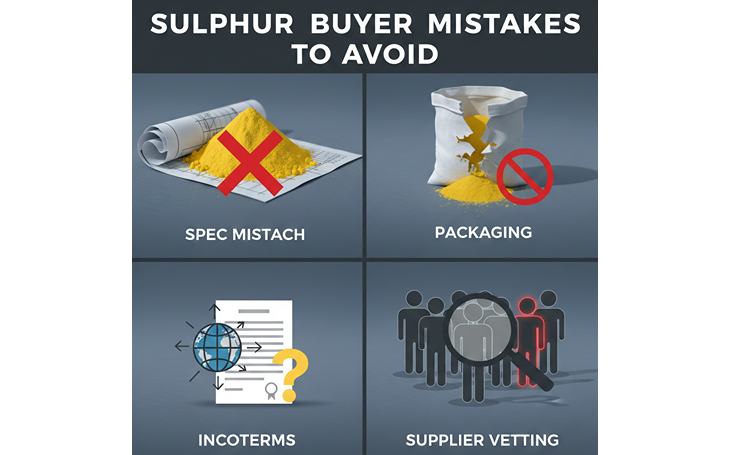
Many importers try to cut costs by buying cheaper or uncertified sulphur. What they receive is often clumped, dusty or moisture heavy. Fertilizer plants then struggle to melt it, and operational delays appear. The true cost is hidden in freight wastage, slow burner performance and unpredictable acid output.
◾ Low moisture and low dust
◾ Delivered with proper documents and safety compliance
◾ Backed by third-party quality inspection
Reliable sourcing keeps fertilizer production steady, even when markets tighten.
Many importers try to cut costs by buying cheaper or uncertified sulphur. What they receive is often clumped, dusty or moisture heavy. Fertilizer plants then struggle to melt it, and operational delays appear. The true cost is hidden in freight wastage, slow burner performance and unpredictable acid output.
Industrial buyers must secure sulphur that is:
◾ Physically stable in storage and transit
◾ Low moisture and low dust
◾ Delivered with proper documents and safety compliance
◾ Backed by third-party quality inspection
Reliable sourcing keeps fertilizer production steady, even when markets tighten.
How Gsinfotechvis strengthens India’s sulphur supply chain
Gsinfotechvis Pvt Ltd delivers refinery-grade raw sulphur from trusted global producers. The company focuses on physical stability, moisture control and packaging quality to protect the usable tonnage. Every shipment includes compliance documents, inspection records and port logistics support.
◾ Quality standards support fertilizer-grade usage
◾ Bulk and containerized shipping reduce storage risk
◾ Teams assist with customs, MSDS and HS coding
◾ Delivery timelines are planned for plant uptime
For India’s agricultural future, sulphur is no longer optional. It is the catalyst that turns fertilizer inputs into real productivity. If your organization needs stable, high-quality raw sulphur for fertilizer production, Gsinfotechvis is positioned to help you grow alongside India’s farming boom.
Check us out on LinkedIn.
Gsinfotechvis Pvt Ltd delivers refinery-grade raw sulphur from trusted global producers. The company focuses on physical stability, moisture control and packaging quality to protect the usable tonnage. Every shipment includes compliance documents, inspection records and port logistics support.
Clients rely on Gsinfotechvis because:
◾ Supply networks cover major international sulphur hubs
◾ Quality standards support fertilizer-grade usage
◾ Bulk and containerized shipping reduce storage risk
◾ Teams assist with customs, MSDS and HS coding
◾ Delivery timelines are planned for plant uptime
For India’s agricultural future, sulphur is no longer optional. It is the catalyst that turns fertilizer inputs into real productivity. If your organization needs stable, high-quality raw sulphur for fertilizer production, Gsinfotechvis is positioned to help you grow alongside India’s farming boom.
Check us out on LinkedIn.