Sulphur Buyer Mistakes to Avoid: Spec Mismatch, Packaging, Incoterms and Supplier Vetting
Industrial sulphur is not a commodity you can buy casually. Fertilizer factories, chemical plants and traders often learn this the hard way when they receive clumped cargo, dusty shipments or material that fails customs checks. Most of these problems are not caused by sulphur itself. They are caused by buyer mistakes during procurement. Understanding these risks can help you avoid millions of rupees in hidden losses.
This guide explains the most damaging sulphur procurement mistakes and how to avoid them.
This guide explains the most damaging sulphur procurement mistakes and how to avoid them.
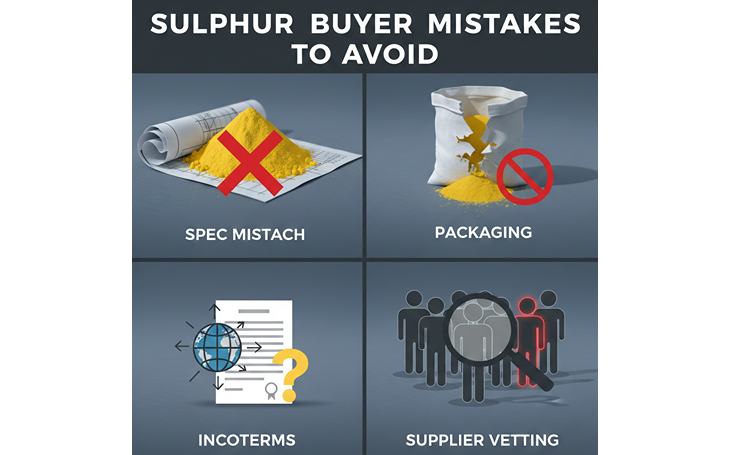
Mistake 1: Spec mismatch due to assumptions
Many buyers think sulphur is “simple” because purity numbers look similar on paper. They focus on sulphur content only and ignore physical properties. This is where shipments begin to go wrong.
◾ Particle size uniformity
◾ Dust or fines percentage
◾ Ash and contamination
◾ Bulk hardness for transport
A sulphur batch can be chemically pure but still unusable if the particles break, clump or melt unevenly. Factories end up grinding, heating and filtering the sulphur before they can use it. The cheap deal becomes expensive very fast.
Solution
Insist on full specification sheets, not just sulphur content. Set acceptable tolerance ranges for moisture, fines and particle hardness. If the supplier cannot provide SGS or Intertek reports, move on.
Many buyers think sulphur is “simple” because purity numbers look similar on paper. They focus on sulphur content only and ignore physical properties. This is where shipments begin to go wrong.
Key specs buyers overlook:
◾ Moisture percentage
◾ Particle size uniformity
◾ Dust or fines percentage
◾ Ash and contamination
◾ Bulk hardness for transport
A sulphur batch can be chemically pure but still unusable if the particles break, clump or melt unevenly. Factories end up grinding, heating and filtering the sulphur before they can use it. The cheap deal becomes expensive very fast.
Solution
Insist on full specification sheets, not just sulphur content. Set acceptable tolerance ranges for moisture, fines and particle hardness. If the supplier cannot provide SGS or Intertek reports, move on.
Mistake 2: Ignoring packaging and physical integrity
Bulk sulphur is fragile. How it is packaged decides how much usable material arrives at your plant. Poor packaging causes moisture absorption, dust generation and crushing during transit.
Importers often choose low cost bulk loading or unlined containers. A month of vibration at sea turns prills or solid balls into powder. That powder sticks to walls, spills during unloading and increases static hazard.
◾ Choose high strength jumbo bags
◾ Avoid single layer woven sacks
◾ Protect cargo from rain and port humidity
◾ Request packaging test results
Packaging is not cosmetic. It protects your tonnage. A two percent loss on a large shipment is real money gone forever.
Bulk sulphur is fragile. How it is packaged decides how much usable material arrives at your plant. Poor packaging causes moisture absorption, dust generation and crushing during transit.
Importers often choose low cost bulk loading or unlined containers. A month of vibration at sea turns prills or solid balls into powder. That powder sticks to walls, spills during unloading and increases static hazard.
Best practices
◾ Use anti static bulk liners
◾ Choose high strength jumbo bags
◾ Avoid single layer woven sacks
◾ Protect cargo from rain and port humidity
◾ Request packaging test results
Packaging is not cosmetic. It protects your tonnage. A two percent loss on a large shipment is real money gone forever.
Mistake 3: Misunderstanding Incoterms
Incoterms decide who is responsible for freight, customs, insurance, demurrage and port handling. New buyers sign contracts without reading them, then get shocked when the vessel arrives and costs pile up.
◾ Cargo arrives with wrong UN 1350 labels
◾ Insurance does not cover storage or offloading
◾ Moisture damage blamed on buyer, not seller
◾ Port penalties due to delayed unloading
Incoterms are not decoration. They change the entire financial outcome of a shipment.
Examples
◾ CIF: Supplier covers freight and insurance, buyer handles destination port
◾ FOB: Supplier delivers to vessel, buyer responsible afterward
◾ CFR: Freight covered, but insurance falls on buyer
If you do not fully understand these terms, you will lose money even if cargo quality is perfect.
Incoterms decide who is responsible for freight, customs, insurance, demurrage and port handling. New buyers sign contracts without reading them, then get shocked when the vessel arrives and costs pile up.
Typical problems:
◾ Buyer assumes supplier will handle customs
◾ Cargo arrives with wrong UN 1350 labels
◾ Insurance does not cover storage or offloading
◾ Moisture damage blamed on buyer, not seller
◾ Port penalties due to delayed unloading
Incoterms are not decoration. They change the entire financial outcome of a shipment.
Examples
◾ CIF: Supplier covers freight and insurance, buyer handles destination port
◾ FOB: Supplier delivers to vessel, buyer responsible afterward
◾ CFR: Freight covered, but insurance falls on buyer
If you do not fully understand these terms, you will lose money even if cargo quality is perfect.
Mistake 4: Believing every supplier who offers “refinery grade”
The sulphur market has middlemen who buy low quality stock from aggregation yards and rebrand it as refinery grade. They may not lie, but they omit the truth. You receive cargo that looks uniform at the top layer and dusty at the bottom. When port inspectors sample it, it fails.
◾ Moisture records
◾ MSDS compliance
◾ Hazard labeling
◾ Shipment lot traceability
If the supplier cannot show refinery source, you are taking a gamble.
The sulphur market has middlemen who buy low quality stock from aggregation yards and rebrand it as refinery grade. They may not lie, but they omit the truth. You receive cargo that looks uniform at the top layer and dusty at the bottom. When port inspectors sample it, it fails.
Real refinery grade sulphur comes with:
◾ Clear origin documentation
◾ Moisture records
◾ MSDS compliance
◾ Hazard labeling
◾ Shipment lot traceability
If the supplier cannot show refinery source, you are taking a gamble.
Mistake 5: No independent inspection
Two buyers can receive sulphur from the same “supplier” and get completely different material. Third party Q&Q inspections protect you from that.
◾ Undisclosed fines
◾ Contamination with ash or sand
◾ Container leakage
◾ False weight declarations
SGS or Intertek certificates are standard in sulphur trade. Avoid suppliers who refuse joint inspection.
Two buyers can receive sulphur from the same “supplier” and get completely different material. Third party Q&Q inspections protect you from that.
Inspection prevents:
◾ Moisture manipulation
◾ Undisclosed fines
◾ Contamination with ash or sand
◾ Container leakage
◾ False weight declarations
SGS or Intertek certificates are standard in sulphur trade. Avoid suppliers who refuse joint inspection.
Mistake 6: Rushing to spot deals
Spot prices look attractive when markets are quiet. During peak demand or geopolitical friction, spot contracts become chaos. Buyers pay inflated prices and accept whatever quality is available. Plants run at reduced output, and dealers scramble to fulfill orders.
Smart procurement teams build long term supply plans with reliable partners, not quick deals with strangers.
Spot prices look attractive when markets are quiet. During peak demand or geopolitical friction, spot contracts become chaos. Buyers pay inflated prices and accept whatever quality is available. Plants run at reduced output, and dealers scramble to fulfill orders.
Smart procurement teams build long term supply plans with reliable partners, not quick deals with strangers.
How Gsinfotechvis helps buyers avoid these mistakes
Gsinfotechvis Pvt Ltd specializes in raw sulphur supply with strict quality and logistics standards. The goal is not just to deliver sulphur, but to make sure buyers can use it without losses.
◾ Third party Q&Q inspection before shipment
◾ Moisture controlled packaging and storage
◾ UN 1350 and IMDG compliance
◾ Guidance on Incoterms and customs documentation
◾ Route planning to reduce demurrage risk
When you avoid spec mismatch, packaging failures and unsafe contracts, the sulphur trade becomes predictable. If your company needs reliable sulphur for fertilizer, rubber or chemical use, partnering with Gsinfotechvis helps you avoid costly mistakes from the very first shipment.
Check us out on LinkedIn.
Gsinfotechvis Pvt Ltd specializes in raw sulphur supply with strict quality and logistics standards. The goal is not just to deliver sulphur, but to make sure buyers can use it without losses.
Clients benefit from:
◾ Verified refinery sources
◾ Third party Q&Q inspection before shipment
◾ Moisture controlled packaging and storage
◾ UN 1350 and IMDG compliance
◾ Guidance on Incoterms and customs documentation
◾ Route planning to reduce demurrage risk
When you avoid spec mismatch, packaging failures and unsafe contracts, the sulphur trade becomes predictable. If your company needs reliable sulphur for fertilizer, rubber or chemical use, partnering with Gsinfotechvis helps you avoid costly mistakes from the very first shipment.
Check us out on LinkedIn.