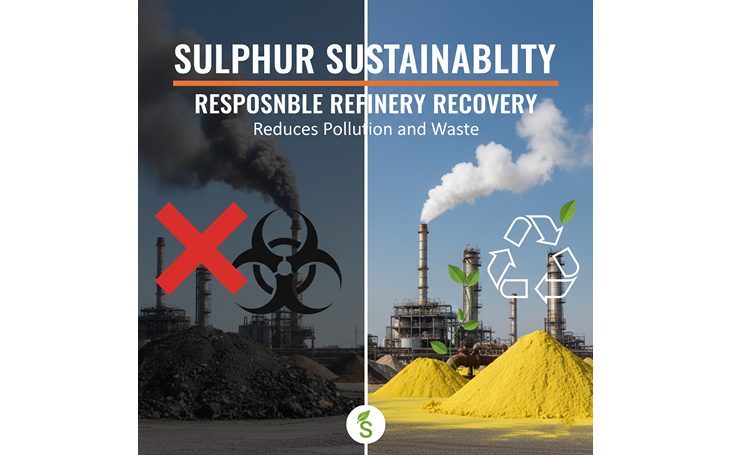
Sulphur Sustainability: How Responsible Refinery Recovery Reduces Pollution and Waste
Sulphur is often misunderstood. Many people see it as a toxic industrial byproduct, but the story is very different in modern refining. When crude oil or natural gas contains sulphur, removing it is essential to prevent air pollution. Instead of releasing sulphur into the environment, refineries recover it and turn it into usable raw sulphur. This process is not just a technical requirement. It has become one of the most impactful examples of circular industrial sustainability.
If handled responsibly, sulphur recovery turns a pollutant into an asset for the fertilizer, chemical and rubber industries. It reduces waste, supports global agriculture and prevents millions of tonnes of emissions.
If handled responsibly, sulphur recovery turns a pollutant into an asset for the fertilizer, chemical and rubber industries. It reduces waste, supports global agriculture and prevents millions of tonnes of emissions.
Why refineries recover sulphur in the first place
Crude oil and sour gas contain hydrogen sulfide and other sulphur compounds. When these fuels burn untreated, they release sulphur dioxide. This gas causes acid rain, soil degradation and respiratory illness. Governments around the world have strict regulations on sulphur content in fuels. Refineries must remove it before fuels reach the market.
Instead of discarding sulphur, refineries use processing units like the Claus reactor to convert hydrogen sulfide into elemental sulphur. The output is sold, stored or exported. The same material that would once pollute the atmosphere becomes a valuable industrial commodity.
Crude oil and sour gas contain hydrogen sulfide and other sulphur compounds. When these fuels burn untreated, they release sulphur dioxide. This gas causes acid rain, soil degradation and respiratory illness. Governments around the world have strict regulations on sulphur content in fuels. Refineries must remove it before fuels reach the market.
Instead of discarding sulphur, refineries use processing units like the Claus reactor to convert hydrogen sulfide into elemental sulphur. The output is sold, stored or exported. The same material that would once pollute the atmosphere becomes a valuable industrial commodity.
Environmental benefits of recovery
◾ Reduces emissions of sulphur dioxide
◾ Prevents acid rain formation
◾ Limits corrosion in pipelines and engines
◾ Converts hazardous compounds into stable solids
Every tonne of recovered sulphur represents pollution prevented.
From refinery waste to agricultural foundation
Recovered sulphur does not sit idle in warehouses. It powers some of the most critical sectors in the global economy. The agricultural industry relies on sulphur based fertilizers to maintain soil health. Phosphate fertilizers like DAP and SSP require sulphuric acid. Without raw sulphur, these fertilizers cannot be made at industrial scale.
◾ Detergent manufacturing
◾ Chemical processing
◾ Metal extraction and refining
◾ Battery research and advanced materials
Instead of mining new sulphur or dumping refinery waste, the industry recycles a chemical that already exists in the petroleum supply chain.
Recovered sulphur does not sit idle in warehouses. It powers some of the most critical sectors in the global economy. The agricultural industry relies on sulphur based fertilizers to maintain soil health. Phosphate fertilizers like DAP and SSP require sulphuric acid. Without raw sulphur, these fertilizers cannot be made at industrial scale.
Sulphur also supports:
◾ Rubber vulcanization
◾ Detergent manufacturing
◾ Chemical processing
◾ Metal extraction and refining
◾ Battery research and advanced materials
Instead of mining new sulphur or dumping refinery waste, the industry recycles a chemical that already exists in the petroleum supply chain.
ESG and sulphur: a true circular economy example
ESG (Environmental, Social and Governance) standards are reshaping how companies operate. Investors and regulators expect industrial players to reduce waste and demonstrate circular practices.
◾ It lowers landfill disposal risk
◾ It reduces mining demand for native sulphur
◾ It enables critical food and material production
Instead of creating more extraction, refineries lean on recovery. This reduces land disturbance and the carbon footprint of fertilizer production. In many ESG audits, sulphur recovery stands as a model of how heavy industries can create value through environmental responsibility.
ESG (Environmental, Social and Governance) standards are reshaping how companies operate. Investors and regulators expect industrial players to reduce waste and demonstrate circular practices.
Sulphur recovery meets ESG goals naturally:
◾ It transforms poisonous gas into useful solid form
◾ It lowers landfill disposal risk
◾ It reduces mining demand for native sulphur
◾ It enables critical food and material production
Instead of creating more extraction, refineries lean on recovery. This reduces land disturbance and the carbon footprint of fertilizer production. In many ESG audits, sulphur recovery stands as a model of how heavy industries can create value through environmental responsibility.
Why quality matters in sustainable sulphur use
Sustainability is not only about collecting sulphur. It is about delivering material that performs safely and efficiently in real industries. Low grade sulphur can contain dust, moisture and contaminants. These cause higher melting energy, operational waste and industrial rejection. Sustainable practice requires reliable, certified supply with minimal handling risk.
◾ Particle uniformity
◾ Storage stability
◾ Documentation and hazard labeling
◾ Compliance with UN 1350 and IMDG standards
If sulphur arrives clumped or degraded, the hidden waste becomes environmental and economic.
Sustainability is not only about collecting sulphur. It is about delivering material that performs safely and efficiently in real industries. Low grade sulphur can contain dust, moisture and contaminants. These cause higher melting energy, operational waste and industrial rejection. Sustainable practice requires reliable, certified supply with minimal handling risk.
Industrial buyers should check:
◾ Moisture tolerance
◾ Particle uniformity
◾ Storage stability
◾ Documentation and hazard labeling
◾ Compliance with UN 1350 and IMDG standards
If sulphur arrives clumped or degraded, the hidden waste becomes environmental and economic.
Responsible suppliers make sustainability practical
Sustainability does not end at the refinery. Logistics partners, shippers and distributors must protect sulphur during transport. Packaging choices, container conditions and port handling determine whether the product reaches industrial users in usable form. A well managed supply chain prevents dust, moisture damage and excessive reprocessing.
Long term sustainability is about consistency. Reliability encourages industries to depend on recovered sulphur instead of mining new reserves.
Sustainability does not end at the refinery. Logistics partners, shippers and distributors must protect sulphur during transport. Packaging choices, container conditions and port handling determine whether the product reaches industrial users in usable form. A well managed supply chain prevents dust, moisture damage and excessive reprocessing.
Long term sustainability is about consistency. Reliability encourages industries to depend on recovered sulphur instead of mining new reserves.
How Gsinfotechvis strengthens sulphur sustainability
Gsinfotechvis Pvt Ltd supports the circular sulphur economy by sourcing refinery grade raw sulphur from verified producers. Instead of pushing low cost, poorly handled material, the company focuses on safe packaging, controlled moisture and physical stability. This ensures sulphur flows smoothly into fertilizer plants, chemical processors and heavy industries without waste.
◾ Documentation and MSDS compliance for safe handling
◾ Shipper networks trained in hazardous cargo standards
◾ Transparent inspection reports from trusted agencies
◾ Packaging designed to lower dust and clumping
Sustainable sulphur is not only about environmental ethics. It is about long term industrial efficiency. When buyers receive dependable sulphur from responsible sources, the entire value chain becomes cleaner, safer and more resilient.
If your organization values quality, safety and circular industrial practices, Gsinfotechvis can help you secure sulphur that supports sustainability from refinery to production floor.
Check us out on LinkedIn.
Gsinfotechvis Pvt Ltd supports the circular sulphur economy by sourcing refinery grade raw sulphur from verified producers. Instead of pushing low cost, poorly handled material, the company focuses on safe packaging, controlled moisture and physical stability. This ensures sulphur flows smoothly into fertilizer plants, chemical processors and heavy industries without waste.
Clients benefit from:
◾ Consistent sulphur quality that reduces process waste
◾ Documentation and MSDS compliance for safe handling
◾ Shipper networks trained in hazardous cargo standards
◾ Transparent inspection reports from trusted agencies
◾ Packaging designed to lower dust and clumping
Sustainable sulphur is not only about environmental ethics. It is about long term industrial efficiency. When buyers receive dependable sulphur from responsible sources, the entire value chain becomes cleaner, safer and more resilient.
If your organization values quality, safety and circular industrial practices, Gsinfotechvis can help you secure sulphur that supports sustainability from refinery to production floor.
Check us out on LinkedIn.