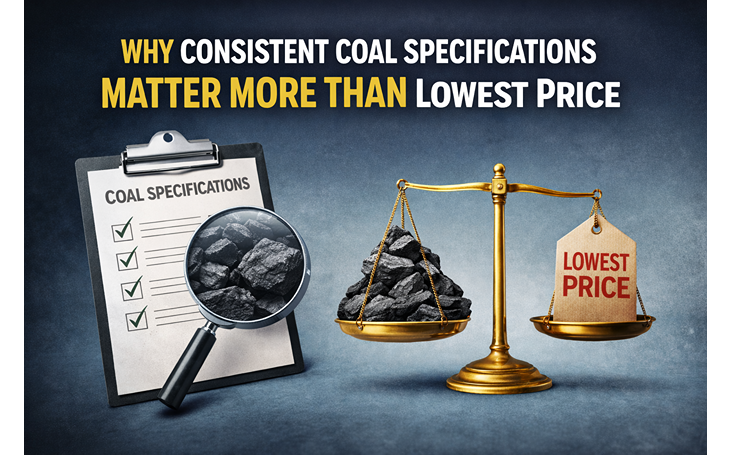
Why Consistent Coal Specifications Matter More Than Lowest Price
In coal procurement, price often becomes the deciding factor. Buyers are under constant pressure to reduce fuel costs, and lower priced coal can appear attractive. However, focusing only on the lowest price often creates hidden operational and financial losses. In reality, consistent coal specifications matter far more than short term price savings. For power plants and industrial users, fuel stability is the foundation of efficiency and cost control.
The True Cost of Cheap Coal
Coal that is priced lower than the market often comes with wider quality variations. Moisture, ash, volatile matter, and calorific value may fluctuate from shipment to shipment. While the invoice price looks attractive, the actual cost of using such coal is much higher.
Inconsistent coal forces plants to adjust operations frequently. Boilers, mills, and handling systems are designed for specific quality ranges. When coal deviates from these ranges, efficiency drops and fuel consumption rises. Over time, the cost of extra coal, higher power use, and maintenance exceeds the initial savings.
Consistency Drives Stable Operations
Stable coal specifications allow plants to operate at steady conditions. When moisture, ash, and heat value remain within a narrow range, combustion becomes predictable. Operators can maintain optimal air flow, temperature, and load without constant adjustments.
This stability improves boiler efficiency and reduces unburnt losses. Equipment operates under less stress, which extends maintenance cycles and lowers the risk of forced outages. Consistent coal supports reliable output, which is critical for power plants and continuous process industries.
Impact on Maintenance and Equipment Life
Coal quality directly affects wear and tear on plant equipment. High or fluctuating ash increases erosion in mills and ducts. Variable moisture causes uneven feeding and higher strain on handling systems.
When coal specifications are consistent, wear patterns become predictable. Maintenance can be planned rather than reactive. This reduces downtime, spare part consumption, and emergency repair costs. Over the long term, consistent coal helps protect expensive assets and improves plant availability.
Fuel Planning and Cost Control
Inconsistent coal makes fuel planning difficult. Plants struggle to forecast consumption accurately because performance varies with each shipment. This leads to inventory imbalances, higher working capital, and logistical challenges.
With consistent specifications, fuel consumption becomes predictable. Plants can plan procurement, storage, and blending more effectively. This improves cost control and reduces the risk of overstocking or shortages.
Compliance and Documentation Benefits
Coal quality consistency also simplifies compliance. Customs declarations, quality certificates, and inspection reports are easier to manage when specifications remain stable. Frequent deviations increase the risk of disputes, reassessment of duties, and regulatory scrutiny.
Consistent coal reduces documentation conflicts and supports smoother import and audit processes.
Why Lowest Price Often Fails
Lowest price coal often requires more blending, more operational adjustments, and more oversight. These hidden efforts increase manpower costs and operational risk. In some cases, plants end up using more coal to achieve the same output, which negates any price advantage.
Reliable suppliers who deliver consistent specifications may charge a slightly higher price, but they offer predictable performance and lower total cost of ownership.
How Gsinfotechvis Supports Specification Consistency
Gsinfotechvis helps coal buyers focus on long term performance rather than short term price. Their team supports quality assessment, supplier evaluation, and compliance alignment to ensure coal specifications meet plant requirements consistently.
By working with Gsinfotechvis, businesses gain better control over fuel quality and reduce the risks associated with inconsistent coal. Their structured approach helps convert coal procurement into a stability driven strategy.
Conclusion
In coal procurement, consistency is more valuable than the lowest price. Stable coal specifications support efficient operations, lower maintenance, predictable costs, and smoother compliance. While cheaper coal may look attractive initially, its hidden costs often outweigh the savings. With expert support from Gsinfotechvis, industries can prioritize consistency and achieve long term operational and financial benefits.
Check us out on LinkedIn.