Why Coal Logistics Fail and How Structured Contracts Prevent Cost Overruns
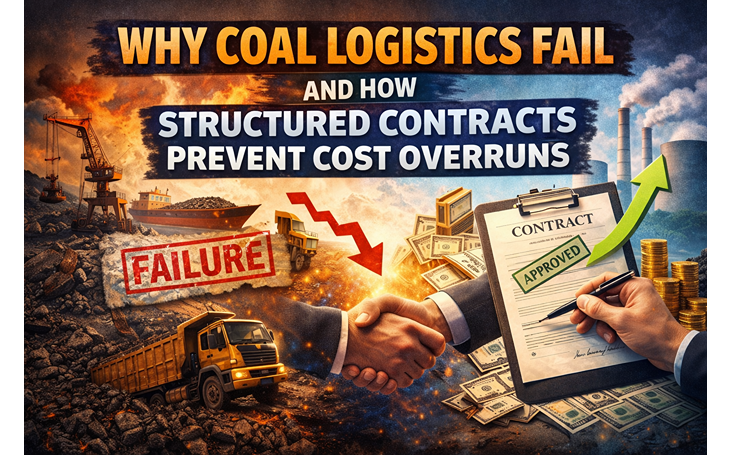
Coal logistics is a complex process that connects mines, ports, vessels, rail networks, and end users. When this chain breaks down, the impact is immediate and costly. Delays, demurrage, and supply disruptions often result from logistics failures rather than coal availability itself. Understanding why coal logistics fail and how structured contracts can prevent cost overruns is essential for buyers and operators across power, steel, and cement sectors.
Common Reasons Coal Logistics Fail
Unclear Contract Responsibilities
Many logistics failures begin with contracts that do not clearly define responsibilities. When loading, unloading, or transport obligations are vague, disputes arise over who bears the cost of delays. This lack of clarity often results in demurrage and unexpected expenses.
Unrealistic Timelines
Aggressive timelines that ignore port capacity, weather risks, or seasonal congestion increase failure risk. When actual operations do not match contract assumptions, delays and cost overruns follow.
Poor Documentation Planning
Incomplete or inaccurate documentation leads to customs holds, re testing, and clearance delays. These issues are often discovered only after the cargo arrives, making them expensive to fix.
Lack of Coordination Across the Chain
Coal logistics involves multiple parties such as suppliers, shipping agents, port operators, transporters, and regulators. Without coordinated planning, small gaps quickly escalate into major disruptions.
The Financial Impact of Logistics Failure
Logistics failures directly affect landed coal cost. Demurrage charges, port storage fees, emergency transport arrangements, and production losses add significant expense. Over time, repeated failures also damage relationships with suppliers, ship owners, and regulators.
For power and industrial plants, logistics disruptions can reduce plant load factor, increase fuel cost per unit, and impact profitability.
How Structured Contracts Reduce Risk
Clear Definition of Terms
Structured contracts clearly define delivery terms, laytime, demurrage rates, and dispatch provisions. When responsibilities are well defined, disputes are reduced and risk is allocated fairly.
Realistic Operational Assumptions
Well drafted contracts are based on actual port capacity, transport availability, and regulatory timelines. This realism helps prevent surprise delays and cost overruns.
Built In Risk Sharing Mechanisms
Structured contracts include clauses for force majeure, weather delays, and regulatory holds. These provisions protect buyers and sellers from unforeseen events and limit financial exposure.
Alignment With Compliance Requirements
Contracts that reflect regulatory and compliance realities reduce the risk of documentation errors and clearance delays. This alignment ensures smoother execution.
The Role of Compliance in Contract Design
Compliance is often treated as an afterthought, but it should be part of contract planning. Quality specifications, inspection standards, and documentation requirements must be clearly stated.
When compliance expectations are built into contracts, suppliers are accountable for meeting them before shipment. This reduces downstream risks at ports and plants.
How Gsinfotechvis Supports Structured Coal Logistics
Gsinfotechvis helps businesses integrate compliance and logistics planning into contract design. Their expertise ensures that contracts reflect regulatory requirements, operational realities, and risk management principles.
By working with Gsinfotechvis, companies can reduce logistics failures, control costs, and improve supply reliability. Their structured approach helps prevent issues before they impact operations.
Conclusion
Coal logistics fail due to unclear responsibilities, unrealistic assumptions, and poor planning. Structured contracts that incorporate operational and compliance realities are a powerful tool to prevent cost overruns. With expert guidance from
Gsinfotechvis,
businesses can strengthen their coal logistics framework, reduce risk, and achieve more predictable and efficient outcomes.
Check us out on
LinkedIn.