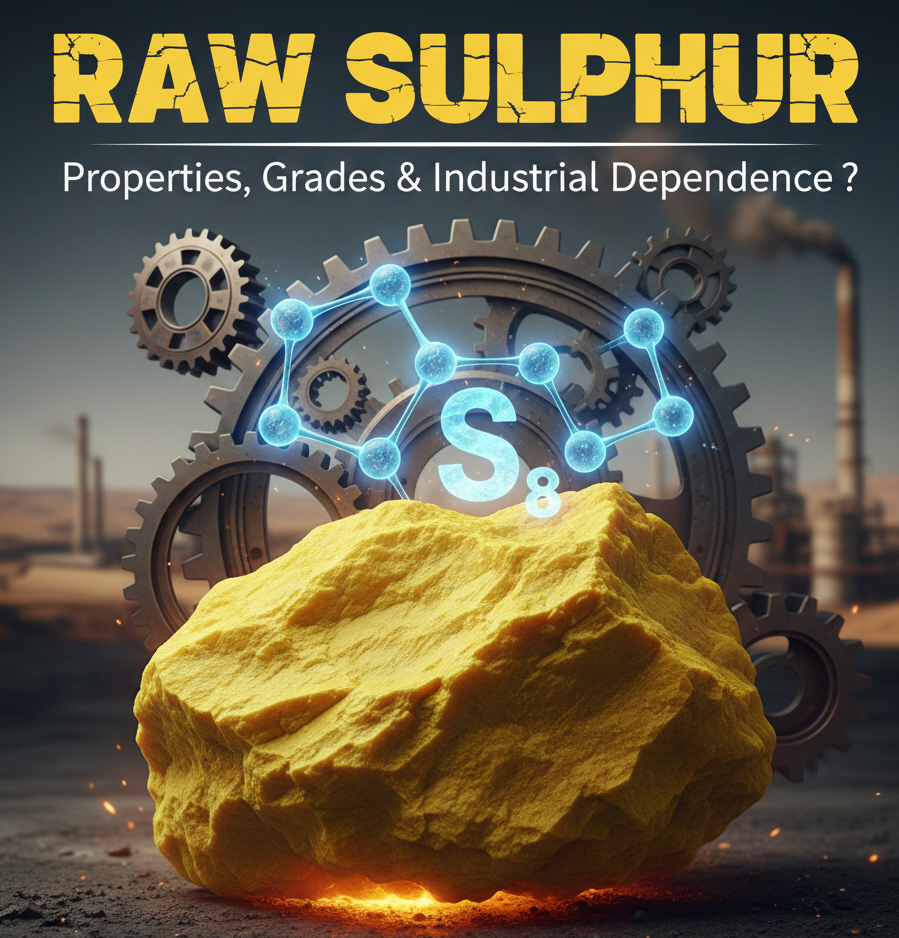
What Is Raw Sulphur? Properties, Grades and Why Industries Depend on It
Raw sulphur is one of the most important elemental materials used in modern industry. From fertilizers and chemicals to detergents and pharmaceuticals, sulphur acts as a building block for countless processes. Although it appears simple as a yellow, solid material, sulphur is a highly reactive element with unique properties that make it essential across many sectors.
This article explains what raw sulphur is, how it is graded and why industries rely on it for critical applications. It also highlights how reliable sourcing supports consistent production for industrial buyers.
What Exactly Is Raw Sulphur?
Raw sulphur is a naturally occurring element found in volcanic regions, sedimentary rocks and petroleum deposits. It is typically extracted through mining or recovered from oil and gas refining. In its pure form, sulphur appears as a bright yellow solid with a faint odour.
◾ Insolubility in water
◾ High reactivity with metals and organic compounds
◾ Ability to form sulphuric acid when processed
These properties make sulphur incredibly versatile in industrial chemistry.
Important Properties of Raw Sulphur
Sulphur’s behaviour under heat and chemical reactions defines its value in industry.
Common Grades of Raw Sulphur
Sulphur is available in different grades depending on origin and processing. Industrial buyers typically choose based on purity, shape and handling needs.
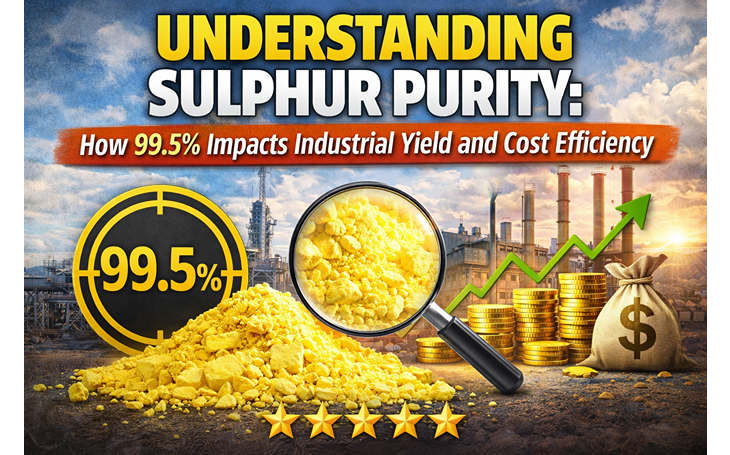
Most industries prefer granular sulphur at 99.5 percent purity, as it supports stable performance in chemical production and reduces impurities in downstream processes.
Why Industries Depend on Raw Sulphur
Sulphur is essential for several high demand industrial sectors.
This wide range of uses shows why sulphur remains an essential raw material for the global economy.
Reliable Supply for Industrial Performance
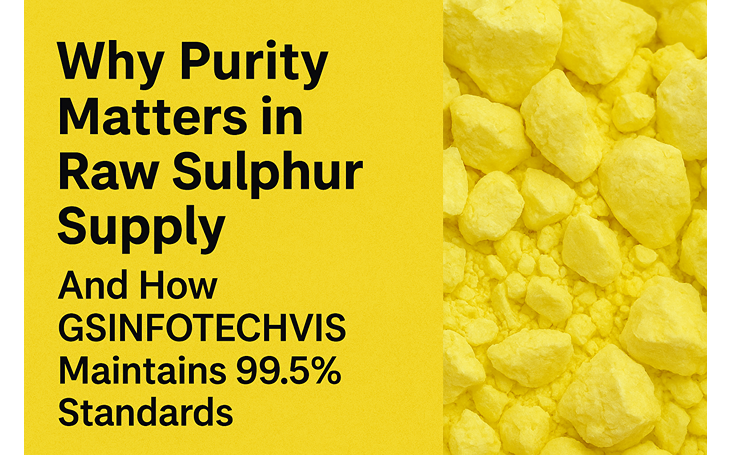
For industries that depend on raw sulphur, consistent quality and timely delivery are crucial. Purity levels, moisture content and particle size can impact chemical reactions and operational efficiency. Companies like Gsinfotechvis supply high purity sulphur, support bulk handling requirements and ensure safe transport through international shipping standards.
◾ Avoid quality variability
◾ Manage cost efficiency
◾ Meet compliance and environmental requirements
Final Thoughts
Raw sulphur may look simple, but it plays a major role in modern industry. Its chemical properties, high purity options and reliable performance make it a key ingredient in fertilizers, chemicals, rubber, detergents and much more. As demand grows across these sectors, businesses need dependable suppliers who understand sulphur grades, quality standards and safe handling.
Check us out on LinkedIn.
This article explains what raw sulphur is, how it is graded and why industries rely on it for critical applications. It also highlights how reliable sourcing supports consistent production for industrial buyers.
What Exactly Is Raw Sulphur?
Raw sulphur is a naturally occurring element found in volcanic regions, sedimentary rocks and petroleum deposits. It is typically extracted through mining or recovered from oil and gas refining. In its pure form, sulphur appears as a bright yellow solid with a faint odour.
Key physical characteristics include:
◾ Low melting point◾ Insolubility in water
◾ High reactivity with metals and organic compounds
◾ Ability to form sulphuric acid when processed
These properties make sulphur incredibly versatile in industrial chemistry.
Important Properties of Raw Sulphur
Sulphur’s behaviour under heat and chemical reactions defines its value in industry.
1. Purity Levels
Industrial buyers usually seek sulphur with high purity. A common benchmark is 99.5 percent purity, which supports consistent chemical reactions and reduces contamination risks.
2. Melting and Flow Characteristics
Sulphur melts easily, which makes it simple to transport, mould or convert into other products. This is important for large scale users who handle sulphur in molten form.
3. Chemical Reactivity
Sulphur reacts with oxygen, hydrogen, metals and many organic compounds. This reactivity allows it to form key chemicals like sulphur dioxide, sulphur trioxide and ultimately sulphuric acid.
4. Stability During Storage
Sulphur is stable under normal conditions and can be stored in solid form without rapid degradation. This makes long term inventory management easier for industries.
Common Grades of Raw Sulphur
Sulphur is available in different grades depending on origin and processing. Industrial buyers typically choose based on purity, shape and handling needs.
Granular Sulphur
Small, uniformly sized granules that flow easily. Ideal for automated handling and bulk loading.
Lump Sulphur
Larger chunks of sulphur produced during mining or refining. Cost effective but requires more manual handling.
Powder Sulphur
Finely milled sulphur used in specialized applications. It offers high surface area for chemical reactions.
Most industries prefer granular sulphur at 99.5 percent purity, as it supports stable performance in chemical production and reduces impurities in downstream processes.
Why Industries Depend on Raw Sulphur
Sulphur is essential for several high demand industrial sectors.
1. Fertilizer Manufacturing
Sulphur is a key ingredient in the production of sulphuric acid, which is used to make phosphate fertilizers. Agriculture depends heavily on these fertilizers for soil nutrition and crop yield.
2. Chemical and Petrochemical Production
Many chemicals are derived from sulphur compounds. Sulphuric acid is one of the most widely used industrial chemicals in the world.
3. Rubber and Polymer Processing
Sulphur is used in vulcanisation, a process that strengthens rubber and improves elasticity. Automotive and manufacturing industries rely on this.
4. Detergents and Cleaning Agents
Sulphur compounds help form surfactants that improve cleaning performance.
5. Pharmaceuticals
Certain medicines and antibiotics require sulphur based compounds as part of their formulation.
6. Metal Refining and Industrial Treating
Sulphur helps remove impurities in metals and fuels during refining.
This wide range of uses shows why sulphur remains an essential raw material for the global economy.
Reliable Supply for Industrial Performance
For industries that depend on raw sulphur, consistent quality and timely delivery are crucial. Purity levels, moisture content and particle size can impact chemical reactions and operational efficiency. Companies like Gsinfotechvis supply high purity sulphur, support bulk handling requirements and ensure safe transport through international shipping standards.
Stable sourcing helps buyers:
◾ Maintain production schedules◾ Avoid quality variability
◾ Manage cost efficiency
◾ Meet compliance and environmental requirements
Final Thoughts
Raw sulphur may look simple, but it plays a major role in modern industry. Its chemical properties, high purity options and reliable performance make it a key ingredient in fertilizers, chemicals, rubber, detergents and much more. As demand grows across these sectors, businesses need dependable suppliers who understand sulphur grades, quality standards and safe handling.
Check us out on LinkedIn.