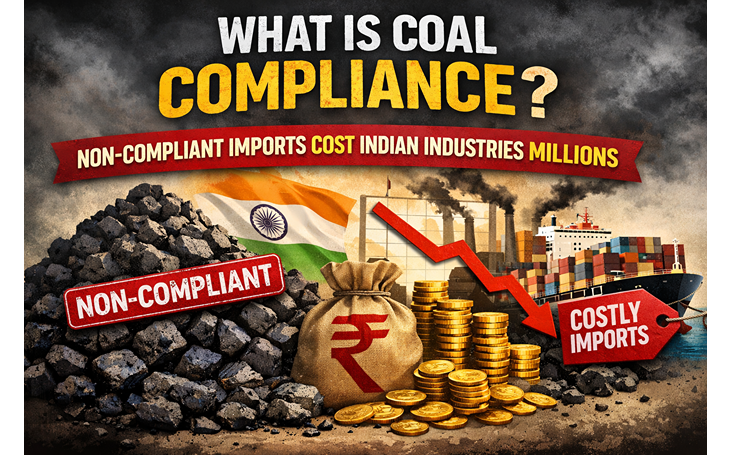
What Is Coal Compliance and Why Non Compliant Imports Cost Indian Industries Millions
Many industries in India, including power plants, steel manufacturers, and cement units, depend on coal as a critical input. While businesses focus heavily on price and supply, coal compliance is often overlooked. This oversight can be costly. Non compliant coal imports lead to financial losses running into millions due to penalties, delays, and operational disruptions. Understanding coal compliance and its impact is essential for every coal importer and consumer.
What Is Coal Compliance?
Coal compliance refers to adhering to all laws, regulations, and standards governing the sourcing, import, handling, and use of coal. In India, this includes rules set by customs authorities, the Ministry of Coal, environmental agencies, and port authorities.
Compliance covers several aspects such as correct coal classification, quality declaration, proper documentation, environmental clearances, and timely regulatory reporting. Each stage of the coal supply chain is monitored to ensure transparency, safety, and environmental protection.
Why Coal Import Compliance Is So Important
Imported coal must meet Indian regulatory standards before it can be cleared and used. Even small errors in documentation or quality declarations can trigger inspections, delays, or rejections at ports.
Customs authorities verify coal grade, calorific value, ash content, and declared price. If test results do not match the declared details, shipments can be held for reassessment. This often results in additional duties, penalties, and storage charges.
For industries that depend on uninterrupted coal supply, such delays can disrupt production schedules and lead to revenue losses.
How Non Compliant Imports Cost Millions
Non compliant coal imports affect businesses in several costly ways.
First, there are direct financial penalties. Incorrect classification or under declaration can attract heavy fines and higher customs duties.
Second, demurrage and detention charges at ports can quickly escalate. Coal shipments held for inspection or re testing may remain stuck for weeks, leading to significant logistics costs.
Third, production losses are a major concern. Power plants, cement units, and steel mills cannot afford fuel shortages. Even a short disruption can result in shutdowns, contractual penalties, and loss of market share.
Finally, repeated non compliance can damage a company’s credibility with regulators, increasing scrutiny on future shipments.
Common Causes of Non Compliance
Many coal importers face challenges due to frequent regulatory changes and complex procedures. Common issues include incomplete documentation, incorrect HS codes, mismatch between supplier certificates and test results, and lack of understanding of Indian compliance requirements.
Relying solely on overseas suppliers for compliance information often increases risk, as foreign standards may not fully align with Indian regulations.
The Value of Professional Compliance Support
Given the high stakes, professional coal compliance management is no longer optional. Expert support helps businesses identify risks before shipments arrive, ensuring all regulatory requirements are met.
This is where Gsinfotechvis plays an important role.
How Gsinfotechvis Helps Indian Industries
Gsinfotechvis provides specialized compliance and advisory services for coal imports and domestic coal operations. Their team assists with documentation review, regulatory reporting, customs coordination, and audit readiness.
By working with Gsinfotechvis, companies can reduce delays, avoid penalties, and ensure smooth clearance of coal shipments. Their practical approach and strong understanding of Indian coal regulations help businesses protect their margins and maintain operational continuity.
Conclusion
Coal compliance is a critical factor in the success of Indian industries that rely on imported coal. Non compliant imports can cost millions through penalties, delays, and lost production. By understanding compliance requirements and partnering with experienced professionals like
Gsinfotechvis, businesses can minimize risks and secure a stable, compliant coal supply chain.
Check us out on
LinkedIn.