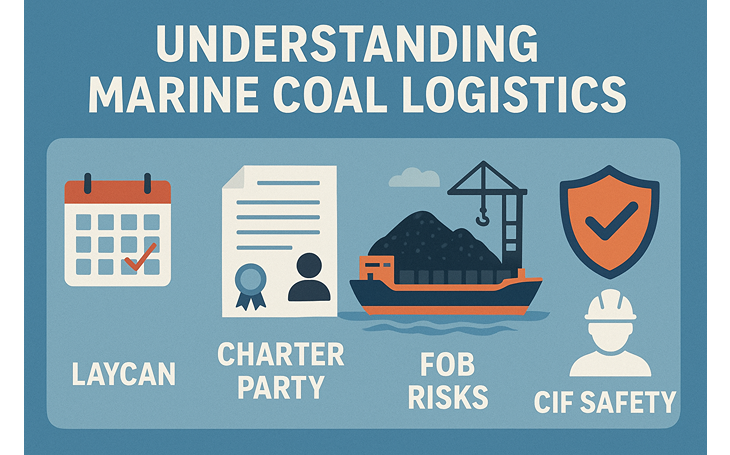
Understanding Marine Coal Logistics: Laycan, Charter Party, FOB Risks, CIF Safety
Marine coal logistics is a complex process that involves more than just shipping coal from point A to point B. For businesses like Gsinfotechvis, understanding terms like Laycan, Charter Party, and Incoterms such as FOB and CIF is crucial to ensure smooth operations, cost efficiency, and risk management.
What is Laycan and Why It Matters
Laycan, short for Laydays and Cancelling, refers to the specific time window during which a vessel must arrive at the loading port to start the coal shipment. For coal suppliers and buyers, this is critical because delays can lead to penalties or rescheduling costs. For example, Gsinfotechvis coordinates with shipping companies to ensure coal shipments meet the Laycan period, preventing disruptions in supply chains.
The Role of Charter Party in Coal Shipping
A Charter Party is a legal agreement between the shipowner and the charterer for transporting coal. It outlines key details like freight rates, vessel type, loading and discharge ports, and responsibilities. By using a well drafted Charter Party, companies like Gsinfotechvis ensure that all parties understand their obligations, reducing disputes and unexpected costs during marine coal logistics.
FOB (Free on Board) Risks in Coal Logistics
FOB is a widely used Incoterm in coal shipping. Under FOB, the seller’s responsibility ends when coal is loaded onto the vessel at the port of origin. This means risks such as damage or loss during transit are transferred to the buyer once the cargo is on board. For instance, if Gsinfotechvis supplies coal under FOB terms, buyers must arrange insurance and take precautions against transportation risks. While FOB can reduce seller liability, it shifts significant responsibility to the buyer, which must be managed carefully.
CIF (Cost, Insurance, and Freight) and Safety Advantages
CIF, on the other hand, offers a higher level of security for buyers. Under CIF terms, the seller not only arranges transport but also provides insurance for the coal during its sea voyage. This makes it a safer choice for buyers who want minimal risk exposure. Gsinfotechvis often uses CIF terms for clients new to coal imports or those shipping to distant ports, ensuring the cargo reaches safely while providing coverage against potential losses.
Choosing the Right Incoterm
Selecting between FOB and CIF depends on the buyer’s priorities. Buyers comfortable handling insurance and logistics may prefer FOB for cost savings, while those seeking safer, hassle free shipping often choose CIF. For suppliers like Gsinfotechvis, understanding these dynamics helps tailor services to client needs, ensuring trust and reliability in every coal shipment.
Optimizing Coal Supply Chains
Beyond Incoterms, efficient marine coal logistics requires coordination of vessels, ports, and timing. Adhering to Laycan schedules, drafting clear Charter Parties, and understanding FOB and CIF responsibilities ensures the coal supply chain remains uninterrupted. Companies that master these elements can reduce costs, minimize risks, and deliver consistent quality, which is why Gsinfotechvis focuses on integrating logistics expertise with client requirements.
Final Thoughts
Marine coal logistics is more than moving cargo. It is about managing time, risk, and agreements effectively. By understanding Laycan, Charter Party, and Incoterms like FOB and CIF, businesses can navigate international coal shipping with confidence. For suppliers and buyers alike, mastering these elements ensures safe, timely, and cost effective coal delivery.
Check us out on LinkedIn.