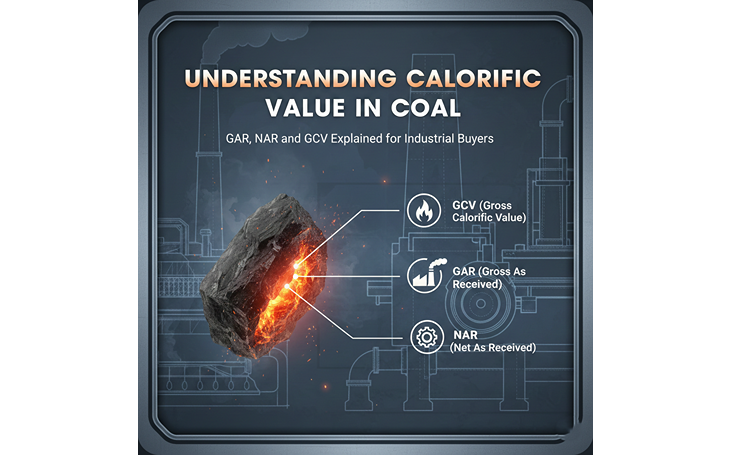
Understanding Calorific Value in Coal: GAR, NAR and GCV Explained for Industrial Buyers
Coal is still one of the most important fuels for industries across India. Power plants, cement factories, textile mills and manufacturing units depend on coal to generate heat and steam. But to choose the right coal for their operations, buyers must understand one key factor: calorific value.
Calorific value determines how much energy coal can produce. The higher the value, the more heat it generates. This makes it the most important parameter for selecting the correct coal grade. In this guide, we break down the meaning of calorific value and explain common measurement terms like GAR, NAR and GCV.
What Is Calorific Value in Coal?
Calorific value tells us how much energy coal releases when it is burned. It is measured in kcal per kg. The higher the value, the more energy the coal produces.
This matters because:
◾ High calorific coal produces more heat
◾ Boilers run more efficiently
◾ Fuel consumption decreases
◾ Operating costs stay under control
For industries that run high temperature processes, selecting the right calorific value is essential for smooth performance.
Difference Between GAR, NAR and GCV
These three terms often confuse buyers. Each one measures calorific value but under different conditions.
1. GCV: Gross Calorific Value
GCV is the total energy contained in the coal. It measures heat produced when coal is burned along with the heat released when moisture condenses.
GCV is the highest calorific value among the three measurements because it includes all heat components.
2. GAR: Gross As Received
GAR measures the energy in coal as it is received, along with the moisture present at that point in time. It is closer to real life performance because no coal is completely dry when delivered.
Industries prefer GAR because it reflects the actual heat output they can expect in their boilers.
3. NAR: Net As Received
NAR is the most practical value for industrial use. It subtracts the heat lost due to moisture and hydrogen content. This means NAR gives a realistic picture of how much usable energy the coal will actually produce.
In simple terms:
◾ GCV is the theoretical maximum
◾ GAR is practical but includes some moisture
◾ NAR is the most accurate measure of real performance
Why Calorific Value Matters for Industries
Different industries need different levels of heat. Using coal with the wrong calorific value can lead to inefficiencies, unstable temperatures and higher fuel usage.
For Power Plants
Power plants need consistent heat release. High calorific coal ensures steady steam generation and better boiler performance.
For Cement Plants
Cement kilns require uniform burning. Medium to high GAR values help maintain steady flame temperatures.
For Manufacturing and Process Industries
Textile, paper, chemical and food units depend on controlled heating. Choosing the right calorific value keeps production stable and reduces downtime.
How Industries Choose the Right Coal Grade
Selecting the correct coal grade depends on:
1. Boiler Capacity
Each boiler is designed for specific calorific ranges. Using coal outside that range can reduce efficiency.
2. Production Requirements
Industries with high energy demand prefer higher GAR or NAR values.
3. Cost Balance
Low calorific coal is cheaper but requires higher volumes. High calorific coal is more efficient but costs more upfront.
4. Emission Standards
Lower ash and sulphur are often found in higher grade imported coal, helping industries meet environmental norms.
Typical Calorific Ranges for Industrial Coal
Gsinfotechvis supplies coal in a wide range of grades that industrial buyers commonly use, including:
◾ 4200 GAR
◾ 4500 GAR
◾ 5000 GAR
◾ 5500 GAR
◾ 6000 GAR
◾ Up to 7500 GAR or NAR depending on requirement
These grades cover everything from cost sensitive operations to high temperature industrial processes.
How Gsinfotechvis Ensures Accurate Calorific Value
While this blog focuses on education rather than promotion, it is important to understand the role of a reliable supply partner. To ensure industries get the correct calorific value, Gsinfotechvis follows:
◾ Third party inspection through SGS or Intertek
◾ Q and Q checks before shipment
◾ Verified supplier sourcing
◾ Clear documentation with GAR and NAR values
◾ Port inspection on arrival if required
This ensures the coal delivered matches the grade that was ordered.
Final Thoughts
Calorific value is the most important factor when selecting coal for industrial use. Understanding GCV, GAR and NAR helps buyers choose fuel that delivers the right heat output, improves efficiency and supports stable production.
With the right knowledge and a dependable sourcing strategy, industries can avoid mismatched grades and keep their operations running at peak performance.
Check us out on LinkedIn.