Thermal Coal: What Is Thermal Coal? Properties, Grades, and Why It Powers India’s Industries
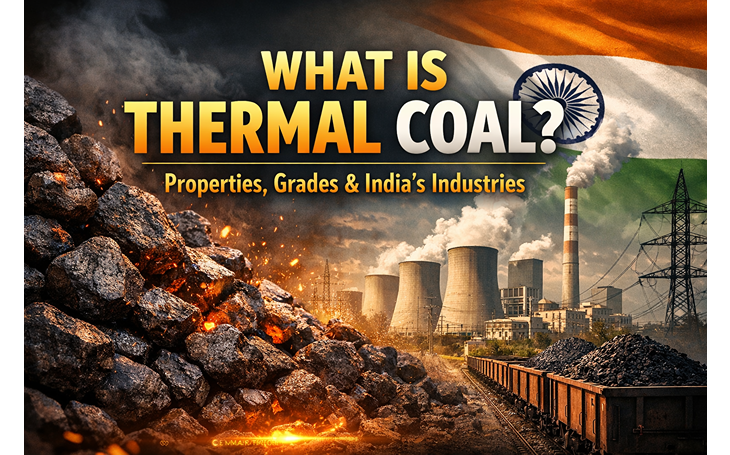
Thermal coal, also known as steam coal, plays a crucial role in meeting India’s growing energy needs. Despite the global shift toward renewable energy, thermal coal remains the backbone of power generation and several industrial processes in the country. Understanding what thermal coal is, its properties, grades, and why it is so important to India helps explain its continued relevance.
What Is Thermal Coal?
Thermal coal is a type of coal mainly used to produce electricity and heat. When burned in power plants, it generates steam that drives turbines to produce electricity. Unlike metallurgical coal, which is used in steelmaking, thermal coal is valued for its ability to burn efficiently and release energy.
In India, thermal coal fuels the majority of coal-based power plants and supports industries such as cement, textiles, paper, and brick manufacturing. Its wide availability and relatively low cost make it a reliable energy source.
Key Properties of Thermal Coal
The usefulness of thermal coal depends on a few important properties. These properties determine how much energy the coal can produce and how cleanly it burns.
1. Calorific Value
This refers to the amount of heat energy released when coal is burned. Higher calorific value means more power generation from the same quantity of coal.
2. Moisture Content
Moisture reduces the heating value of coal. Lower moisture content is preferred because it improves combustion efficiency.
3. Ash Content
Ash is the residue left after burning coal. Lower ash content is desirable as it reduces waste handling and improves plant performance.
4. Volatile Matter
This determines how easily coal ignites and burns. Thermal coal generally has moderate to high volatile matter, making it suitable for power generation.
5. Sulfur Content
Low sulfur coal is preferred because it reduces air pollution and damage to equipment.
Grades of Thermal Coal
Thermal coal is classified into different grades based on its calorific value. In India, coal grades are commonly defined by the heat energy they produce, measured in kilocalories per kilogram.
◾ High Grade Thermal Coal
This has a higher calorific value and lower ash content. It is more efficient and often used in large power plants.
◾ Medium Grade Thermal Coal
Widely used in industrial boilers and mid-sized power plants. It offers a balance between cost and efficiency.
◾ Low Grade Thermal Coal
This coal has higher ash and lower energy content. It is mainly used in plants designed to handle such coal, especially near mining areas to reduce transport costs.
Why Thermal Coal Powers India’s Industries
India is one of the largest consumers of thermal coal in the world. Several factors explain its importance.
First, coal-based power plants supply more than half of India’s electricity. Thermal coal provides stable and continuous power, which is essential for industries and urban infrastructure.
Second, India has large domestic coal reserves. This reduces dependence on expensive energy imports and supports energy security.
Third, thermal coal is cost-effective. For many industries, coal remains cheaper than alternative fuels, especially for large-scale operations.
Finally, thermal coal supports employment and regional development. Coal mining and related industries provide jobs and contribute to the economy in several states.
The Road Ahead
While renewable energy is growing rapidly in India, thermal coal will continue to play a major role in the near future. Efforts are being made to improve efficiency, reduce emissions, and adopt cleaner coal technologies.
In summary, thermal coal remains a vital energy source for India. Its properties, flexible grades, and economic advantages explain why it continues to power industries and support the country’s development. Get more insights on Gsinfotechvis.
Know more about us on LinkedIn.