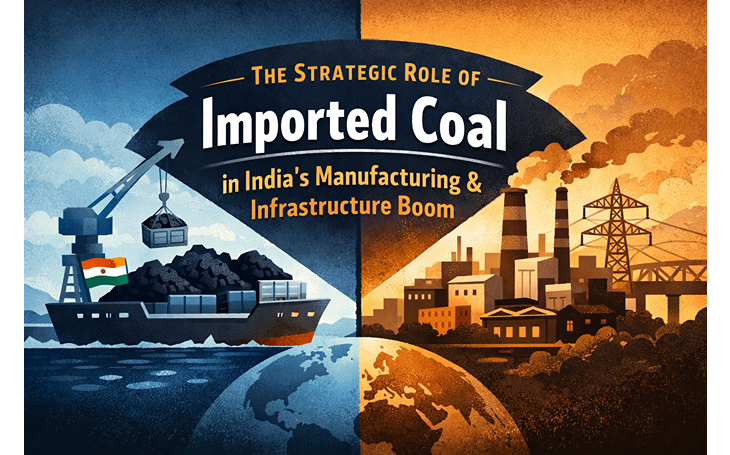
The Strategic Role of Imported Coal in India’s Manufacturing & Infrastructure Boom
India’s manufacturing and infrastructure sectors are expanding at an unprecedented pace. Large scale investments in power generation, steel, cement, roads, railways, and urban development are driving strong demand for energy and raw materials. In this growth story, coal continues to play a critical role. While domestic coal production has increased significantly, imported coal remains a strategic requirement for many industries to ensure consistency, quality, and operational stability.
Why Coal Still Matters for Industrial Growth
Coal is a foundational input for power plants, steel mills, cement factories, and other heavy industries. These sectors form the backbone of India’s infrastructure boom. Reliable energy supply and predictable fuel quality are essential to maintain production schedules, control costs, and meet project timelines.
Although renewable energy is growing rapidly, it cannot yet fully replace coal for base load power and industrial processes. As a result, coal continues to support both manufacturing output and infrastructure development.
Limitations of Domestic Coal
India has made strong progress in boosting domestic coal production. However, domestic coal has certain limitations. Variations in quality, higher ash content, and logistical constraints can affect plant performance, especially for industries that require specific coal characteristics.
For sectors like steel and cement, fuel consistency is more important than just volume. Fluctuations in coal quality can reduce efficiency, increase maintenance needs, and raise overall production costs. This is where imported coal plays a strategic role.
Why Imported Coal Is Strategically Important
Imported coal offers more predictable quality and specific grades that are often not available in sufficient quantities domestically. Lower ash content, higher calorific value, and stable specifications help industries run plants more efficiently.
For power plants, blending imported coal with domestic coal improves combustion efficiency and reduces unplanned shutdowns. For steel manufacturers, imported coking coal is essential for producing high quality steel required for infrastructure projects. Cement plants also rely on imported coal to maintain kiln stability and control energy costs.
In short, imported coal is not a substitute for domestic coal but a complement that enhances performance and reliability.
Supporting Infrastructure Timelines
Infrastructure projects operate on tight schedules and budgets. Any disruption in fuel supply can delay project execution and increase costs. Imported coal helps reduce supply risk by diversifying sourcing options.
When domestic supply faces bottlenecks due to transportation issues or seasonal constraints, imported coal ensures continuity. This reliability is critical for large infrastructure projects where downtime has cascading effects across supply chains.
Managing Cost and Compliance Challenges
While imported coal offers clear advantages, it also comes with challenges. Price volatility, logistics coordination, customs clearance, and regulatory compliance require careful management. Poor planning or documentation errors can lead to port delays, penalties, and unexpected costs.
This makes professional support and structured processes essential for businesses that rely on imported coal as part of their fuel strategy.
How Gsinfotechvis Adds Strategic Value
Gsinfotechvis supports Indian manufacturers and infrastructure companies in managing imported coal efficiently and compliantly. Their services cover procurement advisory, quality verification, documentation review, and regulatory compliance.
By working with Gsinfotechvis, companies can align imported coal sourcing with operational needs and compliance requirements. This helps reduce risk, control costs, and ensure uninterrupted fuel supply for critical projects.
Conclusion
Imported coal plays a strategic role in India’s manufacturing and infrastructure boom. It provides quality consistency, supply stability, and operational efficiency that domestic coal alone cannot always deliver. As India continues to build at scale, a balanced approach that combines domestic production with well managed imports will remain essential. With expert guidance from Gsinfotechvis, businesses can leverage imported coal as a strategic advantage while staying compliant and cost effective in a complex regulatory environment.
Check us out on LinkedIn.