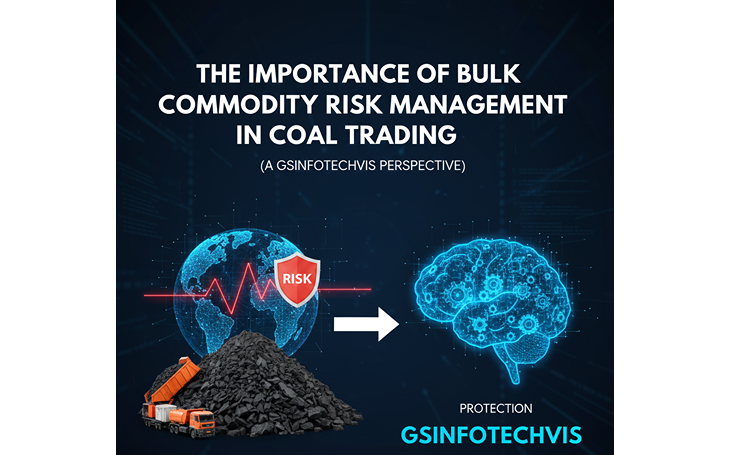
The Importance of Bulk Commodity Risk Management in Coal Trading (A Gsinfotechvis Perspective)
Coal trading is one of the most complex segments of the global commodity market. Prices shift, logistics change, inspections vary and regulations evolve. For industrial buyers, these variables can introduce uncertainty that affects supply, cost and production schedules. This is why risk management is not optional in coal trading. It is essential.
In this blog, we explore the key elements of risk management in bulk coal trading and how structured practices help buyers secure reliable and safe deliveries. The aim is to educate industrial users on how risk is reduced through clear processes, compliance and performance controls.
Why Risk Management Matters in Coal Trading
Coal moves across international waters, through multiple handling points and under strict financial terms. Without proper risk controls, buyers may face:
◾ Quality disputes
◾ Vessel delays
◾ Demurrage charges
◾ Financial exposure
◾ Documentation errors
◾ Compliance issues
A strong risk management system helps prevent these disruptions and ensures that industrial operations run without interruption.
Risk Transfer Through Structured Contracts
The first layer of protection begins with clear contracts. In coal trading, risk must be allocated fairly between buyer and seller.
Structured Sales and Purchase Agreements outline:
◾ Specifications
◾ Payment terms
◾ Delivery responsibilities
◾ Inspection rules
◾ Penalties for non performance
These clauses provide clarity and transfer specific risks to the correct party. For example, if a delay is caused by the supplier during loading, the responsibility for costs may shift away from the buyer.
Performance Bonds for Security
Performance bonds act as financial guarantees. They protect the buyer if the supplier fails to meet contract requirements. The bond ensures that:
◾ Quality is maintained
◾ Delivery timelines are respected
◾ Contract obligations are met
Performance bonds give industrial buyers confidence that the supplier is committed and capable.
Quality Control to Avoid Operational Interruptions
Coal quality is one of the biggest risk factors. Incorrect calorific value, high ash or moisture can affect boilers, slow production or increase fuel consumption.
Quality control reduces this risk by including:
◾ Third party inspection through SGS or Intertek
◾ Lab analysis at the loading port
◾ Independent weight verification
◾ Final checks at the discharge port if required
These checks confirm that the coal delivered matches the specifications agreed in the agreement. For industries, this means fewer operational surprises.
Managing Demurrage and Logistics Delays
Delays at ports can lead to demurrage charges, which increase costs and disrupt schedules. One of the most important risk management strategies is preventing demurrage before it occurs.
This is achieved through:
◾ Advance vessel booking
◾ Accurate documentation
◾ Real time shipment tracking
◾ Supplier accountability through anti demurrage clauses
◾ Smooth coordination with port operators
By keeping vessels moving on schedule, buyers avoid heavy charges and maintain consistent fuel supply.
Compliance Protocols for Safer and Cleaner Operations
Coal trading involves international regulations that protect workers, the environment and the supply chain.
Common compliance protocols include:
◾ MSDS documentation for safe handling
◾ OSHA and SMCRA aligned safety practices
◾ Clean Water Act compliance at mining and handling sites
◾ ESG screening for responsible sourcing
◾ Customs and port clearance requirements
Following these protocols helps avoid legal delays, safety risks and shipment blocks.
Financial Documentation and Banking Risk Reduction
Coal contracts involve large payments. To protect both parties, secure financial instruments are used, such as:
◾ Letters of Credit LC
◾ Standby Letters of Credit SBLC
◾ Bank Comfort Letters BCL
◾ RWA confirmations
These instruments reduce financial risk by ensuring payments are released only when contract terms are met.
A Gsinfotechvis Perspective on Risk Control
While the focus of this blog is educational, it is useful to understand how organized traders handle risk. Gsinfotechvis follows a multilayer system that includes:
◾ Verified supplier networks
◾ Detailed agreement structuring
◾ Strong compliance checks
◾ Q and Q inspections
◾ Demurrage control
◾ Transparent communication
◾ Verified logistics partners
This approach reduces uncertainty and helps industries operate without interruptions.
Final Thoughts
Bulk commodity risk management is the backbone of reliable coal trading. By using structured contracts, quality checks, compliance protocols and financial safeguards, industries can protect themselves from delays, disputes and unexpected costs.
For buyers, understanding these risk management layers helps in choosing the right suppliers and planning operations with greater confidence.
Check us out on LinkedIn.