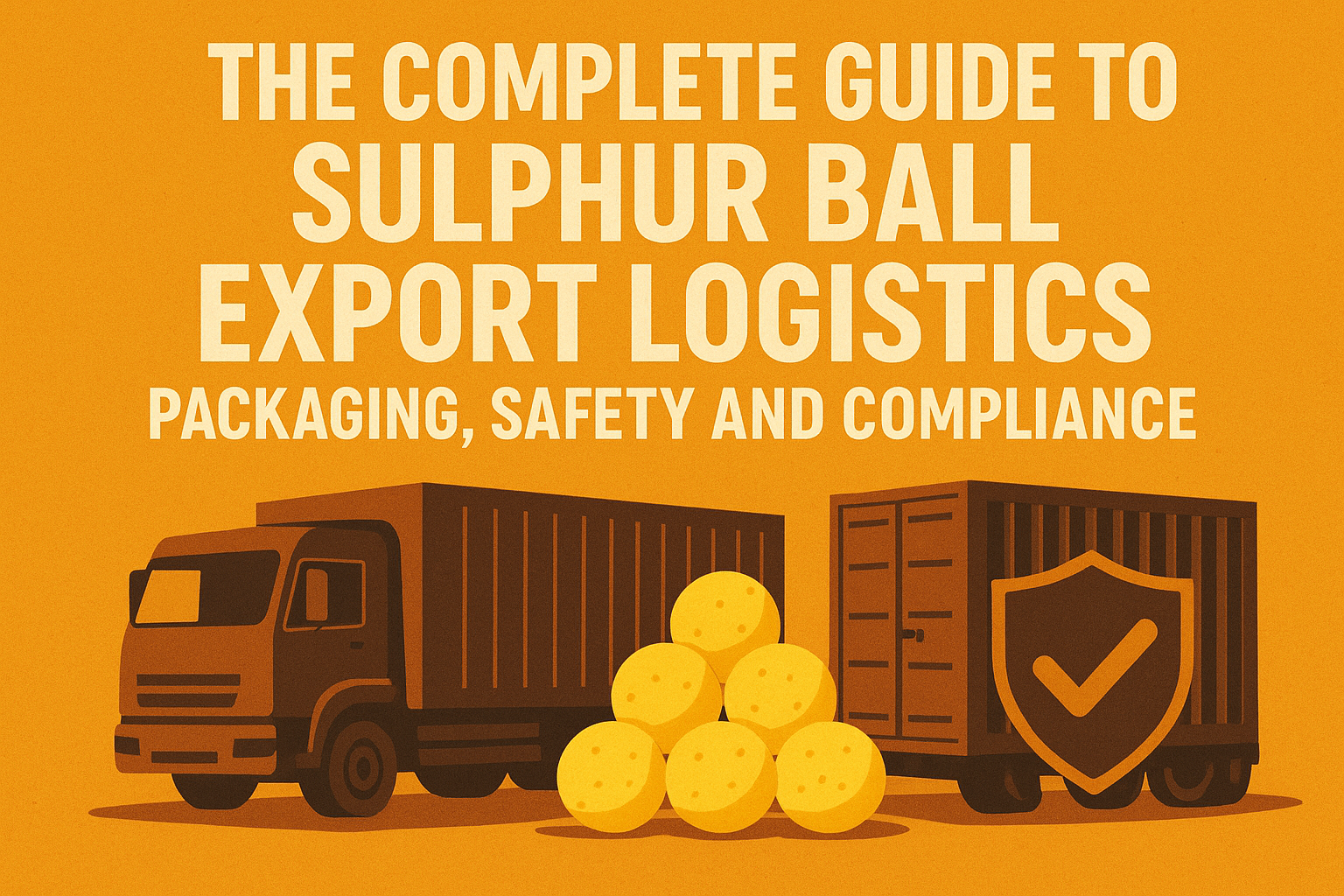
The Complete Guide to Sulphur Ball Export Logistics: Packaging, Safety and Compliance
Exporting sulphur balls requires far more than loading cargo into a container. Because sulphur is a reactive material and classified under specific international transport rules, exporters must follow strict safety, packaging and documentation standards. For buyers and logistics teams, understanding these requirements ensures smooth, compliant and delay free shipments.
This guide explains how sulphur balls are handled, packed and shipped across international borders, along with key regulations like MSDS, IMDG and IMO that safeguard the transport process.
Why Export Logistics Matter in Sulphur Trade
Sulphur balls are widely used in fertilizers, chemicals and industrial applications. Buyers expect clean, dry and consistent product quality. Logistics plays a key role in:
◾ Protecting product purity
◾ Preventing contamination
◾ Avoiding moisture exposure
◾ Ensuring safe global transport
◾ Meeting customs and compliance rules
Proper sulphur logistics reduces operational risks and ensures a safe supply chain for both exporters and end users.
1. Packaging Standards for Sulphur Balls
Packaging determines how safely sulphur moves from storage areas to ships and across international routes.
Jumbo Bags (1 MT or 1.2 MT)
The most common packaging method. Jumbo bags offer:
◾ High durability
◾ Moisture protection
◾ Stackability for bulk storage
◾ Easy container loading
Jumbo bags usually include inner liners to keep sulphur dry and dust free.
Bulk Shipments
Used for very large export volumes. Bulk handling requires:
◾ Clean, dry vessel holds
◾ Proper lining
◾ Controlled loading systems
Bulk shipping is cost effective but requires strict moisture control.
Containerized Shipments (20 FT or 40 FT)
Containers are used when buyers need smaller volumes or cleaner handling. Benefits include:
◾ Reduced contamination
◾ Safer storage
◾ Better protection from weather
Container shipments are also easier to track and manage for long distance routes.
2. Mandatory Safety Documentation
Transporting sulphur requires accurate documentation to comply with global safety rules. The most important document is the Material Safety Data Sheet (MSDS).
MSDS Includes
◾ Chemical identity
◾ Hazard information
◾ Handling instructions
◾ Fire control methods
◾ First aid details
◾ Storage guidelines
Customs officers, port authorities and vessel operators rely on MSDS documentation to ensure proper safety measures along the transport route.
3. Compliance with IMDG and IMO Regulations
Sulphur falls under hazardous cargo classifications. Exporters must follow maritime transport rules approved by the International Maritime Organization (IMO).
IMDG Code Requirements
The International Maritime Dangerous Goods (IMDG) Code defines:
◾ Packaging guidelines
◾ Labeling and hazard marking
◾ Stowage requirements
◾ Fire safety measures
◾ Emergency response procedures
Sulphur is typically listed under Class 4.1 for flammable solids. Improper declaration can lead to port delays or vessel rejection.
Why Compliance Matters
◾ Prevents safety incidents
◾ Ensures insurance validity
◾ Avoids penalties from port authorities
◾ Reduces shipping delays
Buyers and exporters both benefit from strict adherence to IMDG and IMO standards.
4. Safe Handling Rules During Loading and Transport
Sulphur’s reactive properties require careful handling at every stage. Key best practices include:
◾ Keeping sulphur away from moisture
◾ Preventing contact with strong oxidizers
◾ Using clean, dry loading equipment
◾ Avoiding sparks or ignition sources
◾ Maintaining proper ventilation in containers or vessel holds
Temperature and humidity conditions are monitored during loading to avoid chemical instability.
5. Export Documentation for Smooth Trade
International sulphur shipments require a complete set of documents for customs clearance and port acceptance.
Common export documents include:
◾ Commercial invoice
◾ Packing list
◾ Certificate of origin
◾ MSDS
◾ Inspection report (SGS or equivalent)
◾ Bill of lading
◾ Export permits
Accurate documentation ensures faster customs processing and reduces risks of shipment delays.
6. How Gsinfotechvis Supports Safe and Reliable Sulphur Exports
While this article focuses on education, it is helpful to know how organized exporters manage sulphur shipments effectively. Gsinfotechvis supports buyers through:
◾ Sourcing high purity refinery grade sulphur
◾ Verified and safe packaging in jumbo bags
◾ Compliance with IMDG and IMO rules
◾ Full MSDS support
◾ Third party inspection for quality
◾ Smooth coordination across ports and shipping lines
This reduces logistical risks and ensures that sulphur arrives clean, dry and fully compliant.
Final Thoughts
Sulphur ball export logistics combine packaging, safety standards, marine regulations and detailed documentation. From jumbo bags to container shipments, each step must follow strict rules to ensure safe global transport. With proper handling and compliance, industries receive high purity sulphur that supports fertilizer production, chemical processing and large scale manufacturing.
Check us out on LinkedIn.