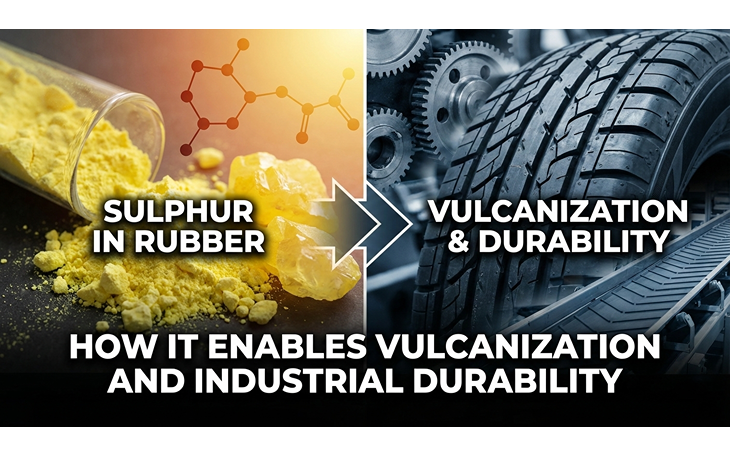
Sulphur in Rubber: How It Enables Vulcanization and Industrial Durability
Rubber is flexible by nature, but pure natural rubber is surprisingly weak. It softens in heat, cracks under stress and wears out quickly. One transformation changed this material forever. When rubber is combined with sulphur and heated, it becomes stronger, elastic and resistant to abrasion. This process is called vulcanization, and it is the backbone of modern rubber manufacturing.
Whether it is a car tire, a conveyor belt or an industrial hose, sulphur is the quiet ingredient that makes rubber durable.
What Vulcanization Really Does
Rubber consists of long molecular chains. These chains slide past one another under pressure. That is why raw rubber stretches easily and cannot hold shape. Vulcanization links these chains together. When sulphur is heated with rubber, the sulphur atoms form bridges between polymer chains. These bridges create a stable network that behaves more like engineered material than a simple plant extract.
The result is impressive. Rubber becomes elastic, returns to its shape, resists tearing and handles higher temperatures. This crosslinking effect is the reason the industrial world can rely on rubber for heavy duty applications.
How Sulphur Works Inside the Rubber
Sulphur does not sit like filler. It chemically reacts with rubber molecules during curing. The number of sulphur bridges determines the properties of the final product. More sulphur creates harder, more heat resistant rubber. Less sulphur produces softer and more flexible rubber.
This balance gives manufacturers control. They can tailor rubber for different uses. Tires need a mix of strength and flexibility. Transport belts require toughness and low wear. Medical equipment needs controlled elasticity. Every one of these outcomes starts with sulphur.
Why Purity Matters for Vulcanization Consistency
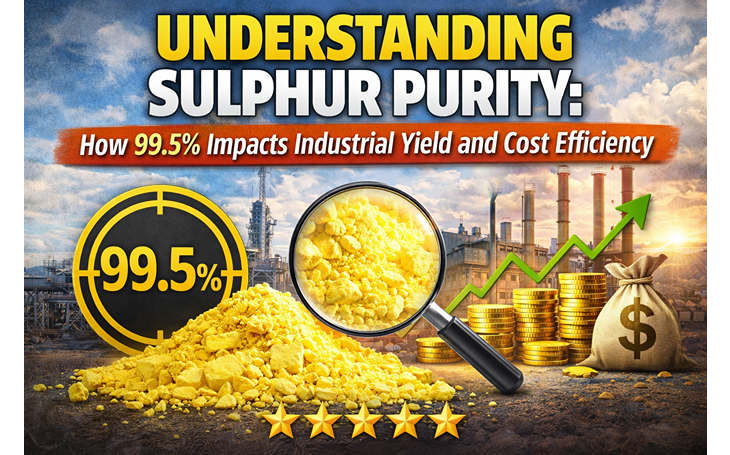
Rubber plants do not simply accept any sulphur. They prefer high purity sulphur with minimal contaminants. Refinery grade sulphur, typically around 99.5 percent purity, gives predictable curing behavior. The sulphur melts evenly, reacts cleanly and does not introduce metals, ash or moisture into the mix.
Impurities interfere with crosslinking. Mineral residue or clay particles act like barriers during the reaction. Instead of forming smooth sulphur bridges, the polymer chains become fragmented. This leads to weak spots, premature cracking and sudden structural failure. For a tire, that means reduced mileage and heat buildup. For a belt, it means early tear and unplanned shutdowns.
Rubber engineers want reliability. High purity sulphur lets them design products that behave the same way every time.
Industrial Performance Starts With Stable Inputs
Rubber manufacturing is sensitive to temperature and timing. A small deviation during curing can make a batch unusable. When sulphur purity varies, factories lose their reference point. They must adjust curing time, temperature and chemical accelerators. This increases energy consumption and wastes labor hours.
Refinery sulphur keeps these variables in check. Plants get predictable crosslink ratios and consistent elasticity. Production flows smoothly and quality stays constant from batch to batch. Lower scrap rates and fewer customer complaints translate directly into cost efficiency.
Safety and Long Term Durability
The durability of rubber affects worker safety, especially in mining, heavy machinery and industrial transport. Hoses and seals carry fuels, chemicals and compressed fluids under pressure. A single weak vulcanization point can trigger leakage or rupture. This risk multiplies when rubber products are exposed to heat, vibration and cyclic stress.
Strong crosslinks reduce those risks. Rubber treated with clean sulphur maintains structural integrity even when exposed to harsh conditions. It resists swelling, cracking and corrosion. This stability is why sulphur based vulcanization has remained the standard for more than a century.
Sulphur Remains Essential Despite New Materials
The rise of synthetics and composite materials has not replaced sulphur’s role. Most modern elastomers still rely on sulphur curing. Even hybrid blends, such as rubber mixed with polymers, need sulphur to maintain flexibility and endurance. Industries keep returning to sulphur because it delivers predictable performance at scale.
Final Thoughts
Rubber vulcanization is a simple idea with enormous industrial impact. Sulphur changes rubber from a weak natural substance into a resilient engineering material. The secret is purity. High grade sulphur produces uniform bonds, consistent curing and dependable strength. For factories that rely on long service life and high reliability, choosing quality sulphur is not optional. It is the foundation of safe and durable rubber products. Get more insights on Gsinfotechvis.
Check us out on LinkedIn.