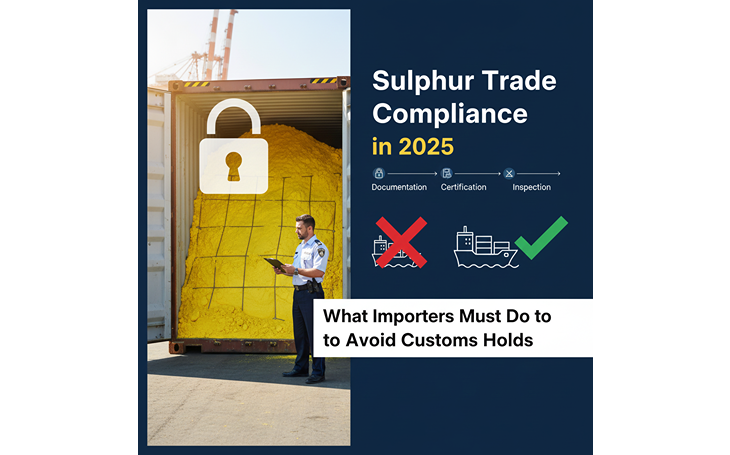
Sulphur Trade Compliance in 2025: What Importers Must Do to Avoid Customs Holds
Moving sulphur across borders looks simple on paper. A buyer signs an agreement, a supplier ships the cargo, and a vessel delivers it. In reality, sulphur is a regulated material. It is a combustible solid and is categorized for hazardous transport. A single missing document can hold a shipment for weeks. In 2025, international trade rules are becoming stricter, which means importers must understand compliance before the cargo ever leaves the port of origin.
For industrial buyers, fertilizer plants and trading companies, knowing the rules prevents delays, demurrage and expensive re-export orders.
Understand Sulphur’s Hazard Classification
Raw sulphur is classified under UN 1350. It falls under Class 4.1 in the dangerous goods category because it can ignite from friction, dust buildup or heat. Many importers mistakenly treat sulphur like a bulk mineral or bentonite sulphur derivative. Customs departments do not see it that way.
This classification matters because it determines:
◾ Packaging codes
◾ Vessel type
◾ Port handling protocols
◾ Fire safety requirements
◾ Declaration formats
◾ Insurance coverage
If the cargo is incorrectly labeled or declared, customs officers can halt unloading until corrections are made. In some ports, non compliant shipments are rejected entirely.
IMDG Rules Govern Maritime Transport
The International Maritime Dangerous Goods code sets the global standard for hazardous cargo movements. Sulphur shipments must comply with it. This includes container labeling, stowage conditions and documentation.
Importers should verify:
◾ Proper Class 4.1 labeling
◾ Correct handling marks on containers
◾ Fire resistant vessel storage arrangements
◾ Ventilation instructions
◾ Temperature monitoring when necessary
Errors occur most often in labeling and stowage documentation. If a container arrives without the correct IMDG sticker, customs authorities will assume high risk and delay discharge.
HS Code Accuracy Prevents Customs Confusion
Each shipment must be declared under the correct Harmonized System code. Coding errors often lead to mismatched tariff categories, incorrect duty rates or suspicion of mis declaration.
Many new traders mistakenly use codes for sulphur based fertilizers or bentonite sulphur. Customs systems identify these discrepancies immediately. The shipment is flagged, placed in inspection mode and often held in port storage.
Correct classification reduces:
◾ Physical inspection likelihood
◾ Reassessment of invoices
◾ Unnecessary compliance audits
◾ Duty recalculation delays
Even a minor coding mistake can trigger weeks of communication between customs, carriers and importers.
Moisture, Fumigation and Contamination Rules
Some importers overlook the moisture aspect of sulphur. Humidity causes sulphur to clump, form dust and build static charge. In certain ports, clumped cargo is considered unsafe. Customs orders fumigation or denial of unloading.
In 2025, ports are increasing controls on:
◾ Bulk cargo moisture content
◾ Pest contamination
◾ Storage hygiene inside containers
◾ Ventilation conditions
If sulphur shows signs of mold or biochemical growth, it may be quarantined. A normal shipment becomes a non compliant hazardous material, and costs escalate quickly.
Container Standards and Physical Packaging
Raw sulphur is sensitive to heat, abrasion and long term vibration. Container standards help prevent ignition and quality degradation. Poor packaging is one of the top causes of customs holds.
Importers should verify:
◾ Container ventilation specifications
◾ Bulk liner quality
◾ Jumbo bag certification
◾ Anti static packaging
◾ Load distribution
◾ Pallet safety
Container collapse, torn bags or loose cargo create spills. If a port views the cargo as unsafe, they stop unloading and transfer responsibility to the importer.
Documentation That Prevents Customs Delays
Sulphur shipments must include a stack of formal documents. Missing even one can freeze clearance.
Common requirements:
◾ Material Safety Data Sheet MSDS
◾ Certificate of origin
◾ Third party quality and quantity inspection
◾ Packing list with hazard class
◾ IMDG safety declaration
◾ UN 1350 labeling list
◾ Bill of lading with cargo description
Traders who rely on suppliers to handle paperwork often overlook these items. Experienced importers ensure all documents are validated before shipment.
Why Customs Holds Destroy Margins
Customs holds are more than an inconvenience. They increase total landed cost, block cash flow and delay industrial production.
Typical impact:
◾ Demurrage fees charged per hour or per day
◾ Storage costs at terminal yards
◾ Vessel rescheduling penalties
◾ Temporary loss of inventory
◾ Downtime at fertilizer or chemical plants
For sulphur buyers, delays are worse than price fluctuations. Plants that rely on continuous feedstock cannot operate without material. Every day of waiting increases real operational losses.
How Gsinfotechvis Protects Sulphur Buyers
Gsinfotechvis Pvt Ltd manages sulphur supply with clear compliance protocols. The company works with vetted refinery producers whose cargo meets IMDG, UN 1350 and industrial safety standards. Documentation, inspection and logistics are integrated into the supply chain, so clients avoid customs surprises.
Clients benefit from:
◾ Verified MSDS and lab reports
◾ Accurate HS coding and export declarations
◾ Pre shipment inspection from SGS or Intertek
◾ Packaging that meets container safety norms
◾ Support with port clearance procedures
By the time a shipment reaches destination, risk exposure is already reduced. The goal is not just selling sulphur. It is ensuring customers receive it without unnecessary cost or delay.
If your organization depends on sulphur for fertilizer, petrochemicals or industrial applications, partnering with Gsinfotechvis keeps compliance simple and predictable. In a world of strict regulations, reliable suppliers make all the difference.
Check us out on LinkedIn.