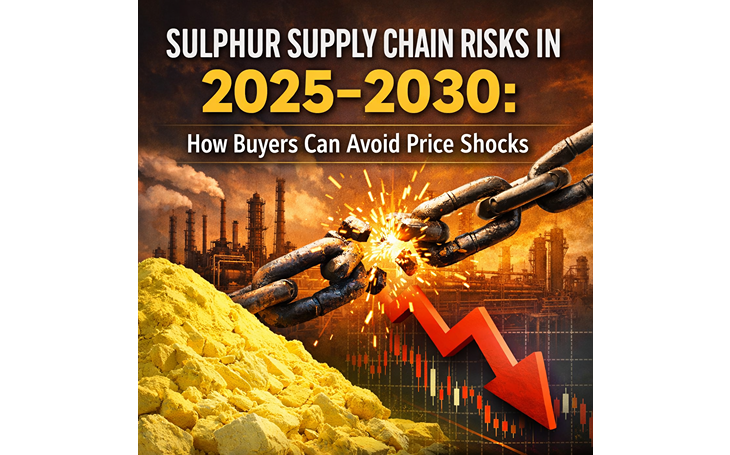
Sulphur Supply Chain Risks in 2025–2030: How Buyers Can Avoid Price Shocks
Raw sulphur is more than a simple industrial commodity. It sits at the center of fertilizer production, petrochemical manufacturing and rubber processing. Countries such as India, Bangladesh, Vietnam and Indonesia increasingly depend on sulphur imports to meet internal demand. As global supply and shipping cycles shift, buyers must understand how sulphur markets behave and what causes sudden spikes in price.
From 2025 to 2030, the sulphur supply chain will face a mix of risks driven by refinery output changes, crude oil trends, geopolitical events and logistics challenges. Businesses that plan ahead will avoid cost shocks and production delays. Those who do not will scramble for supply when it is already too late.
From 2025 to 2030, the sulphur supply chain will face a mix of risks driven by refinery output changes, crude oil trends, geopolitical events and logistics challenges. Businesses that plan ahead will avoid cost shocks and production delays. Those who do not will scramble for supply when it is already too late.
How refinery dependency affects sulphur availability
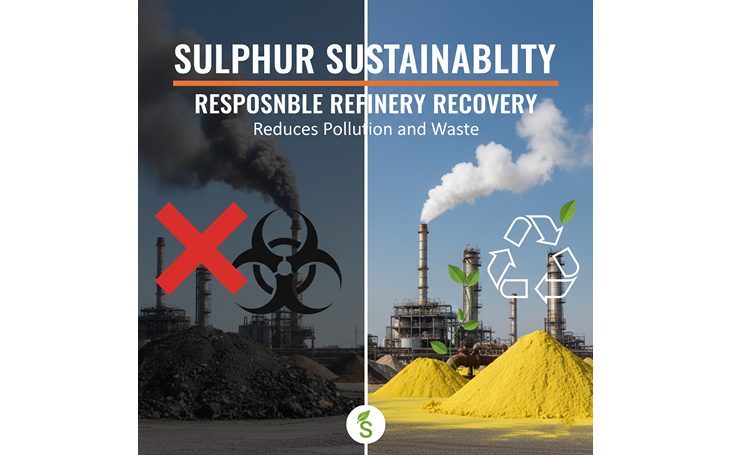
Most global sulphur is not mined. It is recovered from crude oil and natural gas during refinery desulfurization. This means sulphur supply is tied directly to refinery throughput. When refineries reduce output, sulphur production falls. When refineries switch to cleaner fuels or alternative feedstocks, sulphur yields may change again.
◾ Maintenance shutdowns
◾ Environmental compliance upgrades
◾ Supply disruptions at major crude producers
This creates a unique imbalance. Even if sulphur demand stays stable, refinery activity determines the supply base. Industrial buyers should track refinery project cycles and integrate that data into procurement planning.
Most global sulphur is not mined. It is recovered from crude oil and natural gas during refinery desulfurization. This means sulphur supply is tied directly to refinery throughput. When refineries reduce output, sulphur production falls. When refineries switch to cleaner fuels or alternative feedstocks, sulphur yields may change again.
Refinery reductions can happen due to:
◾ Decline in oil demand◾ Maintenance shutdowns
◾ Environmental compliance upgrades
◾ Supply disruptions at major crude producers
This creates a unique imbalance. Even if sulphur demand stays stable, refinery activity determines the supply base. Industrial buyers should track refinery project cycles and integrate that data into procurement planning.
Crude oil price cycles influence sulphur markets
Because sulphur originates from the oil industry, crude price cycles indirectly move sulphur pricing. When crude prices are high, refiners run at full capacity. That pushes more sulphur into the market. When crude prices fall or refineries become unprofitable, throughput drops and sulphur becomes scarce.
◾ OPEC tightening supply
◾ Maritime blockades or chokepoints
◾ Fuel policy changes in major consumer nations
A supply dip of a few million tonnes can impact fertilizer manufacturers and petrochemicals globally. Buyers need a strategy that looks beyond current quarter pricing.
Because sulphur originates from the oil industry, crude price cycles indirectly move sulphur pricing. When crude prices are high, refiners run at full capacity. That pushes more sulphur into the market. When crude prices fall or refineries become unprofitable, throughput drops and sulphur becomes scarce.
Sudden price spikes often occur at the same time as crude shocks. For example:
◾ War or sanctions in oil producing regions◾ OPEC tightening supply
◾ Maritime blockades or chokepoints
◾ Fuel policy changes in major consumer nations
A supply dip of a few million tonnes can impact fertilizer manufacturers and petrochemicals globally. Buyers need a strategy that looks beyond current quarter pricing.
Geopolitical flows shape sulphur trade routes
Refinery sulphur strongly depends on specific regions. The Gulf region, Central Asia and East Asia are key production hubs. If tensions disrupt any of them, logistics and pricing react instantly.
◾ Trade sanctions targeting shipping or commodities
◾ New export tariffs or quotas
◾ Restrictions on dual use chemical cargo
◾ Currency or banking controls affecting LC payments
Even if sulphur remains physically available, paperwork bottlenecks can slow delivery. Customs clearance delays or disrupted banking channels can stall shipments for weeks. A reliable trading partner is essential in navigating these constraints.
Refinery sulphur strongly depends on specific regions. The Gulf region, Central Asia and East Asia are key production hubs. If tensions disrupt any of them, logistics and pricing react instantly.
Geopolitical risks include:
◾ Instability in major sulphur exporters◾ Trade sanctions targeting shipping or commodities
◾ New export tariffs or quotas
◾ Restrictions on dual use chemical cargo
◾ Currency or banking controls affecting LC payments
Even if sulphur remains physically available, paperwork bottlenecks can slow delivery. Customs clearance delays or disrupted banking channels can stall shipments for weeks. A reliable trading partner is essential in navigating these constraints.
Maritime disruptions drive sudden price swings
Even when supply is adequate, the sulphur supply chain depends heavily on bulk marine transport. Port congestion, container shortages and weather events can drive unexpected spikes in freight costs.
◾ Logistics strikes
◾ Vessel availability shortages
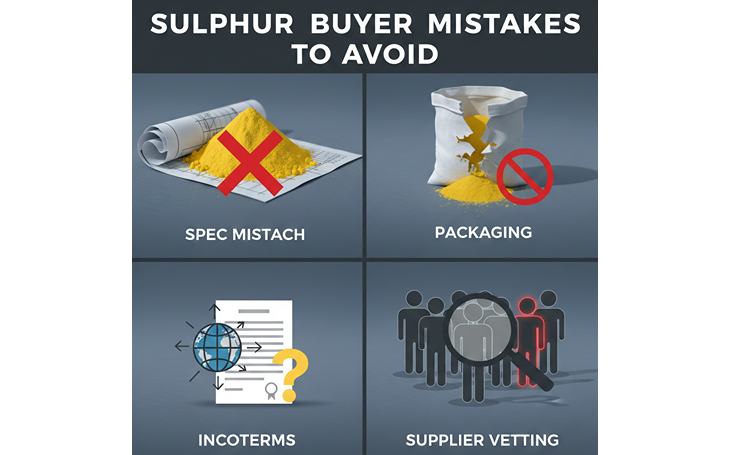
◾ Incoterm mistakes leading to buyer side cost exposure
◾ Demurrage fees due to slow port handling
Since raw sulphur is classified as dangerous goods under global transport standards, only certain vessels and ports can handle it. This increases shipping risk during global crises.
Even when supply is adequate, the sulphur supply chain depends heavily on bulk marine transport. Port congestion, container shortages and weather events can drive unexpected spikes in freight costs.
Typical risk drivers:
◾ Cyclones and monsoon disruptions◾ Logistics strikes
◾ Vessel availability shortages
◾ Incoterm mistakes leading to buyer side cost exposure
◾ Demurrage fees due to slow port handling
Since raw sulphur is classified as dangerous goods under global transport standards, only certain vessels and ports can handle it. This increases shipping risk during global crises.
Practical steps to avoid sulphur price shocks
Smart buyers do not wait for the market to stabilize. They build resilience into their procurement strategy.
◾ Secure long term supply contracts instead of spot purchases
◾ Monitor crude oil benchmarks alongside sulphur prices
◾ Choose suppliers with verified logistics infrastructure
◾ Use third party inspection reports to avoid rejection risk
◾ Store inventory buffers during low price windows
Companies that follow these approaches control their own risk instead of reacting to market panic.
Smart buyers do not wait for the market to stabilize. They build resilience into their procurement strategy.
Some proven methods:
◾ Diversify sourcing beyond a single refinery or region◾ Secure long term supply contracts instead of spot purchases
◾ Monitor crude oil benchmarks alongside sulphur prices
◾ Choose suppliers with verified logistics infrastructure
◾ Use third party inspection reports to avoid rejection risk
◾ Store inventory buffers during low price windows
Companies that follow these approaches control their own risk instead of reacting to market panic.
How Gsinfotechvis supports buyers in uncertain markets
At Gsinfotechvis Pvt Ltd, sulphur supply is treated as a mission critical commodity. The company sources raw sulphur balls from pre vetted refinery partners and verified industrial producers. Quality assurance is handled through third party labs and strict Material Safety Data Sheet compliance.
◾ Flexible packaging options including jumbo bags and containerized units
◾ End to end documentation support for customs and ports
◾ Transparency across certification, testing and shipment records
◾ Efficient shipment planning that reduces demurrage risk
A strong supplier is the best protection against price shocks. By combining quality control, logistics coordination and risk aware sourcing, Gsinfotechvis ensures buyers receive reliable sulphur supply even when markets are volatile.
At Gsinfotechvis Pvt Ltd, sulphur supply is treated as a mission critical commodity. The company sources raw sulphur balls from pre vetted refinery partners and verified industrial producers. Quality assurance is handled through third party labs and strict Material Safety Data Sheet compliance.
Buyers benefit from:
◾ Stable refinery grade sulphur purity near 99.5 percent◾ Flexible packaging options including jumbo bags and containerized units
◾ End to end documentation support for customs and ports
◾ Transparency across certification, testing and shipment records
◾ Efficient shipment planning that reduces demurrage risk
A strong supplier is the best protection against price shocks. By combining quality control, logistics coordination and risk aware sourcing, Gsinfotechvis ensures buyers receive reliable sulphur supply even when markets are volatile.
Final thoughts
The sulphur supply chain is becoming more fragile as energy systems transform and geopolitical conditions shift. From refinery dependency to maritime disruption, price shocks are inevitable. What is not inevitable is the impact those shocks have on your business.
Industrial buyers who plan ahead, monitor refinery activity and partner with dependable suppliers will maintain stable costs between 2025 and 2030. Those who rely on last minute purchases may face shortages, plant slowdowns and unpredictable price spikes.
To secure consistent sulphur supply and reduce your procurement risk, explore how Gsinfotechvis can support your operations. A stable partner makes all the difference when supply chains become uncertain.
Check us out on LinkedIn.
The sulphur supply chain is becoming more fragile as energy systems transform and geopolitical conditions shift. From refinery dependency to maritime disruption, price shocks are inevitable. What is not inevitable is the impact those shocks have on your business.
Industrial buyers who plan ahead, monitor refinery activity and partner with dependable suppliers will maintain stable costs between 2025 and 2030. Those who rely on last minute purchases may face shortages, plant slowdowns and unpredictable price spikes.
To secure consistent sulphur supply and reduce your procurement risk, explore how Gsinfotechvis can support your operations. A stable partner makes all the difference when supply chains become uncertain.
Check us out on LinkedIn.