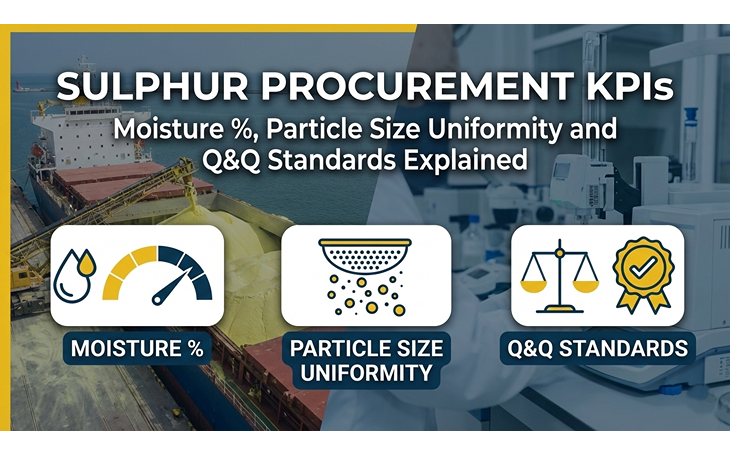
Sulphur Procurement KPIs: Moisture percentage, Particle Size Uniformity and Q&Q Standards Explained
For many industries, sulphur is not a speculative commodity. It is a core manufacturing input. Fertilizer plants, chemical processors and metal smelters run on tight schedules. One bad shipment can halt production, trigger demurrage and burn profits. This is why procurement teams track KPIs for sulphur quality. Moisture percentage, particle size uniformity and Q&Q compliance are three indicators that decide whether a shipment passes or fails. When these KPIs are measured correctly, importers protect their margins and their reputation.
Why Procurement KPIs Matter
Many buyers assume sulphur is the same no matter who ships it. In reality, two batches can have identical sulphur purity and still perform very differently. A small difference in moisture or particle shape can cause melting delays, dust build up or inconsistent reaction behavior in furnaces and sulphuric acid plants. Procurement KPIs help buyers separate cheap cargo from industrial grade supply.
KPIs also form the basis for commercial disputes. When cargo does not meet contracted specifications, penalties and claims depend on measurable inspection criteria. This is where Q&Q procedures come in.
Moisture Percentage Is the First Red Flag
Sulphur is hygroscopic. It absorbs moisture from humid containers, wet ports or unprotected stockyards. Excess moisture causes caking, clumping and oxidation. When bulk cargo arrives with moisture above the contracted tolerance, unloading becomes slow and melting becomes inefficient.
The industry typically prefers moisture levels around 0.3 to 0.5 percent for bulk sulphur. Higher percentages indicate poor packaging, improper yard storage or rain exposure. Moisture also impacts freight. Water weight increases the declared cargo tonnage, so the buyer pays for water instead of usable product.
Effects of wet sulphur include:
◾ Extended unloading times
◾ Block formation inside holds
◾ Uneven melting in sulphur burners
◾ Longer pre processing cycles
◾ Increased safety risk due to humidity and heat pockets
Importers who check moisture at origin avoid unpleasant surprises at destination.
Particle Size Uniformity Controls Handling and Processing
Sulphur can be prilled, granulated, flaked or supplied in solid balls. Buyers prefer prilled and ball sulphur because of its physical strength and predictable flow. Poorly formed particles grind into dust during transit. Dust reduces usable yield, damages conveyors and increases static ignition risk.
Uniform particle size helps:
◾ Accurate dosing in furnaces
◾ Reduced abrasion loss
◾ Consistent bulk loading and discharge
◾ Lower dust concentration in air
◾ Smooth transport through bagging machines
A shipment with mixed fines, broken granules and large lumps is a sign of weak production and weak storage discipline. Even if purity meets specification, particle variance will disrupt the user’s process.
Q&Q Standards and How SGS Determines Pass or Fail
Q&Q stands for Quantity and Quality. It is the inspection framework used by third party auditors such as SGS or Intertek. These agencies measure KPIs against the contract agreed between buyer and seller. They inspect cargo at port or refinery and certify whether the shipment matches the declared specifications.
Typical Q&Q checks include:
◾ Moisture by Karl Fischer or gravimetric method
◾ Ash and contamination presence
◾ Particle hardness
◾ Density and packing condition
◾ Visual impurity observation
◾ Weight verification using calibrated systems
If the shipment passes inspection, the certificate becomes legal proof. If it fails, the buyer can request renegotiation, price adjustment or rejection. In international trade, SGS certificates carry strong credibility and protect buyers from accepting inferior cargo.
Common Pass or Fail Categories Used in Sulphur Trade
Inspectors rely on thresholds. Small deviations may be tolerable if they do not threaten performance or safety. Larger deviations trigger rejection or re specification.
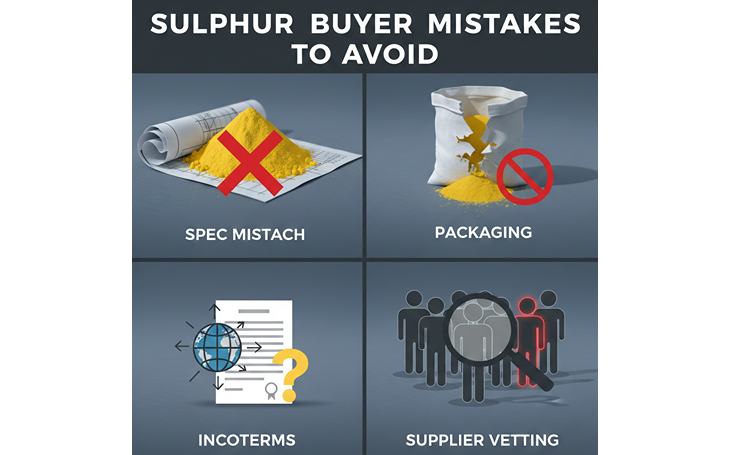
Common pass or fail triggers:
◾ Moisture above contractual tolerance
◾ Excessive dust or fines
◾ Visible contamination such as ash or sand
◾ Wrong cargo format
◾ Non compliant packaging
◾ Broken bags or compromised liners
◾ Missing hazard labeling UN 1350
A batch may score well on chemical purity but still fail due to physical integrity. End users prefer stable performance rather than laboratory numbers alone.
Procurement Teams Should Track KPIs Before Contracting
Strong procurement teams do not rely on supplier promises. They set KPI thresholds in the contract. Every shipment must be inspected before loading or before discharge. They specify moisture tolerance, acceptable fines percentage and minimum particle hardness.
Best practices:
◾ Use written technical specifications
◾ Require third party inspection
◾ Evaluate packaging type for each route
◾ Track performance per supplier over time
◾ Penalize repeat violations
◾ Avoid one off spot suppliers
These practices reduce risk when markets tighten or freight routes become volatile.
Gsinfotechvis Keeps KPI Compliance Simple
Gsinfotechvis Pvt Ltd supplies refinery grade sulphur from verified producers. Each shipment is tested for moisture, particle structure and contamination. SGS or Intertek reports are shared with buyers so they know exactly what they receive. Packaging is selected according to cargo type, route humidity and storage duration.
Clients choose Gsinfotechvis because:
◾ Supplier networks deliver consistent physical quality
◾ Q&Q protocols protect buyers before cargo leaves origin
◾ Handling and packaging reduce dust and moisture
◾ Documentation supports customs and port clearance
◾ Support teams monitor cargo until final delivery
Sulphur procurement is no longer just about tonnage. It is about reliability, traceability and measurable performance. With Gsinfotechvis, buyers get sulphur that meets their KPIs from shipment to production floor.
Check us out on LinkedIn.