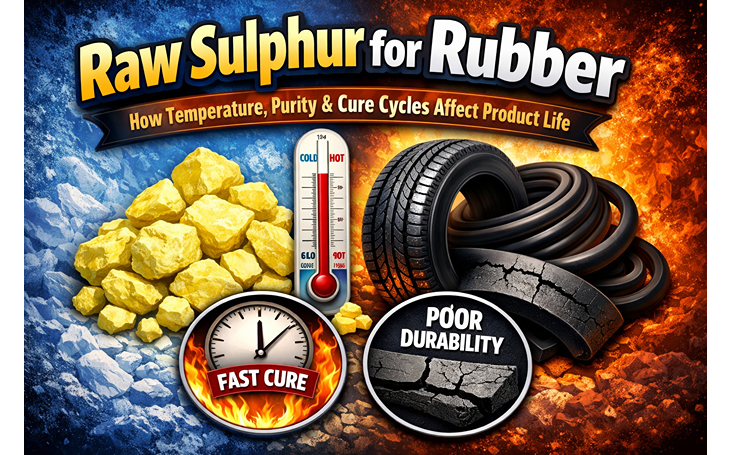
Raw Sulphur for Rubber: How Temperature, Purity and Cure Cycles Affect Product Life
Rubber is one of the most widely used industrial materials on earth. From conveyor belts to tyres, gaskets, medical equipment and footwear, it touches almost every sector. Yet the secret behind rubber’s strength is not rubber itself. It is sulphur. When raw sulphur is used in the vulcanization process, it transforms sticky polymer chains into strong, durable and elastic materials. Every large rubber manufacturer knows this. What many still underestimate is how temperature, purity and cure cycles affect the end product.
To understand these effects, we need to look at the chemistry and process engineering behind sulphur based vulcanization.
To understand these effects, we need to look at the chemistry and process engineering behind sulphur based vulcanization.
Why sulphur is the backbone of rubber durability
Natural rubber is made of long polymer chains. These chains slide against each other, making the raw material soft, tacky and sensitive to temperature. When sulphur is added and heated, it forms crosslinks between these chains. The rubber becomes structured and resilient.
◾ Higher tensile strength
◾ Resistance to tearing and abrasion
◾ Better heat tolerance
◾ Longer service life
This conversion process is vulcanization. Its success depends on how sulphur reacts at different temperatures and how evenly these reactions are maintained.
Natural rubber is made of long polymer chains. These chains slide against each other, making the raw material soft, tacky and sensitive to temperature. When sulphur is added and heated, it forms crosslinks between these chains. The rubber becomes structured and resilient.
Benefits of sulphur crosslinking:
◾ Improved elasticity
◾ Higher tensile strength
◾ Resistance to tearing and abrasion
◾ Better heat tolerance
◾ Longer service life
This conversion process is vulcanization. Its success depends on how sulphur reacts at different temperatures and how evenly these reactions are maintained.
Temperature controls the speed and depth of curing
If temperature is too low, sulphur crosslinks form slowly and unevenly. The material may remain soft or partially cured. If temperature is too high, the rubber overcures and becomes brittle. Engineers refer to this as scorch. Once scorch happens, the rubber cannot be reversed and the batch is wasted.
Each rubber formulation has an ideal curing temperature range. Tyre compounds, for example, often use higher temperatures than medical grade elastomers. Industrial sheets, belts or seals may require longer cure times at stable temperatures to ensure deep crosslinking.
◾ Optimal temperature: Balanced elasticity and durability
◾ High temperature: Excessive stiffness, potential cracking
Even distribution matters. A single hotspot in the mold can ruin a finished component.
If temperature is too low, sulphur crosslinks form slowly and unevenly. The material may remain soft or partially cured. If temperature is too high, the rubber overcures and becomes brittle. Engineers refer to this as scorch. Once scorch happens, the rubber cannot be reversed and the batch is wasted.
Each rubber formulation has an ideal curing temperature range. Tyre compounds, for example, often use higher temperatures than medical grade elastomers. Industrial sheets, belts or seals may require longer cure times at stable temperatures to ensure deep crosslinking.
Typical temperature effects
◾ Low temperature: Under cured, weak mechanical strength
◾ Optimal temperature: Balanced elasticity and durability
◾ High temperature: Excessive stiffness, potential cracking
Even distribution matters. A single hotspot in the mold can ruin a finished component.
Purity of sulphur influences reaction quality
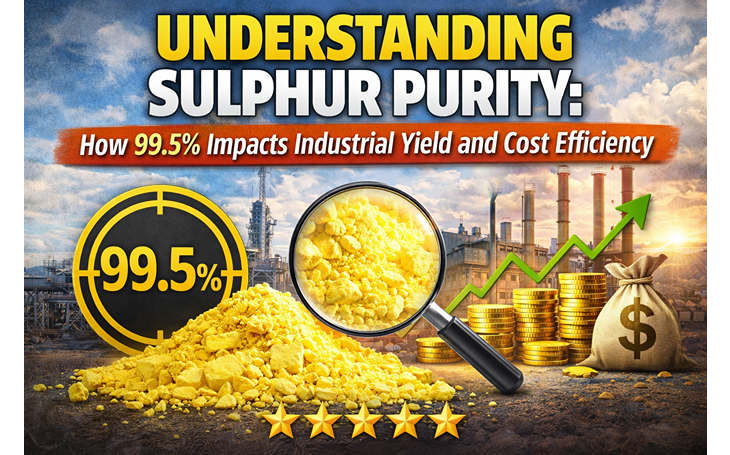
Raw sulphur is available in multiple grades. Lower grade sulphur may contain ash, moisture or organic contaminants. Small impurities affect how sulphur bonds to rubber chains. This translates into weaker vulcanization and reduced product life.
Manufacturers prefer refinery grade sulphur because it melts uniformly and produces clean chemical reactions. It has predictable melting behavior, good flow and low dust. Consistent physical integrity during handling avoids contamination during transport and storage.
◾ Cleaner surface finish
◾ Higher crosslink density
◾ Better ageing resistance
Using impure sulphur may save money at purchase, but it increases defects, rejects and warranty claims later.
Raw sulphur is available in multiple grades. Lower grade sulphur may contain ash, moisture or organic contaminants. Small impurities affect how sulphur bonds to rubber chains. This translates into weaker vulcanization and reduced product life.
Manufacturers prefer refinery grade sulphur because it melts uniformly and produces clean chemical reactions. It has predictable melting behavior, good flow and low dust. Consistent physical integrity during handling avoids contamination during transport and storage.
High purity sulphur leads to:
◾ Faster cure reactions
◾ Cleaner surface finish
◾ Higher crosslink density
◾ Better ageing resistance
Using impure sulphur may save money at purchase, but it increases defects, rejects and warranty claims later.
Cure cycles decide long term performance
Time, temperature and pressure come together in a cure cycle. This is the timeline during which rubber is held at the required temperature under controlled conditions. Cure cycles are determined by the recipe and end use requirements. A tyre tread and a medical seal do not cure the same way.
◾ Holding time
◾ Pressure control
◾ Cooling duration
Incorrect cure cycles can produce internal stress. These stresses sometimes do not appear immediately. They show up during use as cracking, deformation or sudden tearing. Engineers monitor each stage carefully to avoid these latent failures.
Time, temperature and pressure come together in a cure cycle. This is the timeline during which rubber is held at the required temperature under controlled conditions. Cure cycles are determined by the recipe and end use requirements. A tyre tread and a medical seal do not cure the same way.
Core elements of a cure cycle
◾ Preheat stage
◾ Holding time
◾ Pressure control
◾ Cooling duration
Incorrect cure cycles can produce internal stress. These stresses sometimes do not appear immediately. They show up during use as cracking, deformation or sudden tearing. Engineers monitor each stage carefully to avoid these latent failures.
The role of sulphur concentration
More sulphur does not always equal more durability. Too much sulphur creates dense crosslinking. Materials become stiff and brittle. Too little sulphur creates soft compounds that deform under load. The optimal sulphur ratio is determined through testing and experience.
Rubber for tyres may require stronger crosslinks to survive abrasion and heat. Rubber for seals may need softer, flexible networks to prevent cracking at low temperatures.
More sulphur does not always equal more durability. Too much sulphur creates dense crosslinking. Materials become stiff and brittle. Too little sulphur creates soft compounds that deform under load. The optimal sulphur ratio is determined through testing and experience.
Rubber for tyres may require stronger crosslinks to survive abrasion and heat. Rubber for seals may need softer, flexible networks to prevent cracking at low temperatures.
Why large manufacturers insist on uniform supply
Production lines cannot afford inconsistent sulphur. Variations in composition or moisture create unpredictable curing behavior. A batch that passes lab testing may fail during service if its sulphur content is unstable. This is why large producers lock in long term supply contracts with trusted vendors.
◾ Stable inventory
◾ Predictable cure cycles
◾ Uniform mechanical performance
◾ Lower batch rejection
This is where supply partners create value.
Production lines cannot afford inconsistent sulphur. Variations in composition or moisture create unpredictable curing behavior. A batch that passes lab testing may fail during service if its sulphur content is unstable. This is why large producers lock in long term supply contracts with trusted vendors.
Reliable raw sulphur supply ensures:
◾ Consistent quality
◾ Stable inventory
◾ Predictable cure cycles
◾ Uniform mechanical performance
◾ Lower batch rejection
This is where supply partners create value.
How Gsinfotechvis supports rubber manufacturers
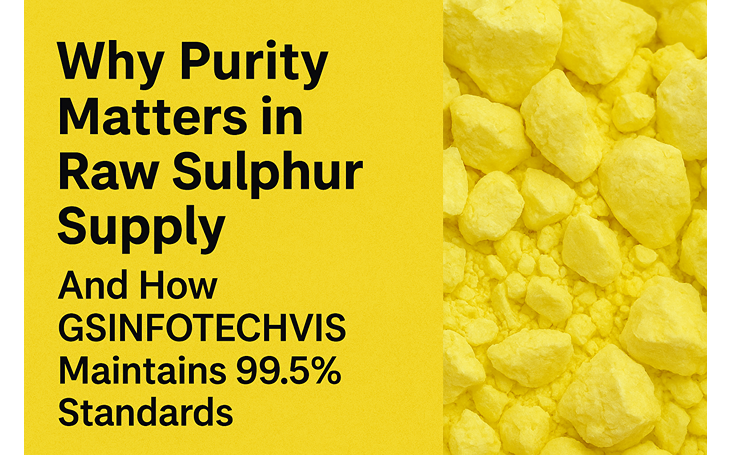
Gsinfotechvis Pvt Ltd provides high purity refinery grade raw sulphur suitable for industrial vulcanization. The company works with verified international suppliers and follows strict quality control measures. Each shipment is backed by laboratory testing, MSDS documentation and safe packaging to protect cargo in transit.
◾ Shipments are handled with reduced contamination risk
◾ Port logistics minimize handling losses
◾ Documentation ensures smooth customs clearance
◾ Dedicated teams guarantee timely delivery
Rubber manufacturers compete in markets where durability is reputation. The right sulphur source determines reliability, not only in the factory but in every kilometre a tyre runs or every seal that prevents a leak. If you want stable, high grade sulphur supply, Gsinfotechvis can help you build performance from the inside out.
Check us out on LinkedIn.
Gsinfotechvis Pvt Ltd provides high purity refinery grade raw sulphur suitable for industrial vulcanization. The company works with verified international suppliers and follows strict quality control measures. Each shipment is backed by laboratory testing, MSDS documentation and safe packaging to protect cargo in transit.
Clients trust Gsinfotechvis because:
◾ Purity levels match industrial specifications
◾ Shipments are handled with reduced contamination risk
◾ Port logistics minimize handling losses
◾ Documentation ensures smooth customs clearance
◾ Dedicated teams guarantee timely delivery
Rubber manufacturers compete in markets where durability is reputation. The right sulphur source determines reliability, not only in the factory but in every kilometre a tyre runs or every seal that prevents a leak. If you want stable, high grade sulphur supply, Gsinfotechvis can help you build performance from the inside out.
Check us out on LinkedIn.