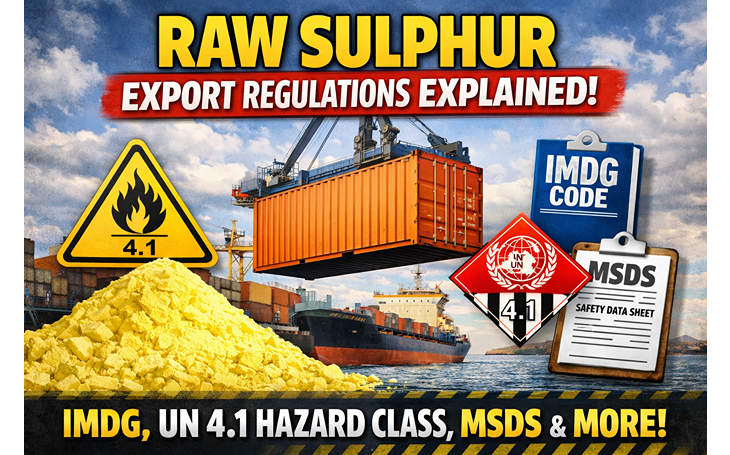
Raw Sulphur Export Regulations Explained: IMDG, UN 4.1 Hazard Class, MSDS & More
Exporting raw sulphur is not the same as shipping any other commodity. It may look harmless, but when handled incorrectly it can ignite, release fumes or contaminate cargo. Global regulations exist to prevent these risks. For manufacturers, fertilizer plants and trading firms, understanding these rules saves money, protects workers and ensures shipments reach their destination without legal or operational problems.
This guide explains the core compliance standards that govern sulphur exports and why they matter for real buyers.
Why Raw Sulphur Is Regulated
Sulphur reacts with oxygen and burns easily. The dust that forms when sulphur is crushed or mishandled is even more hazardous. A spark, a heated surface or friction during transport can cause ignition. Because of this, sulphur is categorized as a hazardous substance.
Regulations exist to minimize fire risk, prevent contamination and protect the people who handle the cargo along its journey. These rules cover packaging, labelling, documentation and even where sulphur is stored on a vessel.
IMDG Code: The Global Standard for Maritime Safety
The International Maritime Dangerous Goods Code, known as IMDG, is the foundation of international sulphur shipping. This rulebook tells carriers how to pack, store, segregate and label hazardous materials transported by sea.
For sulphur exporters, IMDG compliance is not optional. Maritime authorities, ports and insurance providers use IMDG guidelines to determine whether a shipment can be moved. If cargo is non compliant, ships will refuse loading and customs clearance will become a long and expensive issue.
The IMDG Code identifies the physical hazards of sulphur. It controls dust levels, dictates packaging types and includes instructions for cargo segregation. Following these rules reduces the chance of shipboard fires and protects other cargo loaded nearby.
UN 4.1 Hazard Class: What It Means
Raw sulphur is assigned to Hazard Class 4.1. This category describes flammable solids that do not necessarily explode on their own but can catch fire easily when exposed to heat or sparks.
The classification seems technical, but it has a simple purpose. It tells everyone involved in shipping what precautions they must take. Ship captains know where the cargo can be stored. Port workers understand how to move it without creating sparks. Inspectors know which labels to look for on containers and bags.
A simple mislabeling can lead to penalties or reloading at the shipper’s cost. Exporters who understand the UN classification avoid these problems before they occur.
Why MSDS Is More Than a Piece of Paper
Material Safety Data Sheets are often viewed as routine paperwork. In reality they are an essential safety tool. An MSDS explains how to handle sulphur in warehouses, during export and at the receiving site.
It covers storage temperature, packaging standards, exposure risks and emergency actions. If a worker is exposed to fumes or if a container breaks, the MSDS is the first reference. Insurance claims, incident reviews and regulatory audits also rely on this document.
A complete sulphur shipment must include an MSDS aligned with global standards like GHS. Buyers should avoid suppliers who delay or avoid issuing proper documentation.
Packaging and Labelling Requirements
Proper packaging prevents dust generation and heat exposure. Jumbo bags and sealed containers are widely used because they keep sulphur stable and reduce manual handling. Packaging must be tested to prevent breakage during lifting and stacking.
Labelling is equally important. Containers must display the correct UN number, hazard icons and transport instructions. These markings allow logistics teams to identify the cargo even if documentation is missing or damaged.
What a Reliable Supply Partner Does
Good exporters do not wait for problems. They design supply chains around risk prevention. They verify products with third party labs, maintain accurate MSDS records and align every shipment with IMDG requirements.
They also coordinate port logistics so sulphur stays segregated from incompatible cargo. They handle certifications before loading and provide the buyer with full traceability. This reduces operational disruption and protects both parties from regulatory penalties.
Why Compliance Protects Your Business
Ignoring sulphur regulations can lead to shipment delays, extra demurrage charges, vessel rejection and even legal action. The cost of fixing a non compliant shipment is always higher than doing it right the first time.
Businesses that understand IMDG, Hazard Class 4.1 and MSDS requirements stay competitive. Their supply chains remain stable and their reputation in the market grows stronger. In a global commodity like sulphur, reliability is as valuable as price.
Final Thoughts
Raw sulphur is an essential industrial commodity, but only when handled responsibly. Exporters, buyers and logistics partners share the responsibility of compliance. Following the rules keeps workers safe, maintains trade integrity and ensures the material arrives ready for production. Get more insights at Gsinfotechvis.
Check us out on LinkedIn.