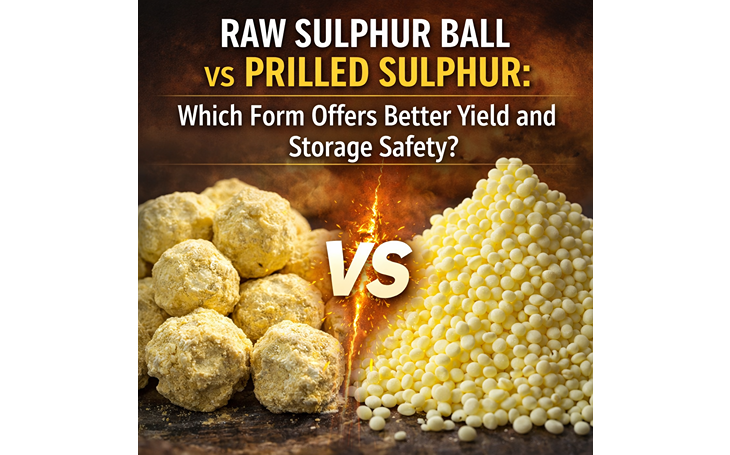
Raw Sulphur Ball vs Prilled Sulphur: Which Form Offers Better Yield and Storage Safety?
Sulphur is one of the most in demand industrial commodities in the world. It fuels fertilizer production, drives petrochemical chains, supports rubber vulcanization, and is used in a wide range of chemical processes. As demand increases, buyers are often stuck deciding between two common forms of supply: raw sulphur balls and prilled sulphur. While both deliver elemental sulphur, their performance, storage safety and logistics behave very differently.
Understanding these differences is not just academic. It directly affects yield efficiency, worker safety, operational reliability and overall import cost. For organizations in agriculture, polymer manufacturing and energy linked industries, choosing the right sulphur form can translate to millions saved or lost each year.
Understanding these differences is not just academic. It directly affects yield efficiency, worker safety, operational reliability and overall import cost. For organizations in agriculture, polymer manufacturing and energy linked industries, choosing the right sulphur form can translate to millions saved or lost each year.
What are Raw Sulphur Balls
Raw sulphur balls are solid spheres made from molten refinery grade sulphur. They are formed to create uniform physical properties, reduce dust and improve handling. This format is popular with large scale industrial users and fertilizer manufacturers because the balls maintain their structure even under harsh storage conditions.
◾ Solid and stable in shape
◾ Resistant to weather and humidity
◾ Less prone to fragmentation in bulk transit
The absence of fine particles reduces product loss, improves worker safety and minimizes risk of combustion from dust build up.
Raw sulphur balls are solid spheres made from molten refinery grade sulphur. They are formed to create uniform physical properties, reduce dust and improve handling. This format is popular with large scale industrial users and fertilizer manufacturers because the balls maintain their structure even under harsh storage conditions.
Raw sulphur balls are typically:
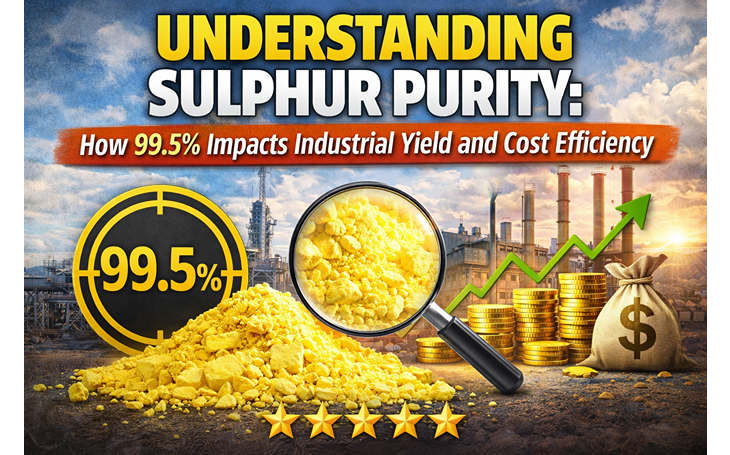
◾ High purity, often near 99.5 percent◾ Solid and stable in shape
◾ Resistant to weather and humidity
◾ Less prone to fragmentation in bulk transit
The absence of fine particles reduces product loss, improves worker safety and minimizes risk of combustion from dust build up.
What is Prilled Sulphur
Prilled sulphur is produced by spraying molten sulphur into a cooling environment, creating small pellets or granules. The size tends to be uniform and much smaller than sulphur balls. Prilled sulphur is widely available and often shipped to regions that require smaller particle material for blending or downstream conversion.
◾ Pack tightly in bags or containers
◾ Dissolve or melt faster in some chemical processes
◾ Present more surface area due to smaller particle size
Because of these traits, prilled sulphur is often used in fertilizer processing or chemical refinements where speed of transformation matters.
Prilled sulphur is produced by spraying molten sulphur into a cooling environment, creating small pellets or granules. The size tends to be uniform and much smaller than sulphur balls. Prilled sulphur is widely available and often shipped to regions that require smaller particle material for blending or downstream conversion.
Prills tend to:
◾ Have good flowability◾ Pack tightly in bags or containers
◾ Dissolve or melt faster in some chemical processes
◾ Present more surface area due to smaller particle size
Because of these traits, prilled sulphur is often used in fertilizer processing or chemical refinements where speed of transformation matters.
Comparing Yield Performance
Yield is the most important metric for manufacturers. The more usable sulphur per tonne, the fewer shipments and procurement cycles are required.
Many large scale producers prefer raw sulphur balls because the physical integrity of the solid shape preserves sulphur mass during storage, conveyor handling and port discharge. Fewer broken particles means less dust loss and a higher percentage of usable product.
Prilled sulphur can deliver quick reaction rates in downstream processing, especially in sulphuric acid production or bentonite blends. The downside is that prills are more fragile. Small pellets are vulnerable to abrasion, leading to dust accumulation and increased handling losses.
A general rule used across industry:
◾ For long supply chains and bulk storage, sulphur balls offer higher retained yield
◾ For rapid chemical feedstock conversion, prilled sulphur offers ease and speed
Yield is the most important metric for manufacturers. The more usable sulphur per tonne, the fewer shipments and procurement cycles are required.
Many large scale producers prefer raw sulphur balls because the physical integrity of the solid shape preserves sulphur mass during storage, conveyor handling and port discharge. Fewer broken particles means less dust loss and a higher percentage of usable product.
Prilled sulphur can deliver quick reaction rates in downstream processing, especially in sulphuric acid production or bentonite blends. The downside is that prills are more fragile. Small pellets are vulnerable to abrasion, leading to dust accumulation and increased handling losses.
A general rule used across industry:
◾ For long supply chains and bulk storage, sulphur balls offer higher retained yield
◾ For rapid chemical feedstock conversion, prilled sulphur offers ease and speed
Storage and Safety Considerations
Sulphur is flammable when dust is present. Storage facilities aim to keep physical material stable, dry and protected from mechanical damage. In this area, raw sulphur balls have a clear advantage.
Balls have lower dust generation and perform better in unconditioned environments. They tolerate high humidity, vessel vibration and loading stresses. This makes them ideal for port yards, open storage and long term inventory.
Prilled sulphur has a larger total surface area across the same mass. More surface area means more opportunity for dust, oxidation and static build up. In tropical regions or poorly ventilated warehouses, this can lead to storage complications. Proper bagging, ventilation and movement limits are essential.
◾ Minimal pile height and evenly distributed stacking
◾ Non sparking equipment during handling
◾ Fire suppression and dust inspection protocols
◾ Trained personnel with proper PPE
Companies that understand and enforce these principles prevent accidents and avoid costly product loss.
Sulphur is flammable when dust is present. Storage facilities aim to keep physical material stable, dry and protected from mechanical damage. In this area, raw sulphur balls have a clear advantage.
Balls have lower dust generation and perform better in unconditioned environments. They tolerate high humidity, vessel vibration and loading stresses. This makes them ideal for port yards, open storage and long term inventory.
Prilled sulphur has a larger total surface area across the same mass. More surface area means more opportunity for dust, oxidation and static build up. In tropical regions or poorly ventilated warehouses, this can lead to storage complications. Proper bagging, ventilation and movement limits are essential.
Safe storage practices typically include:
◾ Ventilated warehouses with controlled humidity◾ Minimal pile height and evenly distributed stacking
◾ Non sparking equipment during handling
◾ Fire suppression and dust inspection protocols
◾ Trained personnel with proper PPE
Companies that understand and enforce these principles prevent accidents and avoid costly product loss.
Logistics and Handling Cost
When transported in bulk form, sulphur balls are less likely to crumble. This reduces material loss during long voyages, especially across sea routes with port to port handling. Many importers prefer them for large vessels or containers to maintain consistency across shipment cycles.
Prilled sulphur requires more protection. Bagged packaging, container liners and controlled discharge increase cost. Shipping is still viable, but logistics teams must plan for dust control and moisture barriers.
The overall cost picture often favors balls for heavy industries and prills for controlled plant to plant supply.
When transported in bulk form, sulphur balls are less likely to crumble. This reduces material loss during long voyages, especially across sea routes with port to port handling. Many importers prefer them for large vessels or containers to maintain consistency across shipment cycles.
Prilled sulphur requires more protection. Bagged packaging, container liners and controlled discharge increase cost. Shipping is still viable, but logistics teams must plan for dust control and moisture barriers.
The overall cost picture often favors balls for heavy industries and prills for controlled plant to plant supply.
Why many industrial buyers choose sulphur balls
Industrial buyers often prioritise reliability. If the cargo arrives intact, processes stay predictable, profits remain stable and downstream plants operate without interruption. For this reason, raw sulphur balls are becoming popular among fertilizer plants, tyre producers, plastics and chemical manufacturers who manage large tonnages.
◾ Outdoor stockpiles
◾ Bulk unloading equipment
◾ Repeated material transfers
Even when prices fluctuate, strong retention value means fewer replacement orders and improved long term efficiency.
Industrial buyers often prioritise reliability. If the cargo arrives intact, processes stay predictable, profits remain stable and downstream plants operate without interruption. For this reason, raw sulphur balls are becoming popular among fertilizer plants, tyre producers, plastics and chemical manufacturers who manage large tonnages.
Their durability supports:
◾ Long transit supply chains◾ Outdoor stockpiles
◾ Bulk unloading equipment
◾ Repeated material transfers
Even when prices fluctuate, strong retention value means fewer replacement orders and improved long term efficiency.
Choosing the right form for your business
Neither format is universally perfect. Each solves a different challenge.
◾ Your facilities receive bulk shipments at ports
◾ You handle high tonnage with loaders or conveyors
◾ You want minimal dust and safer storage
◾ Your production line blends granules or pellets
◾ You handle smaller packages or shorter supply distances
Neither format is universally perfect. Each solves a different challenge.
Choose sulphur balls if:
◾ You operate in humid or high temperature regions◾ Your facilities receive bulk shipments at ports
◾ You handle high tonnage with loaders or conveyors
◾ You want minimal dust and safer storage
Choose prilled sulphur if:
◾ You need fast dissolution or melting◾ Your production line blends granules or pellets
◾ You handle smaller packages or shorter supply distances
How Gsinfotechvis Pvt Ltd helps buyers make the right decision
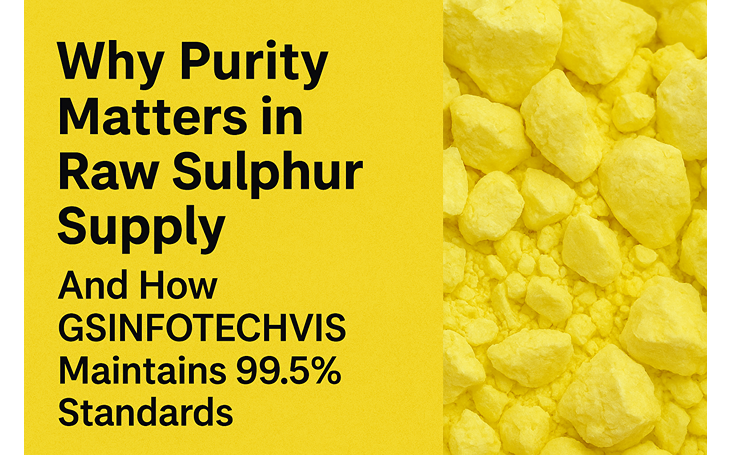
Gsinfotechvis Pvt Ltd supplies refinery grade raw sulphur balls to international buyers who value purity, consistency and compliance. The company works with trusted production networks, verified logistics partners and inspection agencies. Every shipment includes correct documentation, quality testing and packaging guidance so clients can protect their inventory and avoid safety risks.
By understanding your plant requirements, climate conditions and consumption rate, Gsinfotechvis Pvt Ltd helps you select the sulphur form that delivers maximum yield with minimum operational headache.
If your business needs a reliable sulphur supply partner, reach out to Gsinfotechvis Pvt Ltd. Strong sourcing and smart logistics make all the difference in a competitive market.
Check us out on LinkedIn.
Gsinfotechvis Pvt Ltd supplies refinery grade raw sulphur balls to international buyers who value purity, consistency and compliance. The company works with trusted production networks, verified logistics partners and inspection agencies. Every shipment includes correct documentation, quality testing and packaging guidance so clients can protect their inventory and avoid safety risks.
By understanding your plant requirements, climate conditions and consumption rate, Gsinfotechvis Pvt Ltd helps you select the sulphur form that delivers maximum yield with minimum operational headache.
If your business needs a reliable sulphur supply partner, reach out to Gsinfotechvis Pvt Ltd. Strong sourcing and smart logistics make all the difference in a competitive market.
Check us out on LinkedIn.