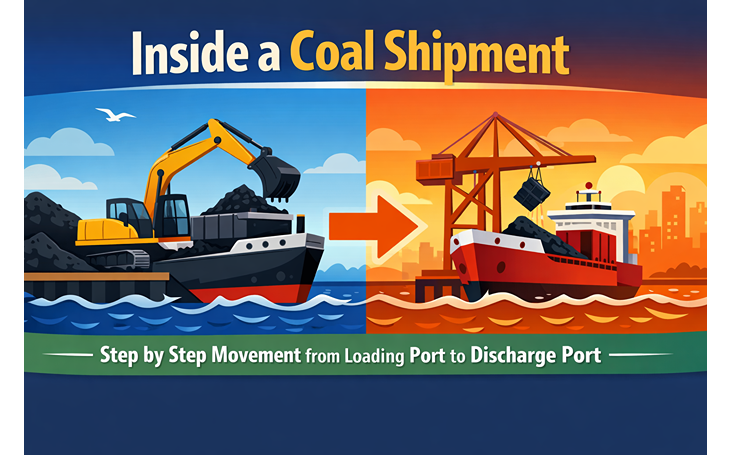
Inside a Coal Shipment: Step by Step Movement from Loading Port to Discharge Port
Every coal shipment follows a detailed and carefully managed journey before it reaches the end user. From the moment coal leaves the mine to its discharge at the destination port, each stage plays a role in determining cost, quality, and delivery time. Understanding this step by step movement helps coal buyers, traders, and plant operators plan better and reduce operational risk.
Step One: Coal Preparation and Stockpiling
The shipment process begins at the source. After mining, coal is crushed, screened, and segregated based on grade and quality. It is then stockpiled at the mine or near the loading port.
Before shipment, coal samples are collected for quality testing. Independent agencies may verify parameters such as calorific value, ash, moisture, and volatile matter. This step ensures that the coal meets contract specifications before loading begins.
Step Two: Inland Transport to the Loading Port
Coal is moved from the mine to the loading port using trucks, rail, or barges. The choice of transport depends on distance, infrastructure, and local conditions.
Timely movement during this stage is important. Delays caused by weather, congestion, or poor coordination can affect vessel schedules and increase costs.
Step Three: Vessel Arrival and Loading Operations
Once the vessel arrives at the loading port, loading operations begin. Coal is transferred from stockpiles or barges to the vessel using conveyors or cranes.
During loading, draft surveys and quantity measurements are conducted to confirm the amount of coal loaded. Proper supervision at this stage helps prevent disputes related to short shipment or quality variation.
Step Four: Export Documentation and Clearance
At the same time, export documentation is prepared. This includes the commercial invoice, bill of lading, certificate of origin, quality reports, and safety documents.
Accurate and complete documentation is essential. Errors at this stage can delay vessel departure or cause issues at the discharge port.
Step Five: Sea Transit to the Discharge Port
After loading and clearance, the vessel sails to the destination port. Transit time depends on distance, vessel speed, and weather conditions.
During sea transit, buyers usually prepare for import clearance by reviewing documents and coordinating inspections. Early preparation reduces delays on arrival.
Step Six: Arrival and Import Clearance at Discharge Port
On arrival, the vessel submits notice and import procedures begin. Customs authorities may conduct sampling and testing to verify declared quality.
Documentation is reviewed, duties are assessed, and regulatory checks are completed. Smooth clearance depends on accurate declarations and verified quality.
Step Seven: Discharge and Post Clearance Movement
Once clearance is granted, coal is discharged from the vessel to port storage areas. From there, it is transported to the end user by rail or road.
Efficient coordination during this stage ensures timely delivery to power plants or industrial units.
Common Risks During Coal Shipment
Delays can occur due to documentation gaps, quality mismatches, port congestion, or regulatory holds. Each risk increases cost and disrupts supply.
How Gsinfotechvis Supports Coal Shipments
Gsinfotechvis helps manage coal shipments by aligning compliance, documentation, and logistics planning from the start. Their team supports quality verification, document review, and regulatory readiness.
By partnering with Gsinfotechvis, businesses can reduce shipment risks and improve delivery reliability.
Conclusion
A coal shipment involves multiple stages from loading port to discharge port. Understanding each step helps buyers manage risk and cost. With expert support from
Gsinfotechvis,
coal shipments can move more smoothly, ensuring timely and compliant delivery.
Follow us on
LinkedIn.