Indian Coal Import Patterns in 2025 to 2030: Which Calorific Segments Will Dominate?
India remains one of the largest coal consumers in the world. Domestic production has grown, but it is unable to meet the needs of power plants, sponge iron units, cement manufacturers and industrial boilers. The next five years will not be about whether India imports coal. The real question is which calorific segments will dominate. Choosing the wrong grade can hurt plant economics. Choosing the right one can stabilize operations and ensure compliance.
In 2025 to 2030, the import landscape will evolve due to energy transitions, climate commitments, port infrastructure and a growing industrial sector. Buyers who understand this trend will control their margins more effectively.
The role of calorific value in Indian coal imports
Calorific value, often expressed as GAR, measures the usable heat in coal. Higher GAR means more heat per tonne. Lower GAR means cheaper coal but more fuel needed to reach target temperatures.
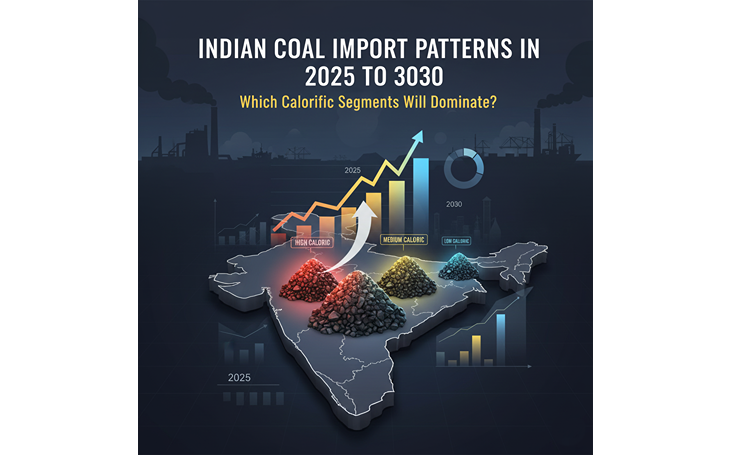
The common imported segments are:
◾ 4200 to 5000 GAR
◾ 5200 to 5800 GAR
◾ 6000+ GAR premium blends
Each segment serves different industries, and each has different supply risks.
Why low GAR may lose relevance
Between 4200 and 5000 GAR, coal is attractive because of its lower landed price. But this grade often carries higher moisture and volatile ash chemistry. Power plants burn more volume to reach the same heat load. Cement kilns lose flame stability. Sponge iron plants face ring formation in the kiln.
Expect demand for low GAR coal to decline over the decade. Plants will not accept frequent furnace trips or rising rejection rates. Lower quality coal becomes more expensive once waste, downtime and fines are counted.
The rise of 5200 to 5800 GAR: the functional workhorse
India’s industrial backbone will favor mid-range coal. This segment balances cost and performance. It burns evenly, does not overload mills, and offers manageable ash fusion behavior.
Industries that will continue to prefer this segment:
◾ Sponge iron manufacturing
◾ Cement clinker production
◾ High-pressure boiler systems
◾ Continuous rotary kilns
These operations need predictable ignition, not theoretical thermal value. Coal in this range often arrives from Indonesia, South Africa or Australia with consistent specifications and manageable moisture.
Expect 5200 to 5800 GAR to dominate import contracts due to:
◾ Better combustion efficiency
◾ Lower fines generation
◾ Reduced clinker formation
◾ Stable logistics profiles
◾ Fewer operational interruptions
Premium 6000+ GAR: strong but situational
High GAR coal burns cleanly and efficiently, but it requires precise burner control. Misuse leads to sharp temperature spikes and refractory distress. Only plants with advanced combustion systems can manage it.
Where premium grades shine:
◾ Modern cement kilns
◾ Utility power boilers with high throughput
◾ Industrial furnaces with optimized airflow
However, this segment suffers from global supply volatility. Cyclones, mine closures or freight spikes raise price unpredictably, making long-term planning difficult.
Market forces shaping import patterns
1. Domestic production limits
Indian coal production improvements cannot fully meet industrial demand. Quality constraints also play a major role. Many grade seams do not match furnace requirements.
2. International geopolitical dynamics
Coal from Indonesia and Australia will remain core supply sources. Producers in Russia and Africa may gain traction if shipping lanes stay stable, but logistics risks will limit their share.
3. Freight economics
Calorific value interacts with freight cost. Higher GAR costs more per tonne but may deliver more heat per vessel slot. Mid-range coal often wins once shipping is factored into delivered energy cost.
4. Environmental pressure
Efficiency is ESG. Companies that use poor-quality coal burn more, produce more emissions and leave larger waste footprints.
Who will dominate consumption
Indian coal buyers fall into three broad categories:
◾ Baseline users who prioritize low price
◾ Performance buyers who care about stability and steady production
◾ Advanced burners who chase maximum output with precise equipment tuning
From 2025 to 2030, performance buyers will lead. The market will shift away from reactive procurement and toward risk-controlled purchasing. Calorific bands with proven performance will outpace speculative blends.
The procurement trap to avoid
Some buyers will look at domestic political statements and assume imports will fall dramatically. They will gamble on fixed local supply and end up overpaying during shortages. India will continue importing coal, especially grades better suited for industrial needs. Short-term optimism will not change kiln and furnace chemistry.
How Gsinfotechvis helps buyers prepare for the next decade
Gsinfotechvis Pvt Ltd monitors coal markets, chartering patterns and refinery disruptions across regions. The company does not recommend coal based on price alone. It maps calorific segments to each client’s furnace design, ash tolerance and load profile.
Clients benefit from:
◾ Reliable 5200 to 5800 GAR supply
◾ Quality screening beyond spec sheets
◾ Moisture and ash control at origin
◾ ESG-friendly sourcing where required
◾ Blending strategies to reduce cost per tonne of output
◾ Long-term contracts to limit volatility
Industrial buyers cannot afford guesswork between 2025 and 2030. The calorific segment you choose will shape operational profit. With Gsinfotechvis, coal procurement becomes strategic, not speculative.
Know more about us on LinkedIn.