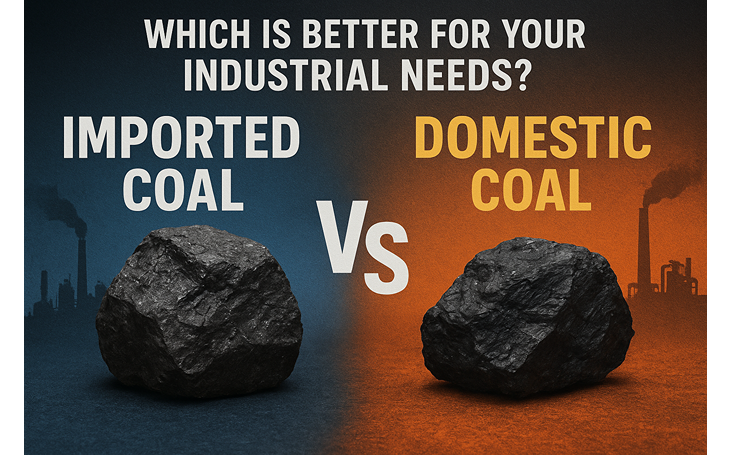
Imported Coal vs. Domestic Coal: Which Is Better for Your Industrial Needs?
Coal remains one of the most important fuels for industries in India. Power plants, cement factories, textile mills and manufacturing units rely heavily on thermal and steam coal to keep their operations running. As India’s industrial demand rises, many buyers wonder whether imported coal or domestic coal is the better choice.
Both options have strengths, and the right choice depends on your energy requirements, quality expectations, budget and consistency needs. This guide breaks down the key differences to help you make an informed decision.
India’s Domestic Coal Production in 2025
India crossed the one billion tonne mark in domestic coal production, reflecting strong output from major mines and continuous government support. This rise in production has helped reduce shortages and improve availability for many industries.
Domestic coal is widely used in:
◾ Power generation
◾ Cement manufacturing
◾ Brick industries
◾ Small and medium scale factories
While abundant, domestic coal comes with its own set of characteristics and limitations.
Advantages of Domestic Coal
1. Easy Availability
Domestic coal is accessible across most regions. With expanded mining operations and better transportation networks, industries can secure supply without relying on international markets.
2. Cost Benefits
Domestic coal often costs less than imported coal because it does not include additional freight, shipping and duty charges.
3. Faster Delivery
Since it is sourced within India, delivery timelines are shorter, which helps industries maintain consistent operations during peak seasons.
Limitations of Domestic Coal
1. Variable Quality
Domestic coal often has higher ash and moisture levels. These variations can affect efficiency and fuel consumption in boilers.
2. Lower Calorific Value
Many industrial users require higher calorific values for better heat output. Domestic coal may not always meet these requirements without blending.
3. Fluctuating Supply During High Demand
Seasonal demand spikes can sometimes affect availability, especially for large buyers.
Advantages of Imported Coal
Imported coal, especially from Indonesia, South Africa and Australia, is known for consistent quality and higher calorific value. Many industries depend on imported coal for performance driven operations.
1. Higher Calorific Value
Imported coal grades often range between:
◾ 4200 GAR
◾ 5000 GAR
◾ 5500 GAR
◾ 6000 GAR and above
Higher heat value means better efficiency, reduced fuel usage and stable performance.
2. Consistent Quality
Imported coal typically has lower ash and moisture. This supports smoother boiler operations and reduces maintenance issues.
3. Reliable Performance
High grade imported coal is preferred for industries that require clean combustion and predictable results.
4. Ideal for Blending
Some industries mix imported and domestic coal to achieve the right balance of price and performance.
Limitations of Imported Coal
1. Higher Cost
Costs are influenced by global prices, freight rates and currency changes.
2. Longer Lead Times
Since delivery depends on shipping cycles, buyers need better planning.
3. Market Fluctuations
Imported coal prices can shift based on global demand and geopolitical factors.
Which One Should Your Industry Choose?
Choose domestic coal if:
◾ Your processes allow variation in calorific value
◾ You want lower procurement costs
◾ You need quick local deliveries
◾ Your facility operates with flexible fuel systems
Choose Imported Coal if:
◾ You need steady and efficient boiler performance
◾ Your operations require high calorific value
◾ You want lower ash and moisture levels
◾ Your industry is sensitive to fuel quality
◾ You prefer long term performance stability
Many industries choose a blended strategy. They use domestic coal for cost efficiency and imported coal for performance. This balance helps maintain production quality without raising fuel expenses too much.
How Gsinfotechvis Supports Industry Needs
While this blog is not intended to be promotional, it is important to highlight the role of a reliable coal sourcing partner. Efficient coal procurement depends on accurate quality checks, dependable suppliers and well managed logistics.
A company like Gsinfotechvis helps industries choose the right grade for their operations. Through verified suppliers, strict inspection practices and strong logistics coordination, industries receive coal that matches their technical requirements.
Final Thoughts
Choosing between imported and domestic coal is not a one size fits all decision. Both have clear advantages and limitations. What matters most is understanding your industrial needs and selecting the grade that supports consistent and efficient performance.
With proper planning and the right supply partner, industries can maintain a stable fuel pipeline and ensure uninterrupted production throughout the year.
Check us out on LinkedIn.