How Strong Port Coordination Protects Buyers from Coal Supply Disruptions
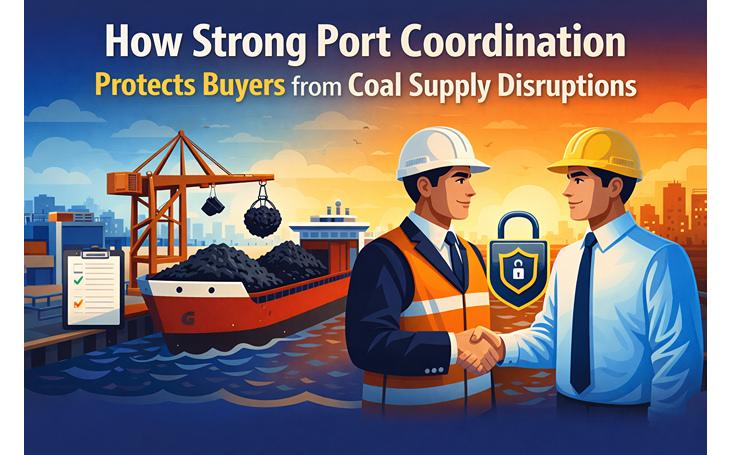
Coal supply disruptions can have serious consequences for power plants, cement units, and steel manufacturers. Even when coal is sourced correctly and shipped on time, weak coordination at ports can interrupt the flow of fuel. Strong port coordination plays a crucial role in protecting buyers from these disruptions by ensuring smooth handling, faster clearance, and reliable onward movement of coal.
Why Port Coordination Matters
Ports act as the critical link between international shipping and domestic consumption. At this stage, coal passes through several hands including port authorities, customs officials, inspection agencies, transporters, and terminal operators. Without proper coordination, small delays at one point can cascade into major supply disruptions.
Effective port coordination ensures that all stakeholders work in sync, reducing waiting time and operational uncertainty.
Common Causes of Port Related Disruptions
Delayed Documentation Processing
Incomplete or inaccurate documents often lead to customs holds. If documents are not reviewed and aligned in advance, clearance can be delayed, blocking cargo movement.
Quality Inspection Bottlenecks
Coal shipments are frequently subject to sampling and testing. Poor scheduling or lack of coordination with inspection agencies can extend testing timelines and delay discharge.
Berth and Equipment Availability Issues
Congested ports and limited unloading equipment can slow operations. Without advance planning, vessels may wait for berths, increasing the risk of demurrage and supply gaps.
Poor Coordination with Inland Transport
Even after discharge, coal must move quickly to the plant. Delays in arranging rail or road transport can lead to stock build up at ports while plants face shortages.
Advance Planning and Scheduling
Effective coordination starts before vessel arrival. Aligning berth schedules, inspection timelines, and documentation review helps ensure smooth discharge and clearance.
Real Time Communication
Continuous communication between port agents, customs, inspection agencies, and transporters allows quick resolution of issues. This reduces downtime and uncertainty.
Integrated Documentation Management
Coordinated handling of documents ensures that customs and regulatory requirements are met without last minute corrections. This speeds up clearance and reduces inspection risk.
Seamless Inland Movement
Strong coordination extends beyond the port. Aligning discharge schedules with rail or road availability ensures coal reaches plants without delay.
Impact on Buyers
For coal buyers, strong port coordination means predictable supply and stable operations. Reduced delays lower demurrage and storage costs. More importantly, uninterrupted fuel flow protects plant load factor and production targets.
Over time, efficient port coordination improves cost control and strengthens supply reliability.
The Role of Compliance in Port Coordination
Compliance is closely linked to coordination. Regulatory requirements around quality, safety, and documentation must be addressed proactively. When compliance planning is integrated into port operations, the risk of holds and re testing decreases.
How Gsinfotechvis Strengthens Port Coordination
Gsinfotechvis supports coal buyers by coordinating compliance, documentation, and port operations. Their team works with port stakeholders to ensure readiness before vessel arrival.
By partnering with Gsinfotechvis, buyers can minimize port related risks and maintain consistent coal supply. Their structured approach helps protect operations from avoidable disruptions.
Conclusion
Strong port coordination is a key safeguard against coal supply disruptions. By aligning documentation, inspections, and logistics, buyers can ensure smooth fuel movement from ship to plant. With expert support from
Gsinfotechvis,
coal buyers can strengthen port operations and secure reliable, disruption free supply chains.
Check us out on
LinkedIn.