How Renewable Energy Expansion Is Reshaping Industrial Coal Demand (2025 to 2035)
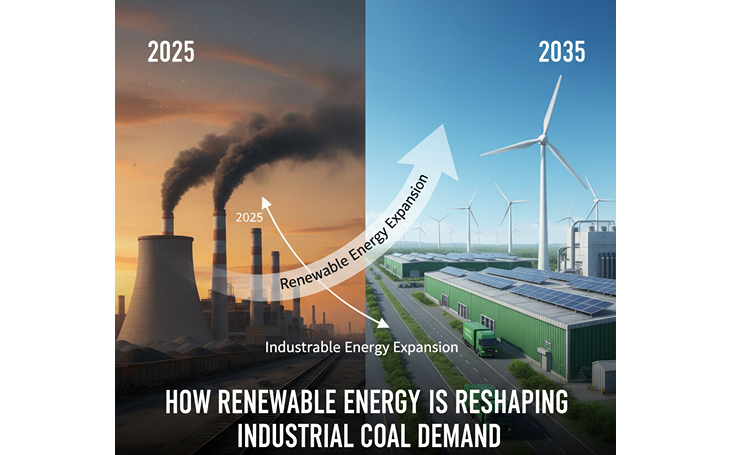
India is in the middle of a long energy transition. Solar parks, wind turbines and grid scale batteries are expanding at a pace once thought impossible. States are signing green energy policies and industries are exploring carbon commitments. Yet coal still fuels the majority of India’s power and many industrial processes. The real question is not whether renewables will replace coal. The question is how the growth of renewables will reshape industrial coal demand over the next decade.
Why Renewables Are Winning Capacity
Renewable energy enjoys a strong cost curve. Solar panel prices have declined. Wind technology has become more efficient. For many new projects, the levelized cost of renewable energy beats traditional thermal power. Add to this policy support, green finance and carbon reduction targets. The result is that more companies now invest in captive solar or wind rather than expanding their coal burn.
Industrial users are also upgrading internal infrastructure. Smart metering, load management and hybrid energy systems help them integrate intermittent power. The more renewables they install, the less continuous coal they need.
Coal Is Not Going Away Soon
Despite strong renewable growth, coal will not disappear between 2025 and 2035. Coal offers baseload stability that solar and wind cannot fully match without deep storage. Many industrial operations require continuous thermal energy. Steel requires heat in blast furnaces. Cement relies on kiln stability. Sponge iron units operate rotary kilns. These processes are difficult to electrify at scale.
Even if a plant uses renewable electricity for auxiliary functions, thermal conversion still demands fossil fuels. Coal remains the bridge between current capability and future innovation. This is why coal demand will not collapse. It will simply change shape.
Balance, Not Replacement
The expansion of renewable power changes when and how industrial coal is consumed. Factories may rely on solar during the day and reduce coal firing. At night or during cloudy weeks, they step up coal usage. This shifts demand from high steady consumption to flexible consumption by condition.
Power utilities are also adopting this pattern. Renewables feed peak demand during daylight, while coal ramps when renewable output drops. Coal becomes the buffer. The market values reliability rather than sheer volume.
The Rise of Hybrid Energy Strategies
Between 2025 and 2035, most industrial buyers will not choose coal or renewables. They will choose both. A typical strategy will include captive solar or wind, supplemented by short term battery storage, combined with contracted coal for thermal load. This approach protects the business from price spikes, policy shifts and unpredictable fuel markets.
Coal importers and logistics firms must adapt to this hybrid model. They must offer flexible batch shipments, guaranteed calorific value and predictable supply windows. Instead of long commitments based on maximum capacity, buyers will prefer right sized allocations and cleaner coal grades.
How Procurement Logic Is Changing
The old approach was simple. Secure coal at the lowest landed price and run the plant. The new approach focuses on energy risk. Companies ask a different question. How can multiple energy sources work together without breaking production?
This mindset affects contract structure. Industrial buyers care about moisture, ash content and combustion stability because renewable share fluctuates. Coal must be consistent and manageable even at lower run rates. Logistics partners must plan for variable demand cycles without punishing buyers for unpredictability. Reliable delivery is now as important as calorific value.
What 2030 Could Look Like
By 2030, renewable penetration will be more visible across India. Solar parks will cluster near industrial belts. Battery capacity will expand. Green hydrogen will advance in pilot projects. Yet coal will continue to power clinker lines, rotary kilns and sponge iron plants in some form.
The story is not coal versus renewable. It is coal plus renewable with each side delivering what the other cannot. Renewables deliver low cost, low carbon electricity. Coal delivers heat, consistency and round the clock reliability. The balance will vary by sector, but the coexistence is certain.
Final Thought
Renewable energy expansion is reshaping industrial coal demand through flexibility, not replacement. It forces buyers to think like portfolio managers rather than single fuel consumers. Companies that understand this shift will secure energy certainty in a volatile decade. The future belongs to those who adopt a balanced energy narrative and treat coal as a strategic component within a wider energy ecosystem. Learn more about Domestic Coal Services at
Gsinfotechvis.
Know more about us on
LinkedIn.