How India’s Domestic Coal Push Is Changing Import Strategy for Buyers
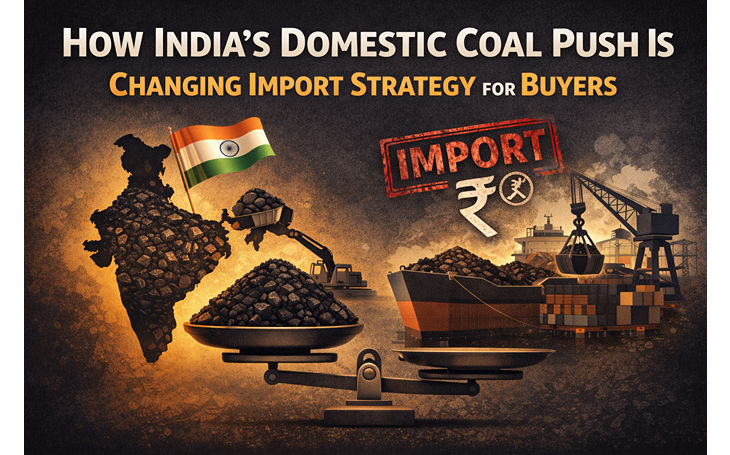
India has been steadily increasing its focus on domestic coal production to strengthen energy security and reduce dependence on imports. Policy reforms, expanded mining capacity, and faster clearances have boosted local coal availability. This domestic coal push is reshaping how Indian buyers approach coal imports. Rather than relying solely on overseas supply, companies are now adopting more balanced and strategic sourcing models.
The Shift Toward Domestic Coal
India has large coal reserves, and recent efforts have aimed at unlocking this potential. Increased output from public sector mines and the entry of private players have improved domestic supply. For power and industrial users, this means better access to locally produced coal and shorter supply chains.
Domestic coal offers advantages such as lower logistics risk, reduced foreign exchange exposure, and faster delivery. These factors are encouraging buyers to reassess their long standing import strategies.
Why Imports Still Matter
Despite the push for domestic coal, imports remain essential. Indian coal has higher ash content and varying quality, which limits its use in certain applications. Steel producers continue to depend on imported coking coal, while many power plants rely on imported thermal coal to maintain efficiency and control emissions.
As a result, imports are not disappearing but becoming more selective. Buyers are focusing on blending strategies that combine domestic coal with imported grades to achieve stable performance at lower overall cost.
Changing Import Strategy for Buyers
The domestic coal push has encouraged buyers to move from volume driven imports to quality driven imports. Instead of importing large quantities, companies are targeting specific grades that complement domestic coal.
Buyers are also becoming more flexible in sourcing. Shorter contracts, diversified suppliers, and spot purchases are being used to respond quickly to market changes. This approach reduces exposure to price volatility and supply disruptions.
Greater Focus on Quality and Compliance
With domestic coal availability improving, imported coal is now expected to deliver clear performance benefits. Buyers are placing stronger emphasis on consistent specifications, lower moisture, and predictable ash behavior.
At the same time, regulatory scrutiny on coal imports has increased. Accurate documentation, quality verification, and compliance with customs and environmental rules are critical. Import strategies that ignore compliance risk face delays, penalties, and cost overruns.
Impact on Cost Management
Blending domestic and imported coal allows buyers to optimize fuel cost without compromising output. However, this requires careful planning and data driven decisions.
Poor blending or inconsistent quality can quickly erase cost advantages. Successful buyers invest in testing, monitoring, and professional oversight to ensure that imported coal adds value rather than complexity.
How Gsinfotechvis Helps Buyers Adapt
Gsinfotechvis supports coal buyers in navigating this changing landscape. Their services help companies align import strategies with domestic coal usage, regulatory requirements, and plant performance needs.
From quality assessment and documentation review to compliance advisory, Gsinfotechvis enables buyers to make informed sourcing decisions. Their structured approach helps businesses balance domestic supply with targeted imports efficiently.
Looking Ahead
India’s domestic coal push will continue to influence import patterns. Buyers who adapt by focusing on quality, flexibility, and compliance will be better positioned to manage risk and control costs.
Conclusion
India’s growing domestic coal production is not eliminating imports but redefining their role. Import strategies are shifting toward selective sourcing, blending, and stronger quality control. By partnering with experts like Gsinfotechvis, coal buyers can adapt to these changes, reduce risk, and build a resilient and cost effective fuel strategy that supports long term growth.
Check us out on LinkedIn.