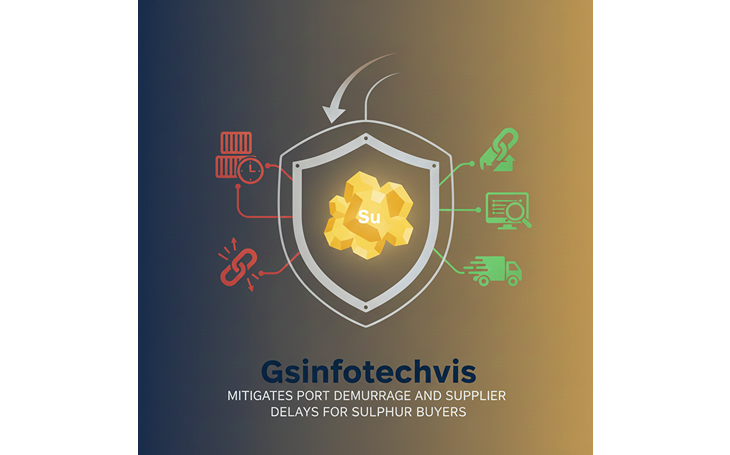
How Gsinfotechvis Mitigates Port Demurrage and Supplier Delays for Sulphur Buyers
Port delays are one of the biggest hidden costs in sulphur trade. A shipment may be priced competitively, but if it sits on a vessel or in a terminal because of late documentation, poor coordination or supplier errors, the final cost increases quickly. Demurrage charges can run into thousands of dollars per day and force buyers to absorb expenses they never planned for.
Gsinfotechvis approaches sulphur logistics with a risk management mindset. Instead of waiting for issues at the port, we work to prevent them. The following methods are key to keeping shipments moving smoothly and protecting buyers from unnecessary penalties.
Understanding Demurrage in Sulphur Trade
Demurrage occurs when a vessel overstays its allowed time at a terminal. The longer a ship sits idle, the more the owner charges. In sulphur shipments, this typically happens due to delayed port clearance, incomplete paperwork, cargo disputes or supplier-side holdups. Even a few days of delay can be more expensive than the shipment’s freight cost.
Many buyers assume demurrage is a downstream problem, but in bulk commodity trade it begins at the source. The real solution is early planning and strict supplier accountability.
Anti Demurrage Enforcement from the Contract Stage
Gsinfotechvis integrates anti demurrage clauses directly into trade agreements. These terms transfer the risk of delay to the party responsible for creating it. If a supplier misses loading dates or fails to complete mandatory documentation on time, they absorb the penalty, not the buyer.
In practice, this means the supplier is motivated to deliver product to the port in time, provide accurate packing lists, label cargo correctly and maintain continuous communication. The buyer does not become the safety net for supplier mistakes. This approach has proven to be far more effective than chasing compensation after the damage is done.
Laytime Benchmarking Based on Real Port Performance
Laytime refers to the time permitted for loading or unloading a shipment. Many contracts use generic estimates which do not account for local infrastructure. Gsinfotechvis benchmarks laytime using real historical port performance. We study loading rates, crane availability, average waiting times and seasonal traffic patterns.
This helps us set realistic standards that reflect each port’s actual capacity. When agreements are based on real numbers instead of assumptions, there is less risk of crossing the laytime threshold. Buyers benefit because projects stay predictable and vessels turn faster.
LC Clauses that Protect Buyers
Letters of credit are normally used to secure payments between buyer and supplier. Gsinfotechvis structures LC terms to protect the buyer from delivery failures. Payment conditions are tied to proof of loading, compliance documents and verified inspections.
If a supplier tries to ship incorrect grade sulphur or attempts to skip inspection, payment cannot be released. This incentivizes accurate delivery and prevents low quality cargo from reaching the port and causing clearance delays. LCs become a contract enforcement tool rather than just a banking formality.
Tight Coordination Between Port, Transport and Supplier
Many delays happen because multiple parties work independently. Gsinfotechvis manages these links centrally. We confirm truck schedules, container allocations and berth slots before the cargo moves. If a vessel is early or the port is congested, alternate routing is activated before the situation becomes critical.
This proactive coordination prevents a common issue in bulk trade: cargo arriving before port paperwork or customs having to recheck labeling due to incomplete documents. By keeping physical and administrative workflows synchronized, we reduce waiting times at terminals.
When a Delay Still Happens
Even the best planning cannot eliminate every risk. Extreme weather, vessel breakdowns or port strikes can disrupt movement. In such cases, Gsinfotechvis follows a recovery protocol. We work with terminal operators, insurance providers and carriers to minimize financial exposure. We negotiate demurrage caps, reschedule discharge windows and communicate updates to buyers in real time.
Instead of reacting blindly, buyers get a controlled response plan that focuses on cost containment.
The Result for Industrial Buyers
Predictability is the real value. Sulphur buyers need cargo that arrives on time, without surprise penalties. When risks are managed at the supplier level, contracts become reliable and ports become less stressful. Productivity remains stable and plants can plan inventory with confidence.
Final Thoughts
Gsinfotechvis treats demurrage as a preventable problem. By enforcing accountability, using accurate laytime data and structuring protective LC terms, we help buyers receive sulphur shipments with minimal disruption and maximum certainty.
Check us out on LinkedIn.