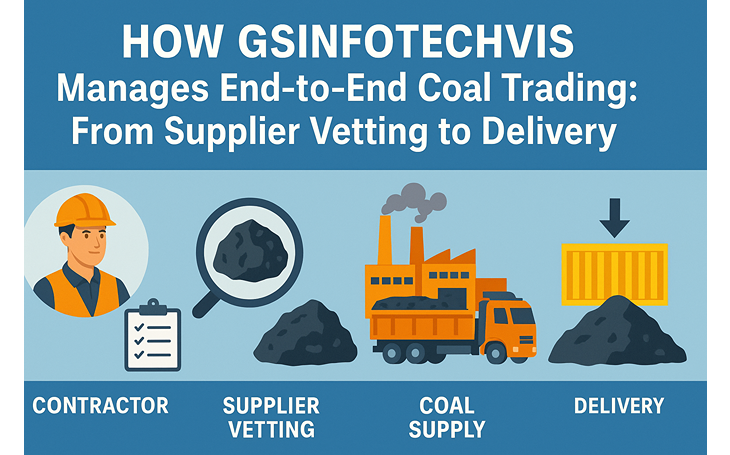
How Gsinfotechvis Manages End-to-End Coal Trading: From Supplier Vetting to Delivery
Coal trading is a complex process. It involves multiple stages, strict documentation, quality checks, global coordination and precise timing. For industries that rely on steam coal, any disruption in this chain can lead to operational delays and increased costs.
This is why a strong end-to-end trading system matters. Gsinfotechvis has built a streamlined coal trading workflow that covers everything from supplier identification to final delivery at the client’s facility. Each step is handled with clarity, compliance and careful verification.
Here is a simple breakdown of how the full process works.
1. Supplier Vetting and Verification
The first step in coal trading is choosing trustworthy suppliers. Gsinfotechvis evaluates global suppliers using a detailed verification process.
This includes:
◾ Legal and compliance checks
◾ Review of export licenses
◾ Port loading capacity
◾ Historical delivery performance
◾ Risk and credit evaluation
◾ ESG and safety checks
By selecting only credible and well established exporters, the company ensures that clients receive consistent grades and timely shipments.
2. Soft Corporate Offer (SCO)
Once a supplier qualifies, a Soft Corporate Offer is shared. The SCO outlines basic terms such as:
◾ Coal grade
◾ Calorific value
◾ Quantity
◾ Loading port
◾ Price range
◾ Delivery format
The SCO helps both sides align on initial expectations before formal commitments begin.
3. Full Corporate Offer (FCO)
After both parties agree on preliminary terms, the supplier issues an FCO. This is a more detailed offer that includes quantity, specifications, logistics and commercial terms.
Buyers review the FCO carefully before proceeding. It is an important checkpoint in the negotiation phase.
4. ICPO and NCNDA
Once the buyer is ready to move ahead, an Irrevocable Corporate Purchase Order is issued. This confirms the buyer’s intent to purchase and readiness to meet the commercial requirements.
An NCNDA, Non Circumvention and Non Disclosure Agreement, is also put in place to protect confidentiality and ensure trust between all parties involved.
5. Banking Instruments: LC or SBLC
A Letter of Credit or Standby Letter of Credit is the next major step. These instruments guarantee the financial commitment of the buyer.
This stage ensures that:
◾ Payments are secure
◾ The supplier can proceed confidently
◾ The transaction meets international banking standards
Proper financial documentation reduces risk on both sides.
6. SPA: Sales and Purchase Agreement
Once banking terms are confirmed, both parties sign the SPA. This is a legally binding agreement that details:
◾ Contracted coal specifications
◾ Quantity and shipment schedule
◾ Price
◾ Performance obligations
◾ Penalties and protections
◾ Delivery terms
◾ Inspection procedures
The SPA is the backbone of the entire transaction.
7. Quality and Quantity Inspection
Before shipment leaves the loading port, a third party inspection is conducted. Agencies like SGS or Intertek verify:
◾ Calorific value
◾ Moisture levels
◾ Ash content
◾ Sulphur
◾ Weight and measurement
These checks ensure the coal matches the contracted specifications. Reports are shared with all parties for transparency.
8. Shipping, Loading and Port Coordination
Once inspection is complete, the shipment is loaded onto the vessel. Gsinfotechvis coordinates closely with:
◾ Port authorities
◾ Loading teams
◾ Vessel operators
◾ Customs agents
This coordination reduces demurrage, avoids unnecessary delays and ensures the shipment departs on schedule.
9. Delivery and Final Inspection
When the shipment arrives in India, another inspection may be conducted depending on client requirements. After unloading, coal is transported to the client’s facility through road or rail.
Industries receive:
◾ Verified coal grade
◾ Accurate quantity
◾ Updated documentation
◾ Smooth logistics support
This completes the end to end trading cycle.
Why This Process Matters for Industries
A structured coal trading process ensures:
◾ Minimum risk
◾ Consistent supply
◾ Accurate specifications
◾ Fewer operational delays
◾ Strong compliance
◾ Better planning for industries
For large industries that rely on steam coal, predictability is essential. A clear trading structure allows them to focus on production without worrying about supply chain gaps.
Final Thoughts
Coal trading may look complicated from the outside, but with the right systems in place, it becomes efficient, safe and predictable. By following a clear step by step process that covers verification, documentation, inspection and delivery, Gsinfotechvis ensures that clients receive dependable coal supply tailored to their needs.
Check us out on LinkedIn.