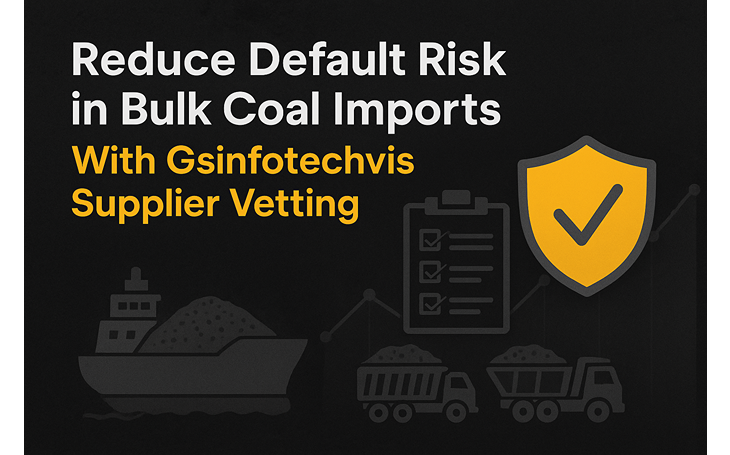
How Gsinfotechvis’s Supplier Vetting Reduces Default Risk in Bulk Coal Imports
Bulk coal imports are high stakes transactions. A single shipment can cost millions of dollars, involve several countries and rely on weeks of coordination. When a supplier defaults, the buyer loses far more than freight fees. There are demurrage penalties, broken production schedules and legal disputes that can take months to settle.
This is why supplier vetting is not a paperwork formality. It is the difference between secure coal sourcing and costly surprise.
Gsinfotechvis approaches supplier selection as a risk management process. Instead of waiting to discover problems mid shipment, we identify them before contracts are signed. The goal is simple. Only work with suppliers who can deliver on volume, grade and timing.
Creditworthiness Checks with D&B
Every coal partner is evaluated using Dun and Bradstreet profiling. This gives insight into the supplier’s financial health, years in operation, payment patterns and past defaults.
Coal is a commodity where low margin intermediaries can disappear mid shipment. Vetting helps filter out companies that only exist on paper or carry unstable credit.
D&B data also helps assess scale compatibility. If a supplier has historically managed small tonnages, they are unlikely to sustain continuous 30 to 50 thousand metric tonne cargoes. Financial resilience matters as much as mine capacity, because bulk trade often requires upfront inventories and strong bank relationships.
Compliance Screening Through World Check
International coal trading touches multiple jurisdictions. Sanctions, environmental violations or politically exposed owners can freeze shipments at the worst possible moment.
Gsinfotechvis uses World Check to screen counterparties for:
◾ Sanction exposure
◾ Litigation history
◾ Money laundering risk
◾ Export ban violations
◾ Reputation alerts
This is not only regulatory hygiene. It protects the buyer from vessels being detained or banks rejecting Letters of Credit due to hidden compliance flags. A supplier with a clean compliance profile is far less likely to trigger cargo seizures or port blockages.
ESG Filters for Sustainable Partnerships
Coal buyers increasingly face reporting obligations on environmental and social performance. ESG review is not about branding. It is about ensuring the supplier respects mine safety, local communities and worker standards.
Suppliers with questionable labor practices often face regional shutdowns or government restrictions. Those disruptions translate to shipment gaps, and buyers end up scrambling for alternative cargo.
Gsinfotechvis screens for:
◾ Worker safety records
◾ Environmental compliance
◾ Regulatory actions
◾ Export credibility
◾ Responsible mining conduct
A supplier that treats ESG like a box ticking exercise usually treats delivery obligations the same way. Responsible operators tend to be reliable ones.
Real Data on Charter Party and Shipment History
Paper contracts tell you intentions. Charter party records tell you truth.
Gsinfotechvis reviews supplier shipping history to verify how often they:
◾ Delivered late
◾ Exceeded laytime
◾ Incurred demurrage
◾ Disputed freight agreements
◾ Cancelled post nomination
A supplier that repeatedly delays vessels or disputes loading terms is a risk. Charter party transparency lets us avoid those patterns. We listen to what ports and carriers report, not only what suppliers claim.
Physical Origin Checks and Stock Audits
Coal sourcing is reliable when it is anchored to real mines or yard inventories. Gsinfotechvis verifies physical origin through:
◾ Terminal photographs
◾ Stockyard inspection reports
◾ Port capacity validation
◾ SGS or Intertek quality certifications
This ensures that cargo exists before contractual commitments begin. Many buyers get trapped in allocation based trading, where coal is promised from one supplier based on someone else’s inventory. When origin is unclear, delays are inevitable.
Documentation and Trade Readiness
A good supplier is ready long before the ship arrives.
Gsinfotechvis evaluates administrative capability:
◾ Can they issue a valid MSDS
◾ Do they correctly label cargo with UN codes
◾ Do they understand LC terms
◾ Can they provide full POP and Q and Q results
Suppliers who struggle with paperwork always struggle with logistics. Those failures often show up at customs, not at contract negotiation.
Why Vetting Protects the Buyer’s Bottom Line
Coal defaults do not just interrupt fuel supply. They force factories to idle boilers, cut production and activate emergency procurement at premium prices. Demurrage eats margins. Late vessels trigger cascading port penalties. Reputation suffers when customers do not get energy or raw material on time.
Gsinfotechvis reduces these risks by saying no early. By narrowing the supplier pool to vetted, proven operators, we prevent costly surprises before they reach the buyer. Reliable coal cannot be sourced through shortcuts. It requires discipline, data and strict standards that place performance over promises.
For industrial buyers, this approach means predictable shipments, fewer disputes and a supply chain built on verified capability rather than optimistic intent.
Know more about us on LinkedIn.