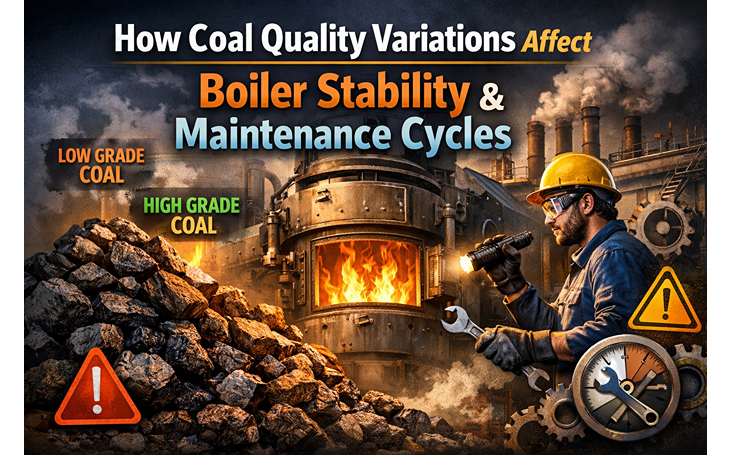
How Coal Quality Variations Affect Boiler Stability and Maintenance Cycles
Coal quality plays a direct role in how efficiently boilers operate in power plants, cement units, and other coal based industries. While fuel procurement often focuses on price and availability, variations in coal quality can quietly disrupt boiler stability and significantly increase maintenance costs. Understanding these effects helps plant operators reduce downtime, improve efficiency, and protect long term asset health.
Why Coal Quality Matters in Boiler Operations
Boilers are designed to operate within specific fuel parameters. When coal quality deviates from these parameters, combustion behavior changes. This affects flame stability, heat transfer, ash formation, and emissions.
Even small variations in coal quality can lead to uneven combustion, higher wear on equipment, and frequent operational adjustments. Over time, this reduces boiler reliability and shortens maintenance cycles.
Key Coal Quality Parameters That Impact Boilers
Calorific Value
Calorific value determines how much energy coal produces. Low or inconsistent calorific value forces operators to burn more coal to maintain output. This increases fuel handling, ash generation, and thermal stress on boiler components. Fluctuating energy content also makes it harder to maintain steady steam generation.
Ash Content and Ash Characteristics
High ash coal leads to more residue after combustion. Excess ash can deposit on boiler tubes, reducing heat transfer efficiency. Over time, this causes higher fuel consumption and uneven temperature distribution.
Ash composition also matters. Certain ash types are sticky and form slag on furnace walls, while others create fine deposits that block air passages. Both scenarios increase cleaning frequency and maintenance shutdowns.
Moisture Content
High moisture coal absorbs heat during combustion, lowering flame temperature. This reduces combustion efficiency and can cause flame instability. Boilers burning wet coal often experience delayed ignition and incomplete combustion, leading to higher unburnt carbon losses.
Moisture variations between shipments can force frequent operational adjustments, increasing operator workload and system stress.
Volatile Matter
Volatile matter affects how easily coal ignites and burns. Coal with very high volatile matter may ignite too quickly, causing flame instability. Low volatile coal may be difficult to ignite and require additional support fuel.
Inconsistent volatile levels across coal supplies can make stable boiler operation challenging, especially during load changes.
Sulfur and Other Impurities
Higher sulfur levels increase corrosion risk in boilers and downstream equipment. This accelerates wear and raises maintenance costs. Other impurities can also affect emissions control systems, adding further operational pressure.
Impact on Maintenance Cycles
Poor or inconsistent coal quality directly shortens maintenance cycles. Boilers exposed to high ash and slagging conditions require more frequent shutdowns for cleaning. Tube erosion, corrosion, and fouling increase repair frequency and spare part consumption.
Unplanned outages become more common, disrupting production schedules and increasing operational costs. Over time, asset life is reduced, leading to higher capital expenditure.
How Consistent Coal Quality Improves Stability
Stable coal quality allows boilers to operate within designed limits. Combustion becomes predictable, heat transfer improves, and emissions remain under control. This extends maintenance intervals, reduces forced outages, and improves overall plant efficiency.
Many plants use coal blending to manage quality variations, but this requires accurate quality data and careful planning.
The Role of Quality Management and Compliance
Managing coal quality is not just a technical issue, it is also a procurement and compliance challenge. Accurate quality documentation, third party inspection reports, and proper supplier selection play a critical role in maintaining consistency.
This is where expert support becomes valuable.
How Gsinfotechvis Supports Boiler Performance
Gsinfotechvis helps industries manage coal quality through structured documentation review, inspection coordination, and compliance aligned procurement support. By ensuring accurate quality verification before coal reaches the plant, they help reduce operational surprises and protect boiler stability.
Their practical approach supports smoother operations, longer maintenance cycles, and better cost control for coal dependent industries.
Conclusion
Coal quality variations have a significant impact on boiler stability and maintenance cycles. Inconsistent fuel leads to operational instability, higher maintenance costs, and reduced efficiency. By focusing on quality management and working with experienced partners like Gsinfotechvis, industries can protect their boilers, improve performance, and achieve more reliable long term operations.
Check us out on LinkedIn.