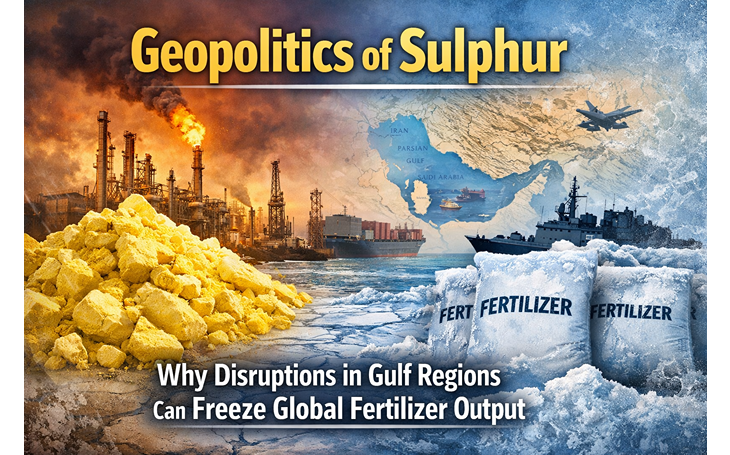
Geopolitics of Sulphur: Why Disruptions in Gulf Regions Can Freeze Global Fertilizer Output
Sulphur is one of the most strategic commodities in modern agriculture. Without it, phosphate fertilizers such as DAP, MAP and SSP cannot be produced at scale. Nearly all sulphur used in fertilizer production first becomes sulphuric acid, which then reacts with phosphate rock. The surprising part is that most of this sulphur is not mined. It is recovered from petroleum refining, and much of the refining capacity sits in one region, the Gulf.
Saudi Arabia, Qatar, UAE, Oman and Kuwait handle a large share of global sulphur exports. A disruption in any of these hubs can ripple through fertilizer supply chains and cause crop inputs to spike in price. Understanding these geopolitical risks is essential for manufacturers and industrial buyers.
Why the Gulf Dominates Sulphur
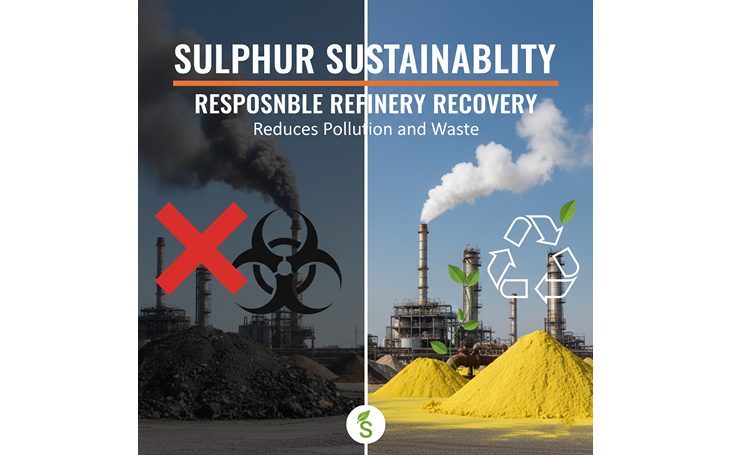
The Gulf states process vast amounts of sour crude and natural gas. Their refineries and gas treatment plants use desulfurization to strip sulphur from fuels. Instead of treating it as waste, they convert it into industrial-grade sulphur that is shipped around the world. These facilities deliver millions of tonnes each year, which feed fertilizer production in India, China, Pakistan, Turkey, Indonesia and Africa.
This scale matters. When Gulf shipments slow down, fertilizer factories struggle to secure feedstock. Because the fertilizer sector consumes most of the sulphur produced globally, supply tightness quickly turns into production slowdown.
How Regional Tensions Turn Into Industrial Shortages
Geopolitical shocks do not always begin in chemical warehouses. Often they start with maritime disruptions, banking restrictions or diplomatic friction.
Typical chain of events
◾ Political tension affects shipping or airspace
◾ Ports become congested or restricted
◾ Refinery maintenance is delayed or accelerated
◾ Export paperwork faces additional checks
◾ Bulk cargo movement slows down
◾ Fertilizer plants run short on sulphur
◾ Wholesale fertilizer prices rise
Even short term disruptions can affect fertilizer manufacturers. Unlike metals, sulphur cannot be easily replaced. If fuel desulfurization decreases, supply drops instantly.
The Refinery Shutdown Factor
Refineries in the Gulf undergo planned turnarounds. These maintenance cycles reduce output while equipment is serviced. While planned, they still trigger price spikes because many buyers wait until the last moment to procure inventory. Unexpected shutdowns are worse. Political tension, sanctions or safety incidents can halt production without warning.
Fertilizer producers buy sulphur as a feedstock, not as a speculative commodity. When feedstock disappears, plants either cut output or pay whatever price is available on the market.
The result is simple. Less sulphur equals less sulphuric acid. Less sulphuric acid equals less phosphate fertilizer. Farmers eventually feel the impact in higher prices for inputs, and food systems become more fragile.
Why India Is Vulnerable
India is one of the world’s largest fertilizer consumers. The country produces large volumes of DAP and SSP but depends heavily on imported sulphur and phosphoric acid. When Gulf shipments become unpredictable, Indian producers experience immediate cost pressure. Companies either scramble for replacement sources or scale back output until supply resumes.
Because India has limited domestic sulphur reserves, strategic sourcing from international partners becomes essential.
Maritime Chokepoints That Magnify Risk
The Gulf is surrounded by critical sea routes. Narrow waterways like the Strait of Hormuz and busy export corridors through Oman, Qatar and Fujairah carry huge volumes of petroleum and sulphur. Military tension, shipping attacks, or even changes in regional freight insurance can slow logistics.
Maritime disruptions trigger:
◾ Vessel delays and rescheduling
◾ Rising freight rates
◾ Limited availability of bulk carriers
◾ Forced storage at ports
◾ Demurrage penalties
All of these raise the landed cost of sulphur, long before it ever reaches a fertilizer plant.
Buyer Strategies During Unstable Periods
Industrial buyers cannot control geopolitics, but they can reduce vulnerability.
Core strategies include:
◾ Building supply from multiple regions, not just one country
◾ Maintaining inventory buffers rather than running lean
◾ Using long term contracts to avoid spot market panic
◾ Working with suppliers that have flexible logistics networks
◾ Tracking refinery turnaround schedules
◾ Monitoring port performance and freight indexes
Companies that adopt these strategies keep production steady while others face shutdowns.
How Gsinfotechvis Supports Sulphur Buyers
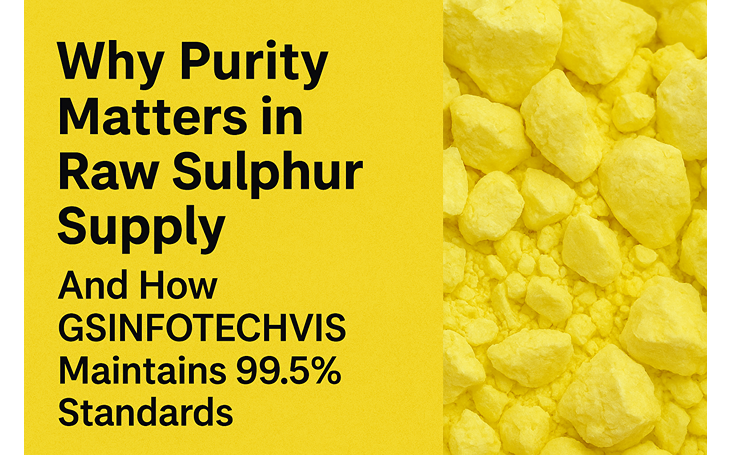
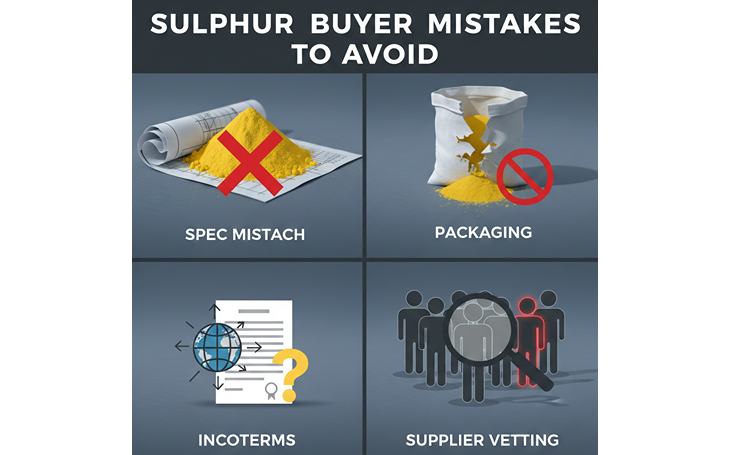
Gsinfotechvis Pvt Ltd understands the geopolitical nature of sulphur supply. The company sources raw sulphur balls from trusted refineries and industrial producers in multiple regions, not only one. This reduces dependency on a single Gulf hub and protects buyers from sudden market shocks. Each shipment is backed by documentation, inspection reports and packaging suited for bulk handling.
Clients trust Gsinfotechvis because:
◾ Supply chains adapt quickly to regional instability
◾ Shipments meet industrial purity and safety standards
◾ Logistics planning reduces demurrage and storage risks
◾ Teams understand import compliance for major ports
◾ Quality is verified through third party testing
In volatile global markets, resilience comes from preparation. If your business relies on stable sulphur supply for fertilizer or industrial use, Gsinfotechvis can help you stay ahead of uncertainty.
Check us on LinkedIn.