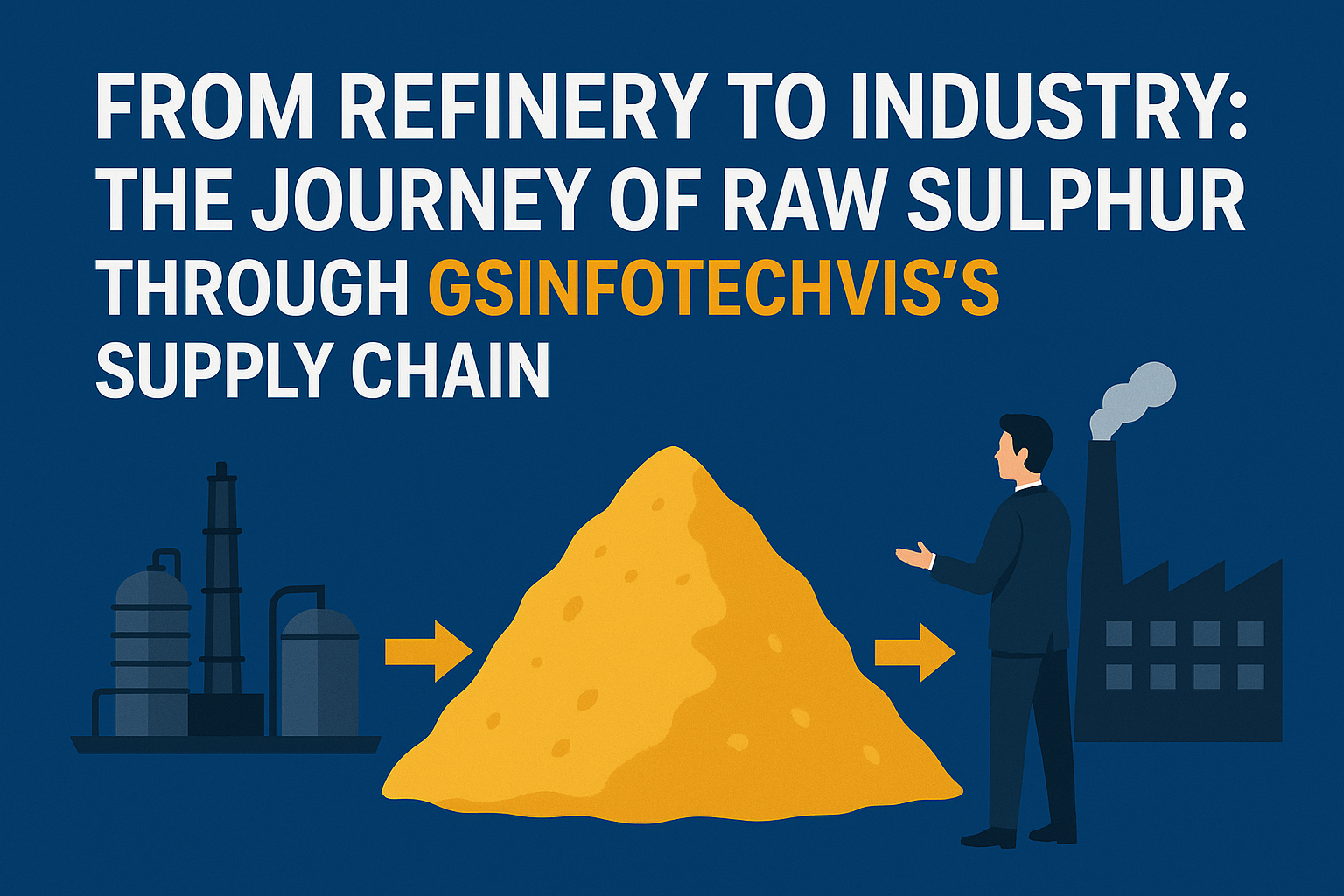
From Refinery to Industry: The Journey of Raw Sulphur Through Gsinfotechvis's Supply Chain
Raw sulphur is a critical ingredient for many industries, especially fertilizer plants, chemical manufacturers and rubber processors. But the journey from a refinery to an industrial facility is far more complex than simply loading a product into a container. It requires strict sourcing controls, safety protocols, independent testing and clear documentation at every stage.
Gsinfotechvis has developed a structured export supply chain that ensures sulphur reaches global buyers safely, consistently and in high purity form. This guide breaks down the entire process step by step so buyers understand how their sulphur is sourced, checked, packed and delivered.
1. Sourcing Sulphur from Verified Refineries
The journey begins at refinery-grade sulphur producers. These refineries extract sulphur during crude oil or natural gas processing, which naturally yields high purity material. Gsinfotechvis works only with verified suppliers who meet strict criteria.
Supplier selection criteria include
◾ Consistent production capacity
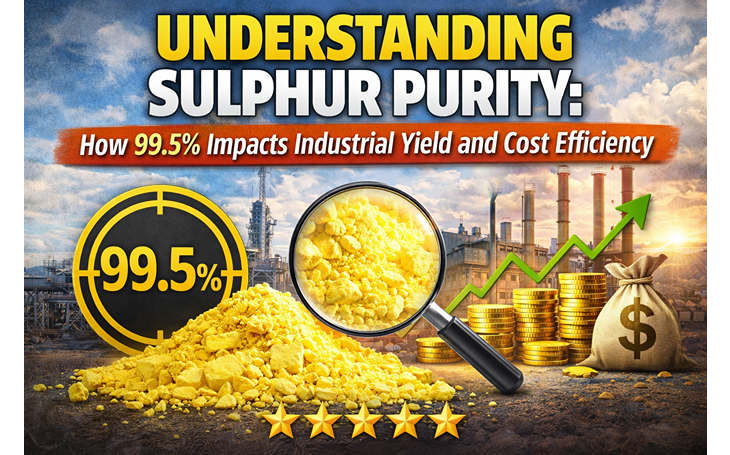
◾ Purity levels near or above 99.5 percent
◾ Compliance with refinery safety and environmental norms
◾ Strong track record in export readiness
◾ Transparent quality documentation
This ensures that buyers receive sulphur that meets industrial chemistry needs without variations or impurities.
2. Pre-Shipment Quality Checks and Laboratory Testing
Quality consistency is one of the most important steps in the sulphur supply chain. Before any shipment leaves the refinery, Gsinfotechvis mandates thorough Q and Q inspections through trusted third party agencies like SGS or Intertek.
Quality checks include
◾ Purity analysis
◾ Moisture measurement
◾ Ash content
◾ Particle size for sulphur balls or granules
◾ Hydrocarbon residue checks
◾ Weight verification
A detailed Certificate of Analysis (COA) is then provided to the buyer. This builds confidence and avoids disputes at the destination port.
3. Packaging for Safe Handling and Transport
Once quality is confirmed, the sulphur is packed according to international safety standards. The packaging format depends on the buyer’s requirement and shipping method.
Typical packaging options
Jumbo Bags (1 MT or 1.2 MT)
Ideal for easy handling, stacking and clean loading. Inner liners protect against moisture.
Container Shipments
Used when buyers need cleaner loading processes or smaller volumes. Containers protect sulphur from weather and contamination.
Bulk Shipments
Suitable for very large volumes. Vessel holds are cleaned, lined and inspected before loading.
Proper packaging also ensures compliance with IMDG and UN Class 4.1 rules for hazardous cargo.
4. Safety Protocols and Compliance Documentation
Every sulphur shipment is accompanied by complete documentation to meet global safety standards.
Documentation includes
◾ MSDS (Material Safety Data Sheet)
◾ IMDG declaration
◾ Certificate of origin
◾ Packing list
◾ Commercial invoice
◾ COA from third party labs
◾ Bill of lading
Gsinfotechvis follows GHS labelling, UN Class 4.1 safety codes and IMO handling rules. This ensures the cargo moves through ports without delays or compliance issues.
5. Shipping Coordination and Logistics Execution
Logistics is a major part of the sulphur journey. Gsinfotechvis oversees the entire export movement from loading port to buyer destination.
Key logistics activities
◾ Scheduling vessels in advance
◾ Supervising loading to avoid contamination
◾ Ensuring proper stowage
◾ Monitoring shipping routes
◾ Providing real time movement updates
◾ Coordinating customs and port formalities
This structured approach minimizes delays and prevents demurrage, giving buyers predictable delivery timelines.
6. Delivery to the Buyer’s Facility
Once the vessel arrives at the destination port, the sulphur undergoes final checks. Gsinfotechvis then coordinates unloading, storage and inland movement when required.
This stage ensures
◾ Clean and safe discharge
◾ Proper handling at the receiving terminal
◾ Smooth transition to local transport partners
◾ On time delivery to industrial buyers
From refinery gate to industrial doorstep, the entire chain is designed to preserve product purity and maintain consistent supply.
Final Thoughts
Raw sulphur may look simple, but delivering it safely and reliably requires a detailed supply chain. From verified refineries and independent testing to compliant packaging and coordinated shipping, each step plays an important role in quality and safety.
Gsinfotechvis brings these elements together to provide industries with high purity sulphur that arrives clean, certified and on time. For fertilizer plants, chemical producers and industrial users, this reliability supports stable operations and long term planning.
Check us out on LinkedIn.