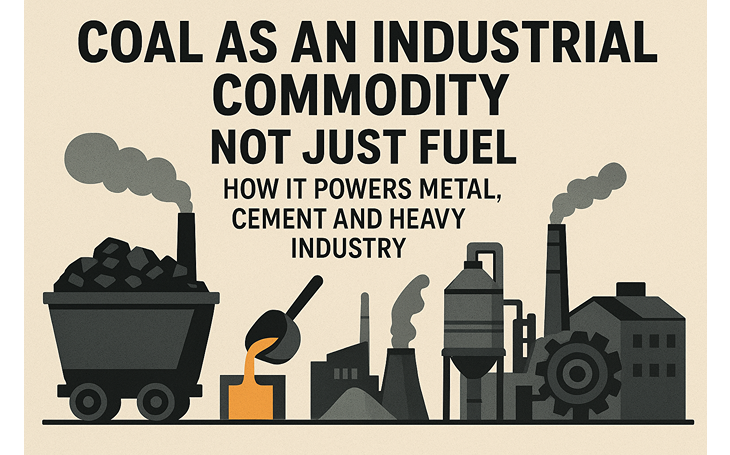
Coal as an Industrial Commodity: Not Just Fuel. How It Powers Metal, Cement and Heavy Industry
Most people see coal only as a fuel source. In industries, coal is far more valuable. It is an input material that shapes how factories run, how metals are produced, and how cement is hardened. Understanding coal as a commodity helps purchasing heads evaluate long term strategy instead of short term cost. Industrial buyers who treat coal as part of downstream production logic benefit from higher output, predictable efficiency, and stronger cost control.
Coal in Steel and Metal Processing
In metal industries, coal is not just burned. It is transformed into coke, a form of carbon that acts as both heat source and chemical reducer. During ironmaking, coke removes oxygen from iron ore and produces molten iron in a blast furnace. Without coke, iron cannot be converted efficiently to steel.
Metallurgical coal has specific characteristics. It needs strong coking properties, low ash, and controlled moisture. These traits prevent furnace instability and allow consistent furnace pressure. When a steel mill secures reliable coal quality, production losses decrease and energy use becomes predictable. Poor coal leads to slag buildup, irregular melt cycles, and higher maintenance.
Industrial buyers who source metallurgical coal through competent suppliers reduce risk in two directions. They secure consistent carbon material and avoid unpredictable shutdowns. This is why major steel producers operate with strict quality standards and layered testing methods. Coal behaves like a raw material, not simply an energy source.
Cement Plants and the Heat Logic
Cement manufacturing relies on coal for stable, high temperature combustion. Rotary kilns need temperatures above 1400 degrees Celsius. Coal is ideal because it maintains flame consistency and can be fed precisely using calibrated burners.
Thermal coal with proper calorific value ensures steady clinker formation. If coal quality fluctuates, kiln temperature becomes unstable. The clinker may form incorrectly and the grinding stage becomes inefficient. This leads to more power consumption and weaker cement output.
By sourcing coal with stable GAR or NAR values, cement plants avoid these inefficiencies. Consistent coal translates directly into predictable tonnage of cement. The commodity value lies in its ability to preserve process stability, not only in its price per ton.
Coal in Heavy Industry
Heavy industry covers aluminum smelters, paper mills, chemical plants, textile factories, and refineries. Many facilities use coal as feedstock for heat, steam, or gasification.
Aluminum smelters require significant heat for electrolysis. Paper mills depend on boilers that use coal to generate steam for pulping and drying. Industrial chemicals such as ammonia or carbon based solvents also originate from coal via controlled conversion.
In each case, coal influences the end product. A textile unit that runs on steady steam can maintain fabric drying cycles. A chemical plant with consistent coal gasification can keep stable yields. As a result, the value of coal lies in the performance it enables downstream.
Downstream Industrial Logic
Coal is a bridge between energy and production. It is similar to iron ore or limestone. When the input material changes, output volume changes. When reliability improves, profitability improves. Industrial buyers who understand this logic focus on metrics like calorific value, ash behavior, sulfur content, and moisture.
Instead of asking how cheap coal is, they ask how coal affects the factory floor. They assess thermal cost per unit of production. They measure how fuel predictability reduces downtime. They evaluate how consistent combustion lowers maintenance. This is the mindset that drives competitive advantage in heavy industry.
Why Reliable Supply Matters
A stable coal source is not a luxury. It is operational insurance. Running out of coal in a blast furnace or kiln can cause heavy losses. Restarting equipment or restarting industrial furnaces may take days. In some cases, the cost of shutdown exceeds the value of the coal inventory by a large margin.
Industrial procurement leaders prefer suppliers who understand this logic. They do not simply demand shipments. They demand quality parameters, inspection records, moisture control, and performance guarantees. Companies like Gsinfotechvis work within this framework by aligning coal supply to industrial usage rather than treating it as bulk commodity trading.
Closing Thought
Coal will always remain an energy source, but in industry it is much more. It is an ingredient that influences how steel is forged, how cement is hardened, and how production lines operate. Viewing coal as an industrial commodity changes how buyers negotiate and how factories plan. The result is better output, stronger process stability, and real economic gains.
Check us out on LinkedIn.