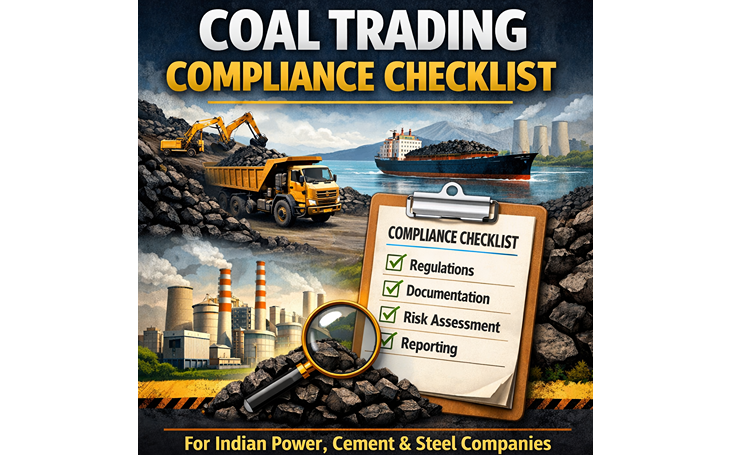
Coal Trading Compliance Checklist for Indian Power, Cement and Steel Companies
Coal trading is a backbone activity for India’s power plants, cement manufacturers, and steel producers. While securing reliable supply and competitive pricing remains important, compliance has become equally critical. Regulatory scrutiny on coal sourcing, imports, quality, and environmental impact is increasing. A clear compliance checklist helps companies avoid penalties, shipment delays, and operational disruptions. This guide outlines the key compliance areas every coal dependent industry in India should focus on.
Supplier Due Diligence
The compliance process starts with the supplier. Companies must verify that coal suppliers follow applicable mining, export, and environmental regulations in their country of origin. Supplier background checks should include ownership details, sanctions screening, and past compliance records. Reliable suppliers reduce the risk of disputes, cargo rejection, and regulatory scrutiny.
Contract and Commercial Documentation
Coal supply contracts should clearly define quality parameters, delivery terms, inspection responsibilities, and dispute resolution mechanisms. Invoices, packing lists, and bills of lading must accurately reflect agreed specifications. Any mismatch between contract terms and shipping documents can trigger customs queries and delays at Indian ports.
Customs Classification and Valuation
Correct classification of coal under the applicable customs tariff is essential. Power, cement, and steel companies must ensure that declared calorific value, ash content, moisture, and grade match test results. Customs authorities often conduct checks to verify valuation and quality. Errors at this stage can lead to duty reassessment, penalties, and extended clearance timelines.
Mandatory Quality and Safety Documents
Coal imports require accurate and up to date quality and safety documentation. This includes certificates of analysis, MSDS, and third party inspection reports such as SGS certificates. These documents confirm coal quality and safety during handling and storage. Consistency across all reports is critical to avoid re testing and shipment holds.
Environmental and Pollution Control Compliance
Coal handling and consumption are subject to environmental regulations. Power plants, cement units, and steel mills must obtain necessary consents from pollution control boards and comply with emission and waste management norms. Proper record keeping of coal consumption, ash disposal, and water usage supports compliance during inspections and audits.
Coal Controller and Regulatory Reporting
Large consumers and captive users of coal are required to submit periodic returns to the Coal Controller’s Organisation. Accurate reporting of coal receipt, consumption, and stock levels is mandatory. Incomplete or incorrect submissions can attract audits and penalties. Maintaining updated records helps companies respond quickly to regulatory queries.
Foreign Exchange and Payment Compliance
Imported coal involves cross border payments governed by FEMA and RBI guidelines. Companies must ensure that remittances to overseas suppliers are supported by correct import documents and settled within prescribed timelines. Non compliance in foreign exchange matters can impact future imports and banking relationships.
Internal Controls and Audit Readiness
An effective compliance framework includes internal checks, documentation tracking, and audit preparedness. Companies should regularly review their coal trading processes to identify gaps and update practices based on regulatory changes. Being audit ready reduces stress during inspections and protects business continuity.
How Gsinfotechvis Adds Value
Managing coal trading compliance across multiple regulations can be challenging. Gsinfotechvis supports power, cement, and steel companies with end to end compliance advisory services. From documentation review and regulatory reporting to audit readiness and risk assessment, their team simplifies complex requirements and helps businesses stay compliant. With practical expertise and a structured approach, Gsinfotechvis enables companies to focus on operations while reducing compliance risk.
Conclusion
Coal trading compliance is no longer optional for Indian power, cement, and steel companies. A clear checklist covering supplier checks, documentation, customs, environmental norms, and regulatory reporting helps prevent costly disruptions. By adopting a proactive compliance approach and partnering with experts like Gsinfotechvis, businesses can ensure smooth coal operations, protect margins, and operate with confidence in an increasingly regulated environment.
Check us out on LinkedIn.