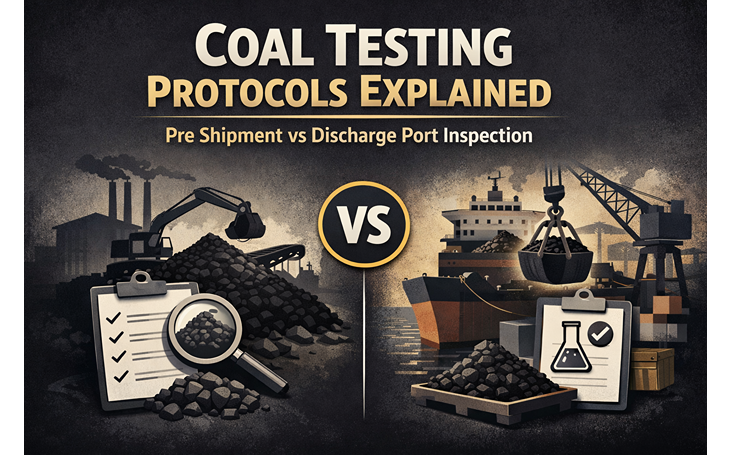
Coal Testing Protocols Explained: Pre Shipment vs Discharge Port Inspection
Coal testing is a critical part of coal procurement and import management. Accurate testing protects buyers from quality risk, pricing disputes, and operational disruption. Two key stages where coal testing is carried out are pre shipment inspection and discharge port inspection. While both serve important purposes, they are often misunderstood or treated as interchangeable. Understanding the difference helps buyers design stronger quality control and risk management processes.
Why Coal Testing Matters
Coal quality directly affects plant efficiency, fuel cost, and maintenance cycles. Testing confirms whether coal meets agreed specifications for calorific value, moisture, ash, volatile matter, and other parameters.
Without proper testing protocols, buyers rely only on supplier declarations. This increases the risk of receiving off spec coal that can impact operations and create disputes after delivery.
What Is Pre Shipment Coal Testing
Pre shipment testing is conducted at the loading port or mine site before the coal is shipped. Independent inspection agencies collect samples during loading and test them at certified laboratories.
The purpose of pre shipment testing is preventive. It gives buyers early visibility into coal quality before the cargo leaves the origin port. If test results fall outside contract limits, buyers can raise objections, renegotiate terms, or stop shipment before costs escalate.
Pre shipment testing also supports documentation accuracy. The results are used to prepare certificates of analysis and inspection reports that accompany shipping documents.
Benefits of Pre Shipment Inspection
The biggest advantage of pre shipment inspection is risk reduction. Detecting quality issues early prevents buyers from paying for non compliant cargo.
It also strengthens contractual control. Clear test results allow buyers to enforce quality clauses and penalties if specifications are not met. From a financial perspective, early testing reduces exposure to demurrage, re testing, and blending costs at the destination.
Pre shipment inspection is especially valuable for imported coal, where corrective action after arrival is limited and expensive.
What Is Discharge Port Coal Testing
Discharge port testing takes place when the coal arrives at the destination port. Samples are collected during unloading and tested to confirm the quality of coal actually received.
This stage focuses on verification rather than prevention. Discharge port results are used to settle final invoices, confirm compliance, and support claims if disputes arise.
Discharge testing also helps plants understand how the coal will perform in their specific operating environment.
Limitations of Discharge Port Inspection
While discharge testing is important, it has limitations. If coal is found to be off spec at this stage, options are restricted. The cargo has already been transported, customs cleared, and discharged.
Corrective actions such as blending, price adjustment, or legal claims often involve delays and additional costs. Operational impact may already be unavoidable, especially for plants with limited stock.
This is why discharge port testing should not be the only quality control measure.
How Pre Shipment and Discharge Testing Work Together
The strongest coal quality control strategy uses both testing stages. Pre shipment testing prevents major issues, while discharge testing confirms final delivery quality.
Comparing results from both stages also helps identify changes during transit, such as moisture increase due to weather. This data improves future procurement decisions and supplier evaluation.
How Gsinfotechvis Strengthens Testing Protocols
Gsinfotechvis helps coal buyers design and manage effective testing protocols. Their team supports inspection planning, agency coordination, and review of test reports at both pre shipment and discharge stages.
By working with Gsinfotechvis, businesses gain clarity and control over coal quality risks. Their proactive approach ensures testing is used as a preventive tool, not just a reactive step.
Conclusion
Coal testing protocols are a key defense against quality risk. Pre shipment inspection reduces exposure by identifying issues early, while discharge port inspection confirms delivery quality and supports claims. Relying on only one stage leaves gaps that can be costly. With expert guidance from Gsinfotechvis, coal buyers can implement balanced testing strategies that protect operations, control costs, and ensure consistent fuel quality.
Check us out on LinkedIn.