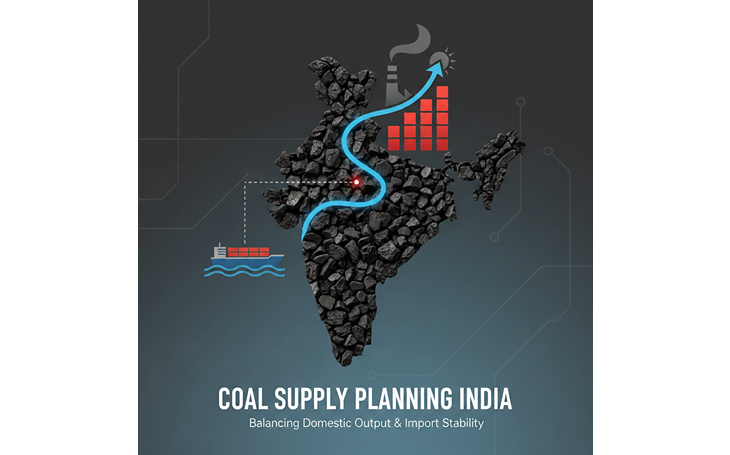
Coal Supply Planning in India: Balancing Domestic Output and Import Stability
Coal supply planning is a critical activity for Indian power producers and industrial users. Reliable fuel availability directly affects plant load, production schedules, and cost control. As India increases domestic coal production while continuing to rely on imports for specific needs, buyers must strike the right balance. Effective planning ensures stability, efficiency, and resilience in a changing energy environment.
The Role of Domestic Coal in Supply Planning
India has made strong progress in boosting domestic coal output. Higher production from public sector mines and new private participation have improved local availability. Domestic coal offers shorter lead times, reduced foreign exchange risk, and greater control over supply.
For many power plants, domestic coal forms the base of fuel planning. It supports baseload generation and provides predictable logistics. However, domestic coal quality varies, especially in terms of ash content, which limits its standalone use in certain applications.
Why Imports Remain Essential
Imports continue to play a stabilizing role in India’s coal supply mix. Steel producers depend on imported coking coal, while several power plants use imported thermal coal to improve efficiency and manage emissions.
Imported coal offers more consistent quality and higher calorific value, which helps balance domestic coal variability. During periods of high demand or domestic supply constraints, imports provide an important buffer that protects plant operations.
Balancing Cost and Reliability
The challenge in coal supply planning is balancing cost efficiency with operational reliability. Domestic coal is generally cheaper but may require blending or operational adjustments. Imported coal is more expensive but offers quality stability.
A balanced strategy uses domestic coal as the primary fuel while supplementing it with imports to achieve performance targets. This approach helps control cost while reducing the risk of output loss or equipment stress.
Managing Supply Risks
Coal supply risks in India include production fluctuations, weather disruptions, transport bottlenecks, and global market volatility. Effective planning accounts for these risks through diversified sourcing and buffer stocks.
Long term contracts for critical imports provide stability, while spot purchases offer flexibility. Clear visibility into delivery timelines and quality parameters is essential for timely decision making.
Importance of Quality and Compliance
Coal supply planning is not only about volume. Quality consistency and regulatory compliance are equally important. Variations in moisture, ash, and heat value can disrupt operations, even if supply volumes are adequate.
Import compliance, documentation accuracy, and quality verification help avoid delays and disputes. Strong coordination between procurement, logistics, and operations teams improves planning effectiveness.
How Gsinfotechvis Supports Coal Supply Planning
Gsinfotechvis helps Indian businesses design structured coal supply strategies that balance domestic and imported coal. Their expertise includes quality assessment, compliance advisory, and documentation support.
By working with Gsinfotechvis, companies gain better control over sourcing decisions and regulatory risk. Their practical approach helps ensure stable supply while optimizing cost and performance.
Preparing for the Future
As India’s energy landscape evolves, coal supply planning will continue to adapt. Improvements in domestic mining, logistics, and technology will strengthen local supply. At the same time, imports will remain a strategic tool for quality and stability.
Conclusion
Coal supply planning in India requires a careful balance between domestic output and import stability. Relying on only one source increases risk and cost. A diversified, well planned approach supports reliable operations and financial control. With expert guidance from Gsinfotechvis, businesses can build resilient coal supply strategies that meet today’s needs while preparing for future change.
Check us out on LinkedIn.