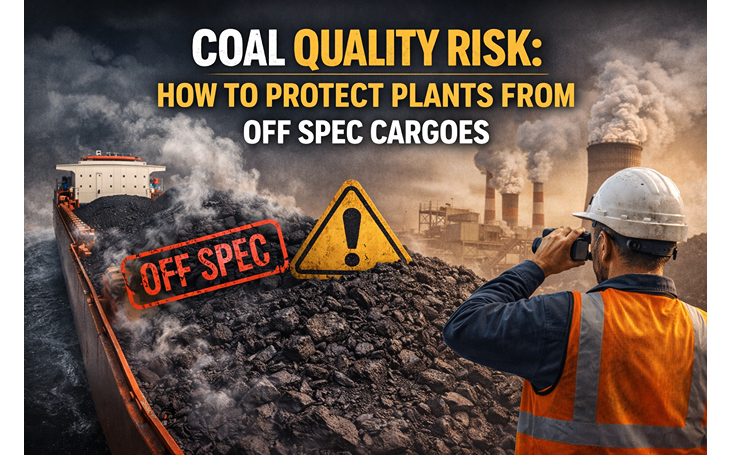
Coal Quality Risk: How to Protect Plants from Off Spec Cargoes
Coal quality risk is one of the most serious yet underestimated challenges faced by power plants and industrial users. An off spec coal cargo can disrupt operations, increase costs, and damage equipment. Even a single shipment that falls outside agreed specifications can impact plant performance for weeks. Understanding how coal quality risk arises and how to manage it is essential for protecting plant stability and profitability.
What Is Coal Quality Risk
Coal quality risk refers to the possibility that delivered coal does not match the specifications agreed in the contract. This may involve higher moisture, higher ash, lower calorific value, or unexpected changes in volatile matter and sulfur.
Off spec coal often looks acceptable on paper but behaves differently during combustion. These differences force plants to adjust operations, blend excessively, or accept reduced efficiency.
How Off Spec Cargoes Affect Plant Performance
When coal does not meet specifications, combustion efficiency drops immediately. Higher moisture reduces effective heat, requiring more coal to generate the same output. Increased ash leads to slagging, fouling, and higher auxiliary power consumption.
Volatile matter variations affect ignition and flame stability, which can cause trips or load instability. Over time, these issues increase maintenance frequency and shorten equipment life. The financial impact often exceeds the cost of the coal itself.
Common Causes of Off Spec Coal
Off spec cargoes usually result from weak quality control at the source, inconsistent mining practices, or blending at the loading port without proper oversight. In some cases, weather conditions such as rain increase moisture during shipment.
Another common cause is over reliance on supplier declarations without independent verification. When quality checks are limited or poorly coordinated, discrepancies are only discovered after discharge.
Protecting Plants Through Clear Specifications
The first step in managing coal quality risk is defining clear and measurable specifications in contracts. Specifications should cover not only calorific value but also moisture, ash, volatile matter, sulfur, and size distribution.
Well drafted contracts also include tolerance limits and penalties for non compliance. This creates accountability and reduces the likelihood of repeated quality issues.
Role of Inspection and Testing
Independent inspection is critical in identifying off spec coal before it reaches the plant. Sampling and testing at the loading port provide early visibility into coal quality.
Third party inspection reports, combined with certificates of analysis, help confirm whether the cargo meets contract terms. Timely review of these documents allows buyers to take corrective action before shipment or discharge.
Managing Risk at the Port and Plant
Quality risk does not end at loading. Monitoring during discharge and post discharge testing helps confirm that coal quality remains within limits. If deviations are detected early, plants can plan blending or operational adjustments to reduce impact.
Structured communication between procurement, operations, and quality teams ensures that decisions are based on accurate data rather than assumptions.
How Gsinfotechvis Helps Manage Coal Quality Risk
Gsinfotechvis supports coal dependent industries by building strong quality control and compliance frameworks. Their team assists with specification drafting, inspection coordination, and review of quality reports.
By partnering with Gsinfotechvis, businesses gain early warning of off spec risks and practical guidance on mitigation. Their proactive approach helps protect plant performance and avoid costly surprises.
Conclusion
Coal quality risk can undermine even the best planned operations. Off spec cargoes increase fuel cost, disrupt performance, and raise maintenance expenses. Protecting plants requires clear specifications, independent inspection, and disciplined quality management. With expert support from Gsinfotechvis, coal buyers can reduce quality risk, safeguard operations, and ensure consistent, reliable plant performance.
Check us out on LinkedIn.