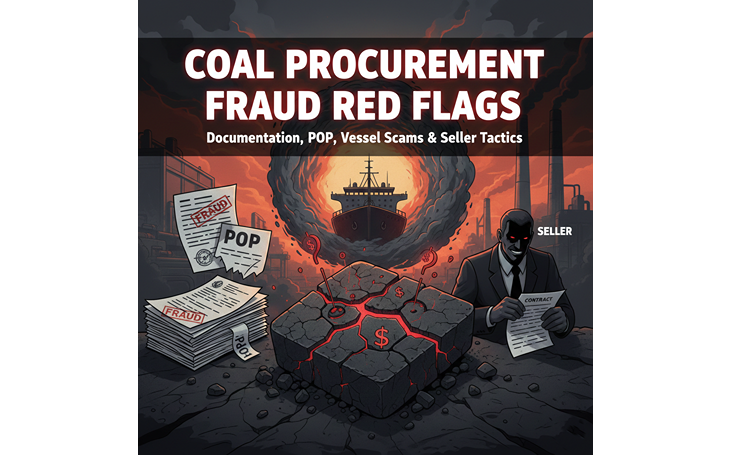
Coal Procurement Fraud Red Flags: Documentation, POP, Vessel Scams and Seller Tactics
The global coal trade is filled with legitimate suppliers, but it also attracts opportunistic brokers, fake intermediaries and fraudulent sellers. Procurement managers, especially in high demand industries like power generation, cement and sponge iron, are often targeted because they operate under pressure. They need coal fast, they need it in bulk and they need it at competitive prices. Fraudsters take advantage of this urgency. Recognizing red flags early can save millions.
This guide breaks down how coal scams unfold and how to protect your operations.
The most common frauds in coal procurement
Coal scams rarely look dramatic. They start with polished presentations, respectable emails and well crafted documents. Buyers only discover the truth when vessels do not exist, shipments never arrive or the paperwork collapses under scrutiny.
The most frequent frauds include:
◾ False Proof of Product documents
◾ Vessel availability scams
◾ Suspicious Letters of Credit requirements
◾ Fake loading port certificates
◾ Layered intermediary networks
These scams are designed to pressure buyers into parting with deposits or signing unfavorable contracts.
Documentation fraud: forged comfort letters and certificates
Fraudulent sellers often present highly detailed documentation. They use these papers to look like established exporters.
Watch for these documents when they appear too early or without verification:
◾ SGS or Intertek certificates issued before loading
◾ Mine concession papers without local authority stamps
◾ Company capability letters signed only by individuals
◾ Certificates in mismatched formats or fonts
◾ Purchase orders without traceable counterparties
Legitimate coal shipments move through a predictable paper trail. Fraudulent ones create paperwork first and try to force buyers to pay upfront.
POP scams: the biggest trap in coal trading
POP stands for Proof of Product. In real coal transactions, POP is not issued until a vessel is confirmed or a loading schedule is locked. Scammers reverse this process. They send POP documents to lure buyers into believing cargo already exists.
Red flags in POP scams:
◾ POP shared before LOI or contract
◾ No link to a real mine or port terminal
◾ No Bill of Lading number or vessel call sign
◾ Certificates with blurred QR codes or serial numbers
◾ Seller demands a large security payment after POP
Professional coal suppliers do not issue elaborate POP packets to unknown parties. They follow contract procedure and verifiable milestones.
Vessel and charter scams: the illusion of cargo in motion
One of the most dangerous scams involves vessel documentation. Fraudsters claim a ship is already loaded or anchored at a nearby port. They use this narrative to pressure buyers into immediate payment.
How vessel scams operate:
◾ Fake AIS screenshots
◾ Edited port clearance documents
◾ Reused Bills of Lading from unrelated shipments
◾ Charter Party contracts with altered names
A real vessel can be checked through port authorities, AIS tracking and terminal scheduling. A fraudulent one disappears once the deposit is paid.
Middlemen stacking: the dangerous chain of brokers
Coal transactions often involve intermediaries. They can be useful when licensed and verifiable. But scammers hide behind chains of agents to avoid accountability.
Typical symptoms of stacked middlemen:
◾ Every answer takes several days
◾ Price changes as messages pass through layers
◾ Requests for small commitment fees
◾ Blame shifting when documents conflict
In a genuine supply chain, communication flows clearly between supplier and buyer. When the structure becomes unclear, risk increases.
Payment traps: when sellers push buyers into unsafe models
Legitimate suppliers offer structured, internationally recognized payment terms. Fraudulent sellers push buyers toward risky arrangements.
High risk indicators:
◾ Advance payments without third party escrow
◾ LC without BL or QC documentation
◾ Pre shipment investment funds
◾ Frozen sample fees of suspicious size
Industrial buyers must resist emotional pressure. Urgency is the favorite weapon of scammers.
How real suppliers operate
Authentic coal suppliers do not rely on intimidating urgency. They follow standard protocols:
◾ Signed LOI or ICPO
◾ Specification tables with origin clarity
◾ Inspection at loading
◾ Bankable contracts
◾ Traceable documentation
◾ Real logistics channels
◾ Transparent vessel schedules
Professional suppliers explain risk allocation, shipping windows and compliance obligations.
How Gsinfotechvis protects buyers from procurement fraud
Gsinfotechvis Pvt Ltd works in real markets, not speculative trading circles. The company sources coal from vetted mines and reputable ports. Documentation, SGS inspection and vessel bookings are done through reliable channels. Clients receive proof only at valid transactional milestones.
Partnering with Gsinfotechvis gives you:
◾ Supply from verified origins
◾ Transparent ash, moisture and GAR data
◾ Legitimate port handling records
◾ Protection against risky LC setups
◾ Vetted charters and vessel coordination
◾ End to end Q and Q compliance
When procurement teams deal with large volumes, they require trusted partners, not glossy promises. Fraud thrives where buyers rush. Gsinfotechvis removes uncertainty so you can focus on operations, not chasing paperwork.
Coal is a strategic resource. Treat procurement like risk management, and choose suppliers who value transparency as much as tonnage.
Know more about us on LinkedIn.