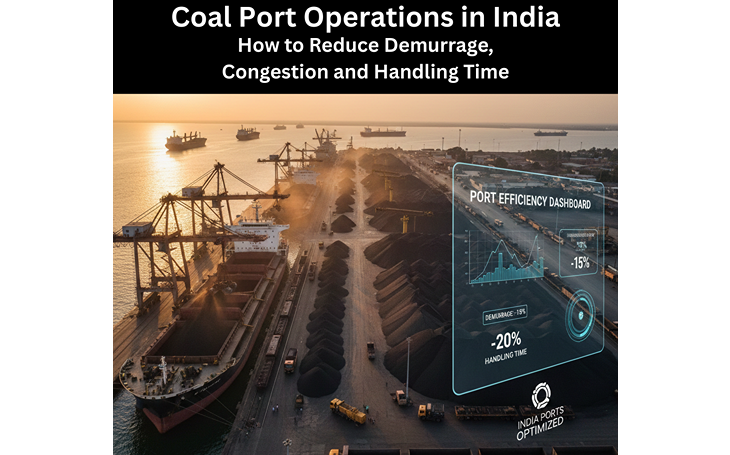
Coal Port Operations in India: How to Reduce Demurrage, Congestion and Handling Time
Coal is a strategic industrial commodity. Power plants, sponge iron units and cement factories depend on it. But coal does not reach the furnace until it passes through ports. Berthing delays, long unloading times and warehouse bottlenecks can turn a profitable shipment into a financial headache. Many buyers underestimate how much money is lost at ports instead of mines or markets. This is where smart logistics decisions change the game.
Why coal ports matter more than buyers think
Ports in India handle millions of tonnes of coal every month. One vessel delay can disrupt multiple downstream plants. Freight charges accumulate by the hour. Handling systems choke and the supply chain stalls.
Coal port issues include:
◾ Poor berth allocation
◾ Customs clearance delays
◾ Slow cargo discharge
◾ Lack of truck or rail evacuation
◾ Miscommunication between suppliers and port operators
These factors are not always visible in contracts, but they impact your bottom line more than coal price fluctuations.
Demurrage is the most expensive mistake
Demurrage is the penalty paid when a vessel exceeds its allowed unloading window. Every extra day is a direct financial loss. Even a small delay can erase the savings expected from a favorable coal deal.
What causes demurrage:
◾ Late berth access
◾ Rain-affected unloading
◾ Suboptimal cargo planning
◾ Port labor shortages
◾ Equipment downtime
For coal importers, demurrage is not a cost calculated after discharge. It must be prevented before the vessel arrives.
Congestion is predictable, not random
Indian ports do not congest by accident. There are visible patterns. Monsoon months slow discharge due to rain and humidity. Certain terminals experience traffic spikes when multiple power companies schedule cargo within overlapping windows.
Congestion triggers:
◾ Seasonal weather
◾ Festival closures
◾ Bulk vessel arrivals with overlapping windows
◾ Limited storage locations near berth
Experienced operators study these patterns before finalizing shipment windows. Buyers who ignore them face idle vessels and overtime charges.
Handling time is where minutes become money
Coal is sensitive to exposure. Excessive moisture breaks lumps into fines. Rough handling damages conveyors. Extra transfer steps increase exposure to weather and contamination.
Poor handling leads to:
◾ Higher fuel consumption in downstream plants
◾ Reduced effective calorific value
◾ Dust losses
◾ Claims disputes with suppliers
Reducing handling time is not only about speed. It is about precision and consistent protection.
How to reduce coal port risk: practical strategies
1. Choose ports based on cargo type
Not every port is suited for every coal category. Some ports handle sub-bituminous coal more efficiently due to equipment designed for lower density material.
2. Use real-time ETA coordination
Track vessel schedules and adjust discharge windows with port authorities. A well-timed arrival can reduce queue delays significantly.
3. Implement cargo split strategies
Dividing large shipments into smaller parcels distributes unloading risk and reduces peak congestion exposure.
4. Pre-plan evacuation logistics
Trucks, rail rakes and barges should be arranged before the vessel anchors. The port is a transit point, not a storage yard. Coal must move immediately after discharge.
5. Monitor weather and rainfall patterns
Protective tarpaulins and covered conveyors reduce fines and moisture damage, particularly during monsoon season.
Case example: unloading delays
A cement buyer imports a 65,000 tonne cargo. Berth congestion extends unloading by four days. Demurrage at USD 15,000 per day adds USD 60,000 to total cost. On paper, the negotiated coal price looked attractive. In practice, port delays eliminated all savings.
If the buyer had:
◾ Selected a less congested terminal
◾ Booked a more strategic laycan window
◾ Pre-arranged evacuation with rail operators
The vessel could have discharged within schedule, preserving operational margins.
Why working alone is risky
Coal logistics involves vessel owners, chartering agents, customs officials, surveyors, terminal operators, yard contractors and transport partners. Each stakeholder influences handling time. Procurement teams often lack the capacity to coordinate every moving part efficiently.
This is where a supply partner with operational experience becomes essential.
How Gsinfotechvis reduces coal port losses
Gsinfotechvis Pvt Ltd is not only a coal supplier. It is a logistics partner that understands port behavior, vessel scheduling and discharge management. The company works closely with Indian and international terminals to prevent shipments from getting trapped in operational or documentation bottlenecks.
Clients benefit from:
◾ Proven port selection strategies
◾ Pre-negotiated discharge coordination
◾ Customs and documentary assistance
◾ Moisture-controlled bulk handling
◾ Real-time vessel tracking
◾ Rail and road evacuation planning
Instead of waiting at congested berths or negotiating under pressure, buyers move cargo efficiently from vessel to plant.
Coal quality matters, but coal movement matters just as much. A shipment sitting at port represents locked capital and operational risk. With Gsinfotechvis, buyers avoid demurrage traps, bypass congestion and keep coal flowing from vessel to furnace without costly interruption.
Know more about us on LinkedIn.