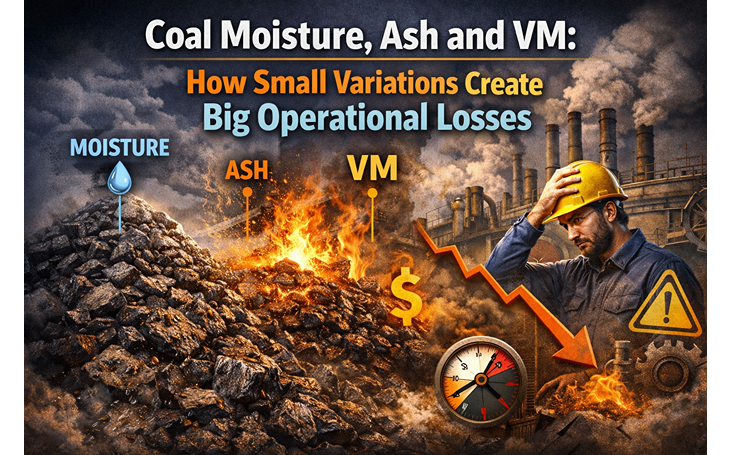
Coal Moisture, Ash and VM: How Small Variations Create Big Operational Losses
Coal may appear to be a uniform fuel, but small changes in its quality can have a major impact on plant performance and costs. Moisture, ash, and volatile matter, often referred to as VM, are three key parameters that directly influence how coal behaves in boilers and furnaces. Even minor variations in these values can disrupt operations, increase fuel consumption, and raise maintenance expenses. Understanding their impact helps industries protect efficiency and profitability.
Why Coal Quality Variations Matter
Power plants, cement units, and industrial boilers are designed to operate within specific coal quality ranges. When coal moisture, ash, or VM deviates from expected levels, combustion efficiency drops. This leads to higher fuel usage, unstable operations, and unexpected downtime. What seems like a small change on paper often translates into large operational losses on the ground.
Moisture Content and Its Hidden Costs
Moisture is the water present in coal. Higher moisture reduces the effective heating value because part of the combustion energy is spent evaporating water instead of producing useful heat.
When coal moisture increases, boilers need more fuel to generate the same output. This raises coal consumption, increases handling and transportation costs, and creates additional stress on feeding systems. High moisture also affects ignition and flame stability, especially during load changes.
Inconsistent moisture levels across shipments make it difficult for operators to maintain stable combustion. Frequent adjustments increase wear on equipment and raise the risk of unburnt coal losses.
Ash Content and Operational Efficiency
Ash is the non combustible residue left after coal burns. While some ash is unavoidable, higher ash content leads to several problems.
Excess ash reduces boiler efficiency by lowering heat transfer rates. Ash deposits on furnace walls and boiler tubes act as insulation, forcing the system to burn more coal to maintain output. Over time, this increases fuel costs and reduces thermal efficiency.
High ash also means more material to handle and dispose of. Ash handling systems face higher loads, increasing maintenance needs and operational risk. In severe cases, slagging and fouling can force unplanned shutdowns for cleaning.
Volatile Matter and Combustion Stability
Volatile matter affects how easily coal ignites and how it burns. Coal with high VM ignites quickly and burns rapidly, while low VM coal requires more heat to start combustion.
When VM levels vary between coal lots, flame behavior becomes unpredictable. High VM coal can cause rapid combustion and localized overheating. Low VM coal may lead to delayed ignition and incomplete burning.
Both situations affect boiler stability and emissions. Operators often compensate by adjusting air flow or using support fuel, which adds to operational costs.
How Small Variations Create Big Losses
Each of these parameters is manageable within limits, but problems arise when they change unexpectedly. A small increase in moisture or ash may seem minor, but when multiplied across thousands of tonnes of coal, the financial impact becomes significant.
Higher fuel consumption, increased auxiliary power usage, more frequent maintenance, and unplanned outages all contribute to rising costs. Over time, these losses can exceed any savings gained from purchasing cheaper coal.
The Importance of Quality Control
Consistent coal quality requires proper sourcing, testing, and documentation. Third party inspection reports, accurate certificates of analysis, and careful supplier selection help reduce variability.
This is where professional support adds value.
How Gsinfotechvis Helps Reduce Quality Risk
Gsinfotechvis supports coal dependent industries by strengthening quality verification and compliance processes. Their team helps review quality documents, coordinate inspections, and align coal specifications with plant requirements.
By working with Gsinfotechvis, businesses gain better visibility into coal quality before delivery. This proactive approach helps prevent operational losses and supports stable, efficient plant performance.
Conclusion
Moisture, ash, and volatile matter may seem like small details, but their impact on operations is substantial. Even minor variations can lead to higher costs, instability, and maintenance challenges. By focusing on quality control and partnering with experienced advisors like Gsinfotechvis, industries can protect efficiency, reduce losses, and ensure reliable coal based operations.
Check us out on LinkedIn.