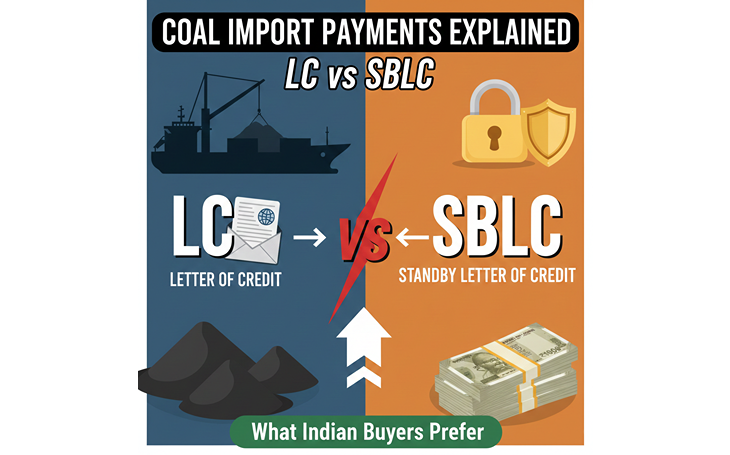
Coal Import Payments Explained: LC vs SBLC - What Indian Buyers Prefer
Coal imports are a major part of India’s energy and industrial supply chain. Along with price, quality, and delivery terms, the payment structure plays a crucial role in the success of any coal transaction. Two commonly used payment instruments in international coal trade are the Letter of Credit and the Standby Letter of Credit. Understanding the difference between LC and SBLC helps Indian buyers choose the right option and avoid financial and operational risks.
Why Payment Structure Matters in Coal Imports
Coal shipments involve large cargo values and long transit times. Sellers want assurance that they will be paid, while buyers want protection against non delivery or quality issues. The payment instrument bridges this trust gap.
A poorly structured payment mechanism can lead to blocked funds, disputes with suppliers, or delays in cargo release. This makes it important for buyers to understand how each option works and when it is best used.
What Is a Letter of Credit
A Letter of Credit, commonly known as LC, is a bank issued payment guarantee on behalf of the buyer. Under an LC, the buyer’s bank commits to pay the seller once specific documents are submitted and verified.
In coal imports, these documents usually include the bill of lading, invoice, certificate of analysis, inspection report, and other agreed papers. If the documents meet the LC terms, payment is released, regardless of any commercial dispute between buyer and seller.
LCs are widely used in Indian coal imports because they offer strong security to both parties. Sellers are assured of payment, while buyers have control through document conditions.
What Is a Standby Letter of Credit
A Standby Letter of Credit, or SBLC, works more like a financial backup. It is not intended to be used in normal transactions. Instead, it is triggered only if the buyer fails to meet payment obligations.
In coal trading, SBLCs are often used when there is an established relationship between buyer and seller. Payments are typically made through open account or agreed terms, with the SBLC acting as a safety net for the seller.
While SBLCs offer flexibility, they provide less control to buyers compared to traditional LCs, especially when it comes to document based checks.
Key Differences Between LC and SBLC
The main difference lies in how payment is executed. An LC is an active payment instrument, while an SBLC is a conditional guarantee.
LCs are document driven, which means buyers can link payment to shipment and quality compliance. SBLCs rely more on trust and creditworthiness.
From a regulatory perspective, LCs are more commonly accepted and preferred by Indian banks and regulators for commodity imports like coal.
What Indian Buyers Prefer
Most Indian coal importers prefer Letters of Credit, especially for large or first time transactions. LCs offer better control over documentation and reduce exposure to quality and delivery risks.
SBLCs are usually considered when buyers have long standing relationships with suppliers or when commercial terms require flexibility. However, they demand strong internal controls to avoid misuse or disputes.
How Gsinfotechvis Helps Buyers Choose the Right Option
Gsinfotechvis supports Indian coal buyers in structuring payment terms that align with regulatory requirements and commercial objectives. Their team reviews contracts, payment clauses, and documentation conditions to reduce risk.
By working with Gsinfotechvis, buyers gain clarity on whether an LC or SBLC suits their transaction. This ensures smoother payments, faster cargo clearance, and better financial control.
Conclusion
Choosing between an LC and an SBLC is a strategic decision in coal imports. While both instruments have their place, Indian buyers generally prefer LCs for stronger control and regulatory comfort. With expert guidance from
Gsinfotechvis, buyers can structure secure and efficient payment mechanisms that support reliable coal sourcing and long term business stability.
Check us out on
LinkedIn.