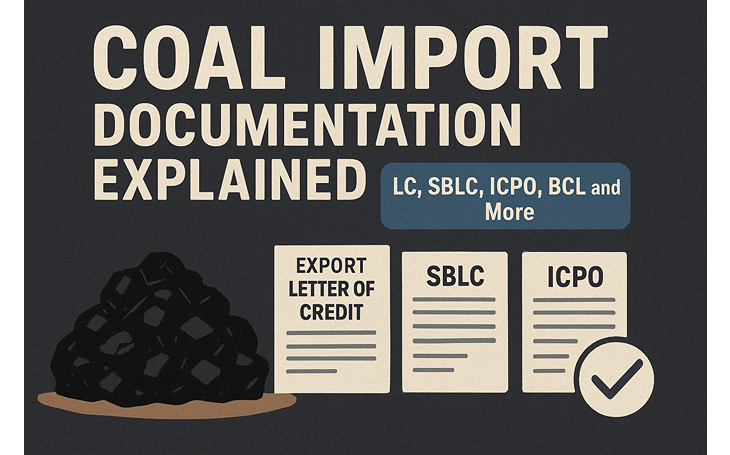
Coal Import Documentation Explained: LC, SBLC, ICPO, BCL and More – A Beginner’s Guide
Importing coal involves much more than buying a commodity. It requires proper documentation, financial security, compliance checks and coordination between suppliers, banks, inspection agencies and logistics teams. For industries new to coal imports, these terms can feel confusing at first.
This guide breaks down the key documents and steps involved in the coal import process. Using a simplified version of the structured workflow followed by companies like Gsinfotechvis, this article explains each document in clear language so buyers can understand what they are signing and why it matters.
Why Documentation Matters in Coal Imports
Coal shipments involve international trade rules, quality requirements and financial guarantees. Proper documentation ensures that:
◾ Both parties are protected
◾ The contract terms are clear
◾ Payments are secure
◾ The coal matches the agreed specifications
◾ Shipments move without delays
Understanding these documents helps buyers make informed decisions and avoid common mistakes in bulk commodity imports.
1. Soft Corporate Offer (SCO)
The process usually begins with the supplier issuing an SCO. This is a preliminary offer that outlines:
◾ Grade of coal
◾ Quantity
◾ Price range
◾ Origin
◾ Loading port
◾ Delivery terms
It is not a binding agreement but serves as the first communication between buyer and seller.
2. Full Corporate Offer (FCO)
After interest is confirmed, the supplier issues an FCO. This document includes more detailed terms such as:
◾ Exact coal specifications
◾ Shipment schedule
◾ Contract duration
◾ Payment terms
An FCO shows the supplier is serious and ready to proceed.
3. NCNDA
The buyer and supplier sign an NCNDA, which stands for Non Circumvention and Non Disclosure Agreement. This protects both parties by ensuring that:
◾ Information remains confidential
◾ Neither party bypasses the other
◾ Intermediaries, if involved, are protected
It builds trust in the early stages of the transaction.
4. ICPO
An ICPO, or Irrevocable Corporate Purchase Order, is issued by the buyer. This confirms:
◾ The buyer’s readiness to purchase
◾ The ability to meet financial obligations
◾ The intention to follow the agreed terms
The ICPO moves the process from discussion to commitment.
5. BCL or RWA Letter
Before proceeding to payment instruments, the supplier often asks for financial proof. Two documents may be used:
Bank Comfort Letter (BCL)
A letter from the buyer’s bank confirming financial capability.
Ready, Willing and Able Letter (RWA)
A bank issued confirmation stating the buyer has the funds and is ready to complete the transaction.
These letters show that the buyer is credible and financially prepared.
6. Letter of Credit (LC) or Standby Letter of Credit (SBLC)
These are the most important financial instruments in coal imports.
LC
A Letter of Credit ensures the supplier gets paid only when the terms of the contract are met and the required documents are submitted.
SBLC
An SBLC serves as a financial guarantee. It activates only if the buyer fails to pay.
Both documents protect the buyer and the seller and reduce financial risk for both sides.
7. Sales and Purchase Agreement (SPA)
Once financial security is in place, both parties sign the SPA. This is the legally binding contract that includes:
◾ Coal specifications
◾ Delivery schedule
◾ Price and payment terms
◾ Penalties
◾ Inspection criteria
◾ Shipping responsibilities
The SPA is the core of the entire transaction.
8. Q and Q Inspection Reports
Before loading, an independent inspection agency checks:
◾ Calorific value
◾ Ash content
◾ Moisture
◾ Sulphur
◾ Weight
This report ensures that the coal matches the contracted grade and helps prevent disputes when the shipment arrives.
9. Shipping and Port Documentation
Several documents accompany the shipment, such as:
◾ Bill of Lading
◾ Cargo manifest
◾ Packing list
◾ Insurance certificate
◾ MSDS (Material Safety Data Sheet)
These documents support customs clearance and confirm safe handling procedures.
10. Final Delivery and Discharge Reports
Once the vessel reaches the destination port, another inspection may be performed. After unloading, the coal is transported to the buyer’s facility and final delivery documents are issued.
Final Thoughts
For beginners, coal import documentation may seem overwhelming, but each document plays a vital role in ensuring a smooth transaction. From establishing trust to securing payments and verifying quality, this process protects both buyer and seller.
With a clear understanding of each document, industries can manage imports with confidence and avoid delays or disputes.
Get to know more about us on LinkedIn.