Coal Import Contracts Explained: SCO, FCO, SPA, LC and Performance Bonds
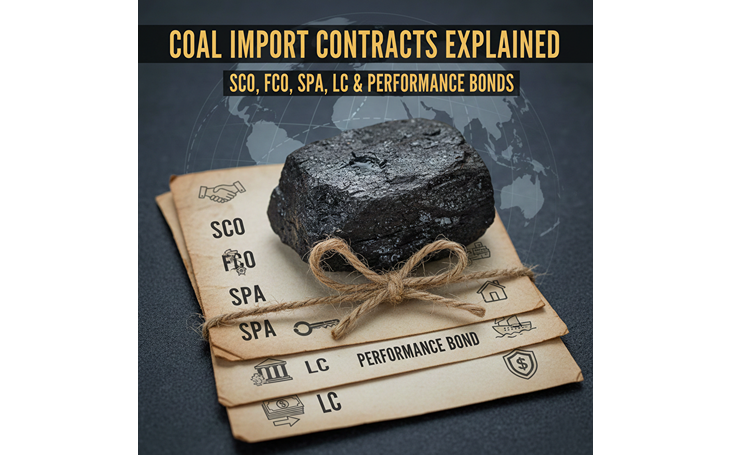
Coal import contracts form the backbone of international coal trade. For Indian power plants, steel producers, and cement companies, understanding these contracts is essential to manage risk, control cost, and ensure reliable supply. Terms such as SCO, FCO, SPA, LC, and performance bonds are commonly used, yet often misunderstood. This article explains these concepts in a clear and practical way.
The Role of Contracts in Coal Imports
Coal import contracts define the commercial, technical, and legal framework of a transaction. They clarify responsibilities related to quantity, quality, delivery timelines, payment security, and penalties. Well structured contracts reduce disputes and protect both buyers and sellers.
What Is an SCO
An SCO, or Spot Contract Offer, refers to a short term or one time coal purchase. These contracts are usually linked to immediate market conditions and are used when buyers need coal quickly or want to take advantage of favorable prices.
SCOs offer flexibility but also carry higher price volatility. Since supply is not secured for the long term, buyers must manage logistics and compliance carefully to avoid delays.
Understanding FCO
FCO stands for Firm Contract Offer. It is a binding offer made by the seller that includes fixed terms such as quantity, price, quality, and delivery period. Once accepted, both parties are legally committed.
FCOs provide more certainty than spot deals and are often used for planned procurement. However, buyers must review quality specifications and delivery terms closely before acceptance.
What Is an SPA
An SPA, or Sale and Purchase Agreement, is a detailed long term contract between the buyer and seller. SPAs typically cover supply over several months or years and include comprehensive clauses related to pricing mechanisms, quality tolerance, delivery schedules, and dispute resolution.
For large consumers like power and steel plants, SPAs offer supply stability and better planning. They also require strong compliance and contract management to avoid penalties.
The Importance of LC in Coal Trade
An LC, or Letter of Credit, is a payment security instrument issued by a bank on behalf of the buyer. It assures the seller that payment will be made once contractual conditions are met.
In coal imports, LCs protect both parties. Sellers gain confidence in payment, while buyers ensure that payment is released only after receiving compliant documents. Errors in LC terms or documentation can cause delays, making careful drafting essential.
Performance Bonds Explained
Performance bonds are financial guarantees provided by one party to ensure fulfillment of contractual obligations. In coal contracts, sellers may provide performance bonds to guarantee supply and quality, while buyers may provide bonds to assure payment or cargo lifting.
These bonds protect against default and provide financial recourse in case of non performance.
Common Contract Risks
Poorly defined quality clauses, unrealistic delivery terms, and weak compliance alignment often lead to disputes and cost overruns. Lack of clarity around inspection standards and penalties increases risk for both sides.
How Gsinfotechvis Adds Value
Gsinfotechvis supports coal buyers by reviewing and aligning contract terms with regulatory and operational realities. Their expertise helps ensure that SCOs, FCOs, SPAs, LCs, and performance bonds are structured to minimize risk.
By partnering with Gsinfotechvis, businesses can strengthen contract governance, improve compliance, and achieve smoother coal imports.
Conclusion
Coal import contracts are more than legal documents. They shape cost, risk, and supply reliability. Understanding SCO, FCO, SPA, LC, and performance bonds helps buyers make informed decisions. With expert guidance from
Gsinfotechvis,
companies can manage coal contracts effectively and protect their operations in a complex trade environment.
Check us out on
LinkedIn.