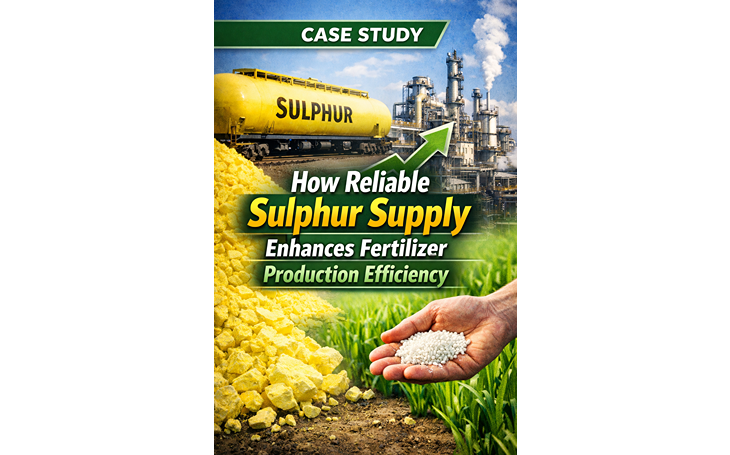
Case Study: How Reliable Sulphur Supply Enhances Fertilizer Production Efficiency
Fertilizer plants run on precision. Every hour of production counts, and every raw material must be available exactly when needed. Among these inputs, sulphur plays a central role. It is the backbone of sulphuric acid production, which feeds into phosphate fertilizers such as DAP, MAP and SSP. When sulphur supply is steady, fertilizer output remains stable. When supply falters, the entire plant feels the impact.
This case study style overview shows how consistent sulphur deliveries transform the efficiency of large fertilizer operations without naming any particular company. The aim is to highlight real industry patterns and the value of a dependable sulphur supply chain.
The Challenge: Frequent Supply Gaps Disrupt Production
A major fertilizer manufacturer operating across several regions was facing routine slowdowns. The issue was not equipment failure or labor shortage. It was inconsistent sulphur deliveries. Shipments arrived late, documentation was incomplete, and cargo sometimes lacked purity consistency. This unpredictability forced the plant to interrupt sulphuric acid output, which in turn affected downstream fertilizer production.
Even short disruptions had a chain reaction. When sulphur was not available at the right moment:
◾ Sulphuric acid units had to reduce their load.
◾ Conversion efficiency dropped.
◾ Storage tanks emptied faster than planned.
◾ Finished fertilizer batches missed their scheduling slots.
◾ Energy consumption increased during start stop cycles.
The company estimated that each day of slowdown cost far more than the sulphur itself.
Step 1: Securing High Purity Sulphur
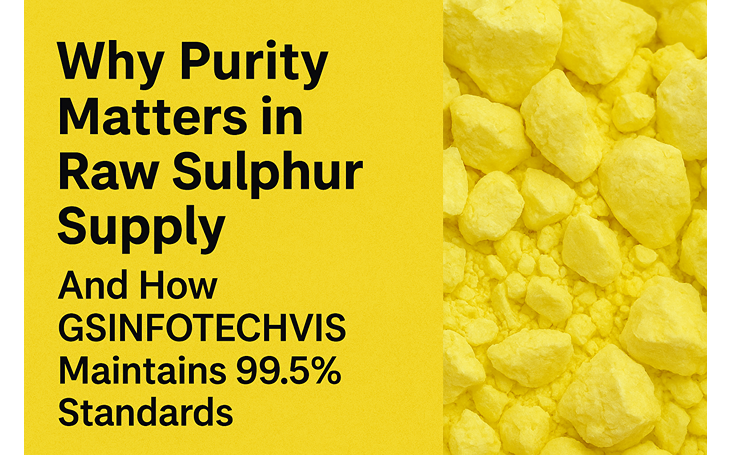
The first improvement came from switching to a steady supply of refinery grade sulphur with consistent purity. Fertilizer plants depend on 99.5 percent grade sulphur because impurities reduce acid conversion efficiency. Lower purity created foam, residue and extra waste in the granulation units.
With reliable purity:
◾ Melting was smoother.
◾ Acid conversion ratios improved.
◾ Less residue meant fewer cleanup cycles.
◾ Operators could run equipment at stable loads.
The plant quickly observed that stable inputs lead to stable chemistry, which drives higher output.
Step 2: Fixing Delivery Timing Issues
The second breakthrough involved restructuring logistics. Instead of relying on suppliers who shipped on tentative schedules, the plant partnered with a trader who used:
◾ Laytime benchmarking
◾ Verified loading windows
◾ Strict anti delay clauses
◾ Coordinated port schedules
This minimized vessel waiting and reduced the risk of demurrage. More importantly, sulphur arrived in predictable cycles. Production managers began planning confidently because they knew exactly when the next shipment would land.
Predictability eliminated the start stop pattern that had drained energy and labor time. Continuous operation raised efficiency.
Step 3: Improving Documentation for Faster Port Clearance
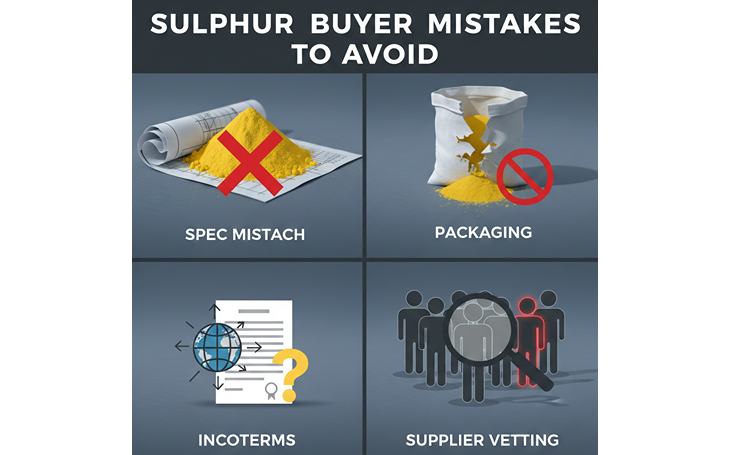
Earlier, the plant often faced delays due to paperwork gaps. Missing MSDS pages, wrong labels on containers or incomplete hazardous cargo declarations kept shipments stuck at the terminal.
The new supply chain approach introduced:
◾ Full MSDS compliance
◾ Clear UN 4.1 hazard labeling
◾ Q&Q inspection certificates
◾ Clean POP and LC aligned terms
With paperwork prepared before shipment departure, port clearance became faster. Containers moved from vessel to transport without wasteful idle time. This directly supported production cycles, as trucks reached the plant earlier.
The Results: Higher Output and Lower Operational Stress
After six months of consistent sulphur deliveries, the fertilizer plant achieved:
◾ Higher sulphuric acid yield
◾ More predictable granulation cycles
◾ Shorter downtime
◾ Lower energy consumption
◾ Better labor utilization
◾ Fewer emergency batch adjustments
The most significant change was operational stability. Teams no longer rushed to compensate for late deliveries. The plant could run long, uninterrupted campaigns, improving overall productivity and reducing operating cost per tonne.
Why Reliable Sulphur Supply Is a Strategic Advantage
For fertilizer manufacturers, sulphur is not just another raw material. It is tied to the chemistry that keeps the entire process running. When sulphur supply is dependable, the plant saves on fuel, manpower, maintenance and scheduling errors. When the supply fluctuates, everything becomes reactive instead of planned.
Final Thoughts
Reliable sulphur sourcing is not an added benefit. It is a core requirement for competitive fertilizer production. Reliable supply transforms efficiency, protects output and strengthens the entire production chain. Get more insights on Gsinfotechvis.
Check us out on LinkedIn.