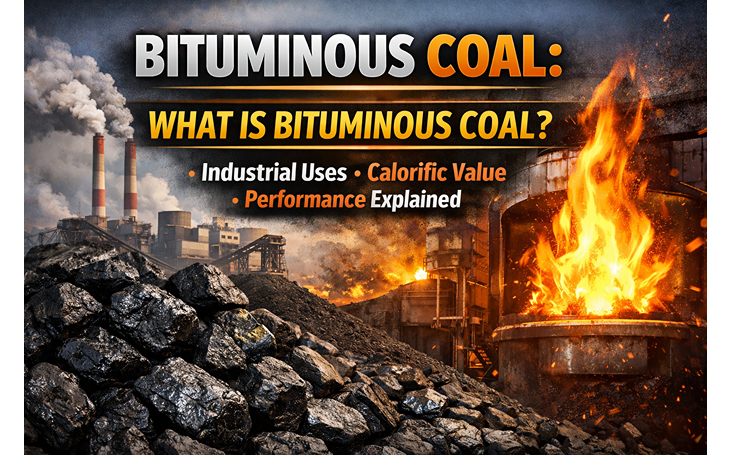
Bituminous Coal: What Is Bituminous Coal? Industrial Uses, Calorific Value, and Performance Explained
Bituminous coal is one of the most widely used types of coal in the world. It plays a significant role in power generation and industrial production, especially in fast growing economies. Known for its high energy output and versatile applications, bituminous coal continues to be an important fuel despite the gradual shift toward cleaner energy sources. This article explains what bituminous coal is, its key properties, industrial uses, and overall performance.
What Is Bituminous Coal?
Bituminous coal is a dense, black coal that falls between sub bituminous coal and anthracite in terms of carbon content and energy value. It is formed from compressed plant material that has undergone heat and pressure over millions of years.
This type of coal is often referred to as soft coal, although it is harder than lignite and sub bituminous coal. Bituminous coal is commonly used for electricity generation and as a raw material in various industries due to its high heat producing capability.
Key Properties of Bituminous Coal
The performance of bituminous coal is determined by several physical and chemical properties that affect how it burns and how much energy it produces.
Calorific Value
Bituminous coal has a high calorific value, typically ranging from 5,000 to 7,500 kilocalories per kilogram. This means it produces more energy per unit than lower grade coals, making it efficient for industrial use.
Carbon Content
It contains a relatively high level of carbon, which contributes to its strong heat output during combustion.
Moisture Content
Bituminous coal has moderate moisture levels. Lower moisture improves burning efficiency and reduces energy loss.
Ash Content
Ash content can vary widely. Lower ash coal is preferred as it improves boiler efficiency and reduces waste disposal costs.
Volatile Matter
This coal has moderate to high volatile matter, allowing it to ignite easily and burn steadily.
Industrial Uses of Bituminous Coal
Bituminous coal is highly versatile and is used across multiple industries.
Power Generation
One of the largest uses of bituminous coal is electricity production. Its high energy content makes it suitable for thermal power plants that require stable and continuous fuel supply.
Steel and Metallurgy
Certain grades of bituminous coal are used to produce coke, which is essential for steel manufacturing. These grades are often classified as coking coal.
Cement Industry
Bituminous coal is widely used in cement kilns as a primary fuel due to its reliable heat output.
Chemical and Manufacturing Industries
Coal byproducts derived from bituminous coal are used to produce chemicals, dyes, and industrial gases.
Performance and Efficiency
Bituminous coal offers a good balance between cost, availability, and energy performance. It burns hotter than lignite and sub bituminous coal, making it more efficient for industrial boilers and furnaces.
However, its performance depends heavily on quality. High ash or sulfur levels can reduce efficiency and increase environmental impact. For this reason, industries often select coal grades carefully or blend coal from different sources to achieve optimal results.
Environmental Considerations
Compared to lower grade coals, bituminous coal burns more efficiently, but it still produces emissions such as carbon dioxide and sulfur compounds. Modern power plants use emission control technologies to reduce environmental impact and improve efficiency.
Conclusion
Bituminous coal remains a key fuel for power generation and industrial processes. Its high calorific value, wide availability, and flexible applications make it a reliable energy source. While energy systems continue to evolve, bituminous coal will continue to support industries that depend on consistent and high performance fuel. Get more insights on Gsinfotechvis.
Know more about us on LinkedIn.