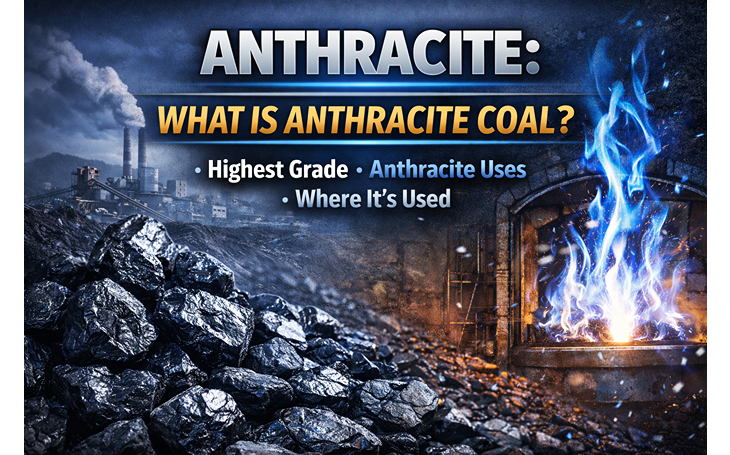
Anthracite: What Is Anthracite Coal? Why It’s the Highest Grade and Where It’s Used
Anthracite coal is often described as the highest grade of coal available. Known for its clean burning nature and high energy content, anthracite stands apart from other coal types. Although it represents a small share of global coal reserves, its unique qualities make it valuable for specific industries and applications. This article explains what anthracite coal is, why it is considered the highest grade, and where it is commonly used.
What Is Anthracite Coal?
Anthracite is a hard, compact form of coal with a shiny black appearance. It is formed over millions of years under intense heat and pressure, which gives it a very high carbon content. Compared to other coals such as lignite, bituminous, and sub bituminous coal, anthracite contains fewer impurities and burns more efficiently.
Because of its structure, anthracite is harder to ignite than other coal types. However, once it starts burning, it produces steady heat with minimal smoke.
Why Anthracite Is the Highest Grade of Coal
Anthracite is considered the highest grade because of its superior physical and chemical properties.
High Carbon Content
Anthracite typically contains more than 85 percent carbon. This high carbon level is the main reason for its strong and consistent heat output.
High Calorific Value
It has a higher calorific value than other coals, meaning it releases more energy per unit when burned. This makes it highly efficient for heating and industrial use.
Low Moisture and Ash
Anthracite has very low moisture and ash content. Less moisture improves burning efficiency, while low ash reduces waste and equipment wear.
Low Volatile Matter
This coal releases very few gases when heated, resulting in cleaner combustion and minimal smoke.
Low Sulfur Content
Lower sulfur levels make anthracite a cleaner fuel compared to many other coal types.
Where Anthracite Is Used
Due to its high quality and cost, anthracite is used in applications where performance and cleanliness matter most.
Residential and Commercial Heating
Anthracite is widely used for space heating in cold regions. It burns longer and produces more heat than other coals, making it suitable for home heating systems and commercial boilers.
Industrial Applications
Industries use anthracite in metal processing, glass manufacturing, and cement production. Its stable heat and low impurities help maintain product quality.
Water Filtration
Crushed anthracite is commonly used in water filtration systems. Its hardness and purity make it effective in removing contaminants.
Steel and Metallurgy
Anthracite is sometimes used as a carbon additive in steelmaking to improve strength and consistency.
Advantages and Limitations
Anthracite offers several advantages, including high efficiency, clean burning, and long burn time. It also produces less smoke and fewer emissions compared to lower grade coals.
However, anthracite has some limitations. It is more expensive and less widely available than other coal types. Its higher ignition temperature also means it requires proper equipment to use effectively.
Conclusion
Anthracite coal stands at the top of the coal hierarchy due to its high carbon content, excellent calorific value, and clean burning nature. While it is not as widely used as other coals, its performance makes it ideal for specialized industrial, heating, and filtration applications. For users who value efficiency and cleanliness, anthracite remains a premium and reliable choice. Get more insights on Gsinfotechvis.
Know more about us on LinkedIn.