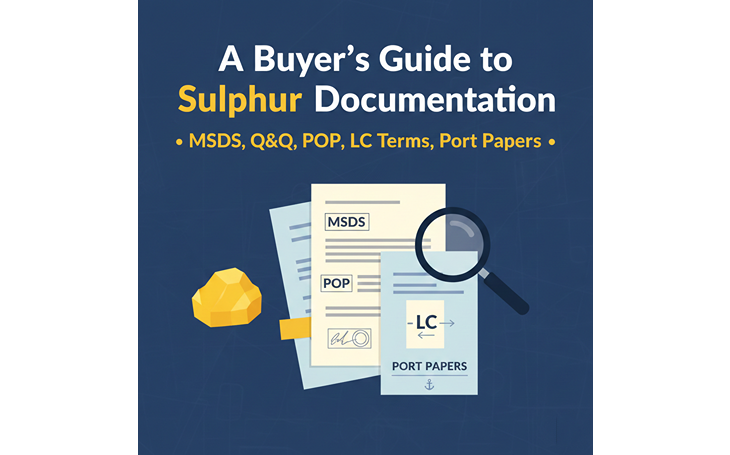
A Buyer’s Guide to Sulphur Documentation: MSDS, Q&Q, POP, LC Terms, Port Papers
Purchasing industrial sulphur is not only a logistics transaction. It is a documentation exercise that protects both the buyer and the seller. A single missing certificate can stop a shipment at the port, delay a vessel or force re-testing that costs thousands. Traders who understand sulphur paperwork navigate the market with confidence, while new buyers often get stuck in unnecessary bottlenecks.
This guide explains the key documents you should expect when sourcing sulphur and why they matter.
MSDS: The Foundation of Safe Handling
The Material Safety Data Sheet is the first document a sulphur buyer should look for. Raw sulphur is a flammable solid. It reacts to heat, friction and sparks. MSDS explains how to handle it safely from storage to shipment. It lists hazards, emergency procedures, transport codes and safe temperature ranges.
Port authorities and carriers use MSDS to verify that a shipment is compliant. Insurance reviews rely on it. Plant managers use it to train workers on unloading and storage. An incomplete MSDS should be a red flag. Always insist on a version aligned with global standards like GHS and IMDG requirements.
Q&Q Inspection: Your Quality Guarantee
Quantity and Quality inspection is performed by an independent agency such as SGS or Intertek. Inspectors collect samples from the cargo to verify sulphur purity, moisture and ash content. The inspection also confirms physical condition, packaging integrity and lot consistency.
Q&Q protects you from receiving off-grade material. It proves that what was agreed in the contract matches what is loaded at the port. Without Q&Q, every dispute becomes emotional instead of factual. A buyer with verified data wins negotiations, insurance claims and customs checks.
POP: Proof of Product
Proof of Product is a document that shows the material actually exists and is ready to ship. Traders who operate without POP often rely on theoretical inventory or third party promises. This creates unnecessary risk.
POP typically includes stockyard location, batch certificates and logistic readiness details. It tells you the producer has the goods and is not searching for them after taking your order. Serious suppliers provide POP early to build confidence.
LC Terms: Designing Payment for Protection
Letters of Credit are not just banking procedures. They are buyer protection tools. A well structured LC ties payment to delivery performance. Funds release only after inspection, loading confirmation and documentation checks.
If a supplier sends wrong grade sulphur or delays shipment, LC terms can block payment until they correct the issue. Many inexperienced buyers use open payment or weak LC formats and end up absorbing losses. Clear LC conditions remove uncertainty and keep the trade professional.
Shipping and Port Documentation
Once sulphur is packed, the final stage begins. Correct port papers ensure that cargo moves quickly through customs and terminal handling. These include packing lists, container seals, hazardous cargo declarations and export permits.
Every bag or container must display proper UN Class 4.1 labels. These markings tell port teams how to handle the cargo and where it should be stored. Missing labels trigger manual audits or repacking. That slows down loading and increases port fees.
Why Documentation Matters More Than Price
Industrial operations run on schedules. A plant that depends on sulphur cannot afford to wait because someone forgot a certificate or mislabeled a shipment. The real cost is not the sulphur price, but the production time lost during delays.
Experienced exporters track documentation from the beginning. They do not treat paperwork as an afterthought. They prepare MSDS, perform Q&Q inspection, provide POP and design LC terms that limit risk. When containers arrive at the port, every document is already aligned.
Your Best Strategy as a Buyer
Do not rely on verbal promises. Request documents. Ask who performs testing and how samples are collected. Confirm what happens if a test fails or a loading date slips. This mindset saves you from quality disputes and demurrage surprises.
Final Thoughts
Industrial sulphur trade rewards preparation. Buyers who understand documentation are not just customers. They are partners who protect their operations, their supply chain and their cash flow. Get more insights on Gsinfotechvis.
Check us out on LinkedIn.