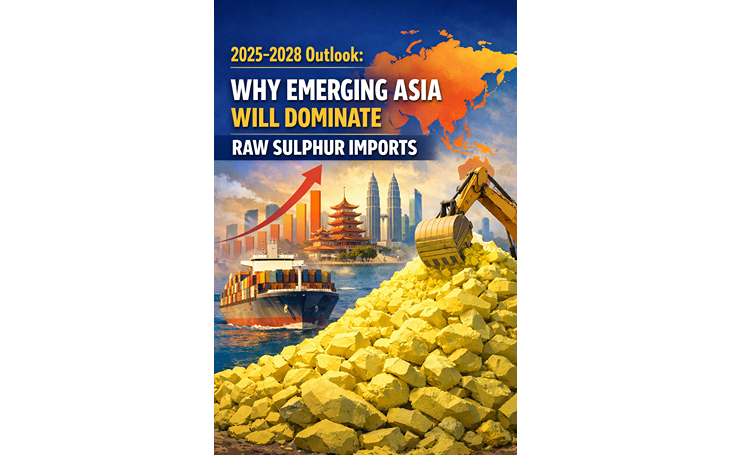
2025–2028 Outlook: Why Emerging Asia Will Dominate Raw Sulphur Imports
Emerging Asia is entering a phase of strong industrial and agricultural growth. Increasing fertilizer production, petrochemical projects and refining capacity are pushing demand for raw sulphur higher than ever. Between 2025 and 2028, this region is expected to lead the world in sulphur imports due to structural changes, not temporary spikes. Understanding these drivers helps buyers plan supply early and avoid disruptions from price swings or vessel shortages.
Agriculture Growth Is Fueling Direct Demand
Many countries in South and Southeast Asia rely on agriculture as a major part of their economy. Fertilizer use is central to keeping that sector productive. Raw sulphur is converted into sulphuric acid, which forms the base of phosphate fertilizers such as DAP, MAP and SSP. As populations grow and food demand rises, these nations must boost fertilizer output.
India, Indonesia and Bangladesh are investing heavily in food security. Governments are incentivizing fertilizer capacity to support farmers and stabilize crop yields. The region is simply too large to depend on seasonal imports of finished fertilizers. Local manufacturing is the long term answer and sulphur is at the core of those plans.
India: The Anchor of Asian Sulphur Imports
India remains the most influential player in the region. Its fertilizer sector consumes huge volumes of sulphur every year and this will increase as production expands. The growth is not limited to government owned plants. Private fertilizer producers are scaling their capacity to improve margins and meet rising rural demand.
India’s phosphate fertilizer units depend on consistent sulphur deliveries. A single delay can affect thousands of tonnes of chemical output. With plans to reduce reliance on imported finished fertilizers, India will continue to import large quantities of raw sulphur to feed domestic production lines.
Indonesia: Industrial Modernization and Agricultural Push
Indonesia is making two parallel moves. The first is strengthening its refinery output and petrochemical sector. The second is supporting agricultural productivity to feed a growing population. Both require sulphur.
While Indonesia has domestic resources, local supply is not always enough to sustain fertilizer factories at full capacity. Imports fill the gap. As the country expands industrial infrastructure and upgrades rural farming networks, sulphur imports will remain a key lever for growth.
Bangladesh: Fertilizer Reliability as a National Priority
Bangladesh views food security as strategic policy. Farmers rely on phosphate and nitrogen fertilizers, making sulphur based acids essential. Government backed plants have expanded capacity, and new projects are under consideration. These facilities need a predictable stream of raw sulphur. Domestic production cannot fully support this demand, which makes international sourcing important.
Bangladesh’s fertilizer ecosystem is smaller than India’s, but its growth rate is faster. That growth drives recurring raw material imports instead of temporary spot purchases.
Vietnam and Thailand: Industrial Manufacturing Meets Farming Needs
Vietnam and Thailand are emerging industrial hubs with strong export sectors. Rubber manufacturing, agro processing, petrochemicals and automotive parts all rely on sulphur based materials. Their fertilizer needs complement these sectors. As both nations allocate more resources to high value agriculture, more phosphate fertilizers will be produced locally.
These countries are less likely to depend entirely on imported finished fertilizer. They prefer raw inputs that give them manufacturing control. Sulphur is among the most critical of those inputs.
Supply Chain Implications for 2025 to 2028
The growing demand across emerging Asia will have direct consequences on the sulphur logistics market. Vessel availability, freight rates and port congestion will all feel the pressure as more shipments arrive at regional terminals. Buyers who rely on last minute sourcing will face more volatile prices.
The most resilient strategy is long term supply planning. Dedicated sourcing partners, structured LC terms and pre planned port coordination can help avoid demurrage, contract disputes and delayed discharge. The importance of proactive planning will increase as more plants come online.
The Bottom Line
Between 2025 and 2028, emerging Asia is not just a buyer of sulphur. It is becoming the global center of sulphur consumption. Industrialization and fertilizer expansion will keep raw sulphur imports strong in India, Indonesia, Bangladesh, Vietnam and Thailand. The companies that understand this trend will secure their supply early and maintain stability in an increasingly competitive market. Get more insights on Gsinfotechvis.
Check us out on LinkedIn.